A Master of Stone and Spirit
In the heart of the Late Middle Ages, a period defined by soaring spires and profound devotion, Peter Parler emerged as one of the most influential architects and sculptors of his era. Born into a distinguished dynasty of master builders, he carried the weight of tradition while simultaneously forging a new, expressive language for European architecture. Known variously as Peter von Gemünd or Petr Parléř, his identity was inextricably linked to the Parler family, a lineage of craftsmen whose influence stretched across much of Central Europe. His journey began in the town of Schwäbisch Gmünd, Germany, where he received his early training, eventually leading him to work at significant medieval building sites including Strasbourg, Cologne, and Nuremberg.
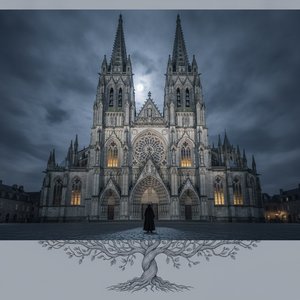
The trajectory of Parler’s career reached its zenith when he moved to Prague, the capital of the Kingdom of Bohemia. Here, under the patronage of the Holy Roman Empire, he was able to realize a vision of architectural grandeur that would define the skyline of the city for centuries. His work at St. Vitus Cathedral stands as his most enduring legacy, a monumental achievement where he utilized complex networks of ribbed vaults to create an interior that seems to defy gravity. Through his engineering brilliance, the heavy stone walls appear light and ethereal, allowing for expansive windows that transform the cathedral into a vessel for celestial light.
The Artistry of the Parler Dynasty
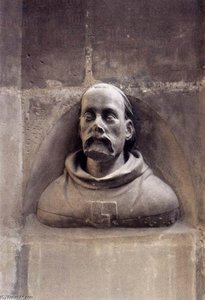
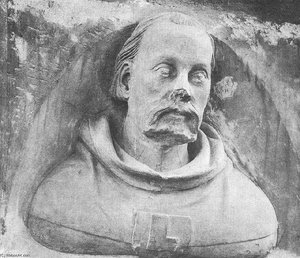
Parler was not merely a builder of structures but a sculptor of profound emotional depth. His ability to breathe life into cold stone allowed him to bridge the gap between the rigid forms of earlier Gothic traditions and a more naturalistic, human-centric approach. This mastery is perhaps most intimately captured in his Self-Portrait, an evocative piece that offers a rare glimpse into the artist's own contemplative soul. In this work, one can observe the meticulous craftsmanship required to render the subtle textures of hair and the serene expression of a man deeply engaged with both his faith and his craft.
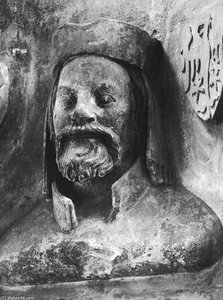
His sculptural contributions often complemented his architectural feats, creating a unified aesthetic experience within the sacred spaces he designed. Notable works such as the Head of Charles IV demonstrate his ability to capture individual character and royal dignity through the Late Gothic style. His achievements were not isolated incidents but part of a broader movement of artistic innovation that saw:
- The development of intricate net vaulting systems that revolutionized cathedral interiors.
- A shift toward greater naturalism in sculptural portraiture, capturing human emotion and detail.
- The establishment of a lasting architectural legacy within the Bohemian landscape.
- The integration of structural engineering with high-level decorative artistry.
Through his hands, the stone became a chronicle of history, an enduring testament to the skill of the Parler family. His life's work remains etched in the very fabric of Europe, serving as a bridge between the medieval world and the burgeoning complexities of the later centuries.
الأسئلة والأجوبة
إلى أي حقبة تاريخية ينتمي بيتر بارلر؟
أبدع بيتر بارلر خلال حقبة أواخر العصور الوسطى، وهي الفترة التي تضع نشاط الفنان في سياقه التاريخي.
أين ومتى وُلد بيتر بارلر؟
وُلد بيتر بارلر في شوابيش غيموند عام 1330.
من أي بلد بيتر بارلر؟
وُلد بيتر بارلر في ألمانيا.