
Small Triptych1يان فان إيكNone
 Oil
Oil- WallArt
- Early Netherlandish Painting
The Enigmatic Intimacy of the Small Triptych
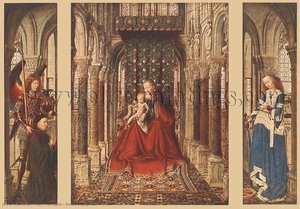
Jan van Eyck’s Small Triptych, a masterpiece completed around 1437 and currently residing in the Gemäldegalerie Alte Meister in Dresden, isn't merely a painting; it’s an invitation. A remarkably intimate work considering its scale, this triptych offers a profound glimpse into the devotional practices of early Renaissance Europe. Measuring just under 30 centimeters tall, it immediately draws the viewer in with its meticulous detail and the quiet solemnity of its subjects. Unlike grand altarpieces designed for public display, the Small Triptych speaks to a more personal sphere – a private devotion, perhaps, or a moment of contemplative reflection. The choice of grisaille, a monochrome technique utilizing shades of grey rather than vibrant color, is particularly striking. It lends an almost sculptural quality to the figures, as if they were carved from stone, emphasizing their timelessness and spiritual weight.
A Composition of Sacred Figures
The triptych’s narrative unfolds in a carefully orchestrated sequence. The central panel presents the Virgin Mary cradling the infant Jesus within a simple, yet elegant church interior. This scene immediately establishes a sense of serenity and maternal grace – a quintessential representation of Marian devotion. To the left, St. Michael stands as a powerful protector, accompanied by a donor figure, likely representing one of the patrons who commissioned the work. His posture exudes authority and piety. On the right wing, we encounter St. Catherine, another revered saint known for her steadfast faith and unwavering virtue. The inclusion of these three figures – Mary, Michael, and Catherine – represents a harmonious balance between divine grace, earthly protection, and spiritual fortitude. Crucially, when closed, the triptych reveals an Annunciation scene on its outer wings, creating a continuous narrative thread that underscores the central theme of God’s intervention in human affairs.
The Revolutionary Technique of Oil Paint
What truly elevates the Small Triptych is Van Eyck's masterful command of oil paint. This medium, still relatively new at the time, allowed him to achieve an unprecedented level of realism and detail. The subtle gradations of light and shadow, the delicate rendering of textures – from the folds of Mary’s robes to the intricate stonework of the church – are a testament to his technical skill. Van Eyck's use of oil paint also enabled him to work with remarkable patience, layering thin glazes upon thin glazes to build up color and depth. This painstaking process is evident in every brushstroke, contributing to the painting’s luminous quality and its enduring beauty. The technique was revolutionary for its time, allowing a level of detail previously unattainable with tempera or fresco.
A Window into Early Netherlandish Devotion
The Small Triptych offers more than just aesthetic pleasure; it provides a valuable window into the religious beliefs and practices of early Renaissance Europe. Its intimate scale, combined with its meticulous detail and symbolic imagery, reflects a deeply personal form of devotion – one that sought to connect individuals directly with the divine. The work’s grisaille palette further emphasizes the spiritual nature of the scene, stripping away worldly distractions and focusing attention on the sacred figures within. Today, reproductions of this remarkable triptych allow us to appreciate Van Eyck's genius and contemplate the profound beauty of early Netherlandish art, offering a tangible connection to a bygone era of faith and artistic innovation.
يان فان إيك (1390 – 1441)
يان فان إيك (1390-1441): رائد الرسم الفلمنكي المبكر، اشتهر بإتقانه للرسم الزيتي ولوحاته الواقعية الرائدة مثل لوحة أرنولفيني و المذبح في غنت. استكشف فن عصر النهضة الشمالي!
عن هذا العمل الفني
- العنوان: Small Triptych1
- الفنان: يان فان إيك
- التنسيق: Landscape
- وضع حقوق النشر: ملك عام
- الحركة الفنية: Early Netherlandish Painting
- الوسيط الفني: Oil
- لوحة الألوان: Earthy
- اللون الرئيسي: Driftwood
- الكلمات المفتاحية: early netherlandish, oil painting, jan van eyck
- درجة اللون: Golden Yellow Range
حقائق سريعة
- Title: Small Triptych1
- Dimensions: 27.5 x 21.5 cms
- Subject or theme: Religious scenes
- Year: 1437
- Influences: International Gothic
الأسئلة والأجوبة
هل تُعد "Small Triptych1" للفنان يان فان إيك من بين الأعمال الفنية المرغوبة ضمن حركة Early Netherlandish Painting؟
تُصنف "Small Triptych1" للفنان يان فان إيك ضمن فئة Legendary وتنتمي إلى حركة Early Netherlandish Painting.
ما هو اللون الطاغي على تكوين "Small Triptych1" للفنان يان فان إيك؟
اللون السائد في "Small Triptych1" للفنان يان فان إيك هو Driftwood (#b28e6a).
إلى أي لون يميل "Small Triptych1"؟
اللون السائد في "Small Triptych1" للفنان يان فان إيك هو Golden Yellow Range. ويمثل هذا اللون النغمة الأساسية لمجموعة الألوان المستخدمة.