A Life Dedicated to the Sun King
Adam Frans van der Meulen, a figure often overshadowed by the more flamboyant artists of his era, nevertheless played a pivotal role in shaping the image of Louis XIV – the “Sun King.” Born in Brussels in 1632, his life wasn’t merely one of artistic creation; it was an active participation in the construction of royal propaganda. Van der Meulen rose from humble beginnings as a student under Peter Snayers, mastering the dramatic techniques of battle scenes and courtly depictions, but his trajectory shifted dramatically when he received an invitation to Paris in 1664 – a summons that would forever intertwine his fate with the most powerful monarchy in Europe. This wasn’t simply a career move; it was an immersion into a world where art served as a potent tool for asserting authority and projecting an image of unparalleled grandeur.
From Workshop to the Gobelins: A Master of Military Narrative
Van der Meulen's artistic journey began within the traditional framework of a master-apprentice relationship, absorbing the techniques of his mentor, Peter Snayers. Snayers specialized in capturing the dynamism of military engagements and the elegance of courtly life – subjects that provided a solid foundation for Van der Meulen’s early work. However, it was his acceptance into the Brussels Guild of Saint Luke in 1651 that truly marked his professional ascent. Yet, it was the invitation to Paris in 1664, orchestrated by Jean-Baptiste Colbert, Louis XIV's shrewd finance minister and superintendent of buildings, arts, and manufactures, that fundamentally altered the course of his career. Colbert recognized Van der Meulen’s exceptional ability to convey movement and detail – qualities deemed essential for immortalizing the king’s military triumphs in tapestries. This marked his entry into the heart of the Gobelins Manufactory, a prestigious institution dedicated to producing luxurious textiles adorned with intricate designs and historical narratives. Here, he became an integral part of a team led by Charles Le Brun, the court painter and director of the Gobelins, tasked with crafting a visual mythology around Louis XIV’s reign.
The Art of Propaganda: Weaving Royal Glory
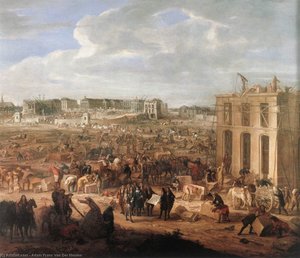
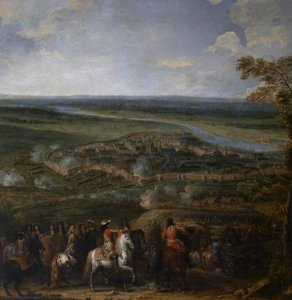
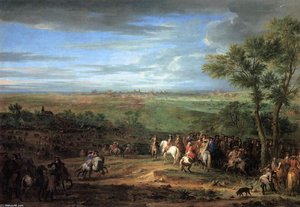
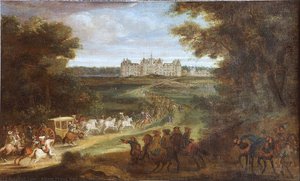
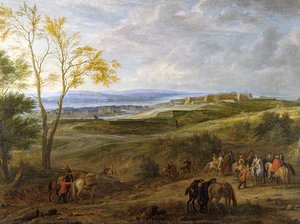
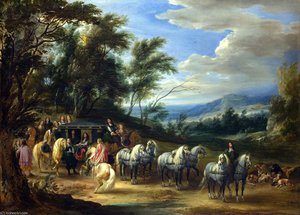
Van der Meulen's role at the Gobelins extended far beyond simple execution; he was deeply involved in conceptualizing and realizing complex narrative cycles. He wasn’t merely painting scenes; he was meticulously documenting Louis XIV’s military campaigns, accompanying the king on expeditions to Flanders and Burgundy, sketching battlefields, sieges, and strategic maneuvers with an almost obsessive attention to detail. These sketches served as the blueprints for the magnificent tapestries that would adorn the palaces of Versailles and other royal residences – a tangible representation of France's power and prestige. The “History of the King” series, depicting Louis XIV’s conquests, stands as perhaps his most significant achievement, showcasing not only his artistic skill but also his understanding of how to visually communicate political messages. Collaboration was paramount; Van der Meulen frequently worked alongside other Flemish artists like Adriaen Frans Boudewijns and Abraham Genoels, each contributing their expertise in landscape design and engraving, creating a truly collaborative masterpiece. The “Maison Royales” series, depicting the opulent palaces of Louis XIV, further demonstrated his versatility – capturing both the grandeur of architecture and the refined elegance of courtly life.
Style and Influence: A Baroque Vision
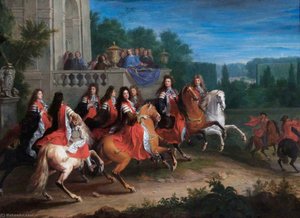
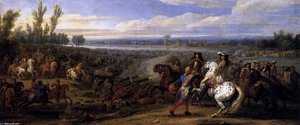
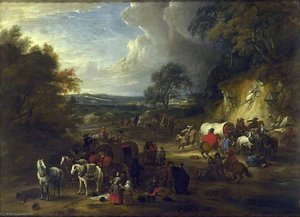
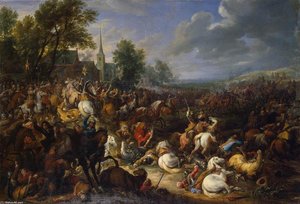
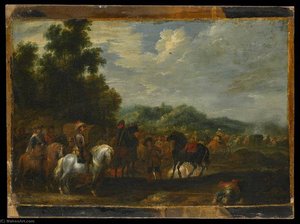
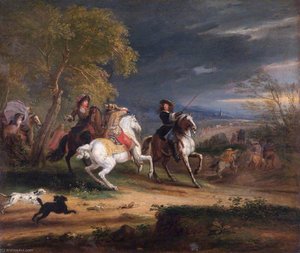
Van der Meulen’s artistic style is characterized by a remarkable dynamism and meticulous attention to detail. His battle scenes aren't static depictions; they pulsate with energy, conveying the chaos, drama, and sheer scale of warfare. He possessed an unparalleled ability to portray horses – capturing their power, grace, and movement with breathtaking realism – a skill that earned him considerable acclaim and was highly valued in the context of military painting. However, it’s crucial to recognize that his work wasn't solely driven by artistic merit; it served a clear propagandistic purpose, glorifying Louis XIV’s reign and projecting an image of invincibility. This focus on realism, combined with a deliberate emphasis on spectacle, profoundly influenced the development of military painting in France, establishing a style that would be emulated for generations to come. Beyond his tapestries, Van der Meulen received numerous honors – including a royal privilege allowing engravings of his works and appointment as “Ordinary Painter to the King” in 1673 – a testament to his established reputation and the value he brought to the French court. Adam Frans van der Meulen died in Paris in 1690, leaving behind a legacy not just as a skilled artist but as an instrumental figure in shaping the visual narrative of one of Europe’s most powerful monarchs. His detailed depictions of battles, landscapes, and courtly life continue to offer valuable insights into the era and stand as enduring examples of Baroque artistry serving a potent political purpose.