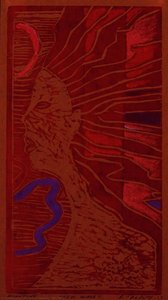
Ann Graves Tanksley (b. 1934)
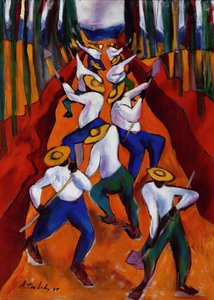
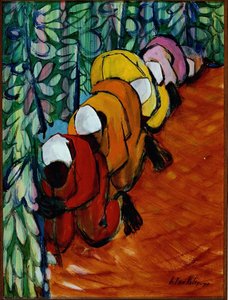
Ann Graves Tanksley is an American artist born in Pittsburgh, Pennsylvania in 1934. She stands as a prominent figure within the Black Arts Movement and her distinctive style—characterized by representational oils, watercolor, and printmaking techniques—captures the essence of African American cultural themes. Her artistic journey began with a simple fascination ignited by crayons and beads gifted to her during kindergarten, establishing a lifelong dedication to visual expression.
Early Life and Education
Born Marion B. Graves and Gertrude DiuGuid Graves, Tanksley’s upbringing in Pittsburgh's Homewood community profoundly shaped her worldview. From a young age, she demonstrated an innate aptitude for art, recognizing the transformative power of creative pursuits. Her formative years were marked by academic excellence—graduating from South Hills High School in 1952 and Carnegie Institute of Technology (now Carnegie Mellon University) in 1956 with a Bachelor of Fine Arts degree—laying the groundwork for her future artistic endeavors. Following graduation, she married fellow Homewood native John Tanksley and relocated to Brooklyn, New York, where he pursued a career as a photo re-toucher within the advertising industry.
Career Highlights
Tanksley’s professional life unfolded with significant milestones. Initially prioritizing family responsibilities, she transitioned into arts education, serving as an instructor at Queens Youth Center for the Arts from 1959–1962 and substitute instructor of art at Malvern Public Schools in 1971. Further enriching her artistic understanding, she undertook studies at the Arts League of New York and The New School for Social Research (Greenwich Village), delving into diverse artistic methodologies. Notably, she honed her printmaking skills at Robert Blackburn’s Printmaking Workshop, mastering the monotype technique—a method particularly resonant with her exploration of Zora Neale Hurston's literary inspirations. She was also a founding member of Where We At: Black Women Artists, Inc., fostering collaborative creativity within a vibrant artistic community. Her work gained recognition throughout the 1980s and 1990s, culminating in exhibitions showcasing her distinctive style and thematic concerns.
Influence and Artistic Style
Tanksley’s artistic vision was deeply influenced by Zora Neale Hurston—a novelist whose writings captivated her imagination during the 1980s. Inspired by Hurston's profound observations of Black life and culture, Tanksley embarked on a monumental project: creating over 200 pieces of monotypes and paintings that served as visual interpretations of Hurston’s narratives. This ambitious undertaking cemented her reputation as an artist dedicated to conveying complex human experiences through meticulous technique and evocative imagery. Her distinctive style—characterized by representational oils, watercolor, and printmaking—emphasizes simplicity and spontaneity, reflecting a commitment to capturing the essence of everyday life with sensitivity and nuance.
Notable Achievements
Ann Graves Tanksley’s artistic legacy extends beyond her individual creations; she has contributed significantly to the advancement of Black art scholarship and fostered collaborative creativity within the Where We At collective. Her artworks reside in prestigious collections—including the Johnson Publishing Company, Studio Museum in Harlem, national Museum of Women in the Arts, and The Hewitt Collection—testament to their enduring artistic merit and cultural significance. Tanksley’s unwavering dedication to her craft continues to inspire artists and audiences alike, solidifying her place as a pivotal figure within American art history.