David Alfaro Siqueiros (1896–1974) – A Life Forged in Revolution
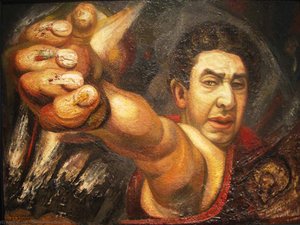
David Alfaro Siqueiros, born José de Jesús Alfaro Siqueiros in 1896 – though later research pinpointed his birthplace as Chihuahua City rather than Camargo – was more than just a painter; he was a force of nature, an embodiment of the tumultuous spirit of post-revolutionary Mexico. His life wasn’t confined to the studio but exploded onto the public stage, interwoven with political struggle and a relentless pursuit of art as a tool for social transformation. Early experiences shaped his trajectory: orphaned young, raised by his grandparents in Irapuato, Guanajuato, he was exposed to anarcho-syndicalist ideas that would deeply influence his worldview. This nascent political awareness blossomed during his student days at the Academy of San Carlos, where a protest against rigid teaching methods led to the establishment of an “open-air academy” – a defiant act marking the beginning of his artistic journey and foreshadowing a lifetime of challenging convention. The Mexican Revolution itself was the crucible in which Siqueiros’s artistic and political convictions were forged. He didn't merely observe the upheaval; he actively participated, joining the constitutional army and witnessing firsthand the hardships endured by working people and rural communities – experiences that would forever inform his art.Early Influences and Artistic Formation
Siqueiros’s formative years instilled in him a profound skepticism towards established institutions and a fervent belief in social justice. These convictions fueled his intellectual curiosity and propelled him toward anarchist thought, shaping his worldview before he even embarked on formal artistic training. His studies at the Academy of San Carlos proved pivotal, not only honing his technical skills but also fostering a rebellious spirit that would soon find expression in his groundbreaking approach to mural painting. The rejection of traditional academic methods – symbolized by the “open-air academy” – represented a deliberate defiance of convention and signaled Siqueiros’s determination to forge his own path as an artist, prioritizing experimentation and social engagement above all else. This rebellious impulse would continue throughout his life, driving him to confront injustice wherever he encountered it and advocating tirelessly for the rights of marginalized communities.European Immersion: Cubism and Renaissance Fresco Techniques
Between 1919 and 1923, Siqueiros undertook a transformative journey to Europe, immersing himself in the avant-garde currents reshaping the art world. This period wasn’t simply about mastering artistic techniques; it was an intellectual awakening fueled by exposure to revolutionary ideas. He absorbed the lessons of Cubism, particularly Cézanne's pioneering use of color and form, recognizing its potential for conveying emotional depth and challenging conventional perspectives. Simultaneously, he studied Renaissance fresco techniques in Italy – a skill that would become central to his monumental mural projects – demonstrating an impressive ability to synthesize disparate influences into a singular artistic vision. This meticulous attention to detail and mastery of traditional methods underscored Siqueiros’s belief in the importance of grounding innovation within established traditions.The Mexican Mural Movement: Revolution as Inspiration
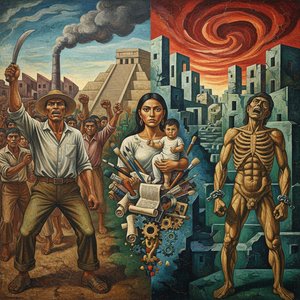
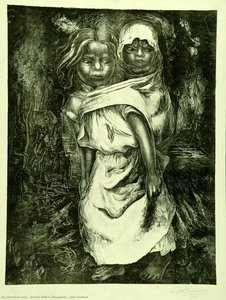
The eruption of the Mexican Revolution irrevocably altered Siqueiros's trajectory, transforming him from an idealistic student into a committed political activist. He joined the constitutional army, witnessing firsthand the brutal realities faced by ordinary Mexicans – poverty, exploitation, and violence – experiences that profoundly impacted his artistic sensibility. Recognizing the power of art to communicate complex ideas and inspire social change, he embraced the challenge posed by Diego Rivera and José Clemente Orozco to create large-scale murals that served as instruments of propaganda and education. This collaboration cemented Siqueiros’s place in history as one of the “big three” Mexican muralists—artists who redefined artistic expression through a commitment to social realism and revolutionary ideals.Monumental Murals: Technique, Symbolism, and Political Engagement
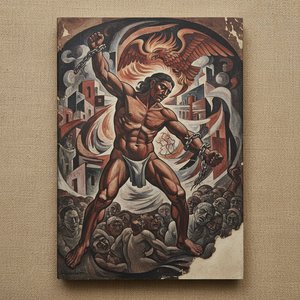
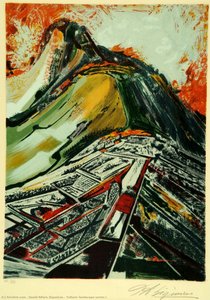
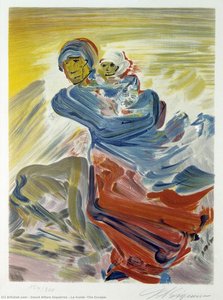
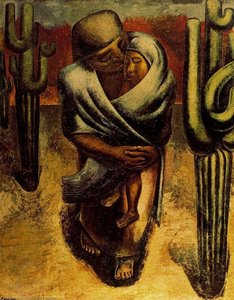
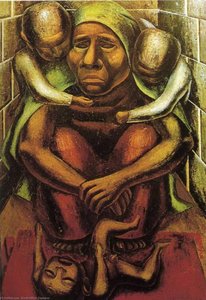
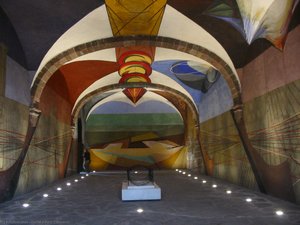
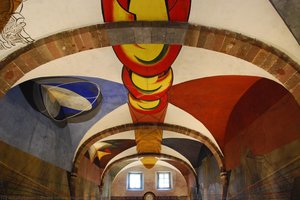
Siqueiros's murals stand apart from conventional art forms due to their sheer scale and innovative techniques. He championed the use of industrial paints sprayed from paint guns—a radical departure from traditional fresco methods—to expedite the process of decorating monumental buildings while simultaneously achieving unprecedented textural complexity. His compositions are dynamic, imbued with movement and energy, reflecting the turbulent spirit of his time. Bold colors and dramatic lighting amplify emotional impact, conveying messages of social justice and political resistance. Works like *The New Democracy*, *The Polished City,* and *March of Humanity* exemplify Siqueiros’s artistic vision—a fusion of sculptural treatment of forms and monumental scale designed to engage a wide audience and provoke contemplation about the human condition. His murals are not merely decorative; they are powerful statements about history, ideology, and the struggle for liberation. ## Legacy and Influence: Beyond Painting – A Voice for Revolution David Alfaro Siqueiros’s legacy extends far beyond his artistic output. He established himself as a tireless advocate for social justice and political activism—a conviction that fueled his involvement in labor movements and drove him to confront oppression wherever he encountered it. His pioneering use of industrial paint spraying techniques revolutionized mural painting, influencing generations of artists who followed him. Moreover, Siqueiros’s work profoundly impacted the Chicano art movement in the United States during the civil rights era—providing a visual language for expressing cultural identity and challenging systemic discrimination. He remains an enduring symbol of artistic courage and unwavering commitment to revolutionary ideals—a testament to the transformative power of art when wielded with conviction and purpose. His murals continue to inspire debate and contemplation, reminding us that art can serve as a catalyst for social change and a beacon of hope for those striving for a more equitable world.Въпроси и отговори
В кой град и държава е роден/а Дейвид Алфаро Сикеирос?
Дейвид Алфаро Сикеирос е роден в Хавао, Мексико.
Кога и къде е роден/а Дейвид Алфаро Сикеирос?
Дейвид Алфаро Сикеирос е роден в Хавао през 1896 г.
От коя държава е Дейвид Алфаро Сикеирос?
Дейвид Алфаро Сикеирос е роден в Мексико.