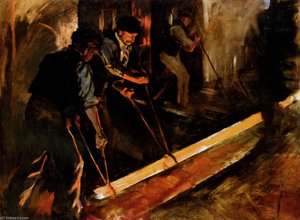
Elizabeth Forbes (1859–1912): The Queen of Newlyn and the Poetic Landscape
Elizabeth Adela Armstrong Forbes (née Armstrong; 29 December 1859 – 16 March 1912) stands as a remarkable figure in Victorian and Edwardian art history—a woman artist who defied societal expectations and achieved considerable renown, particularly within the vibrant Newlyn Art Colony. Born in Kingston, Ontario, Canada West, Forbes’s artistic journey began with a privileged upbringing steeped in intellectual curiosity and nurtured by her mother's unwavering support for creative pursuits. Her early education instilled in her a profound appreciation for observation and detail—qualities that would become hallmarks of her distinctive style.- Early Life & Education: Forbes received private instruction before embarking on formal studies at the South Kensington Art School (later Royal College of Art) in London, where she honed her skills in oil painting and printmaking.
- Influences: Her artistic sensibilities were profoundly shaped by luminaries like James Abbott McNeill Whistler—whose etching techniques instilled a meticulous attention to tonal subtleties—and Walter Sickert, who championed realism and psychological depth.
The Brittany Period and Plein Air Painting
A pivotal moment in Forbes’s artistic development arrived with her relocation to Pont-Aven, Brittany, in 1882. This immersion in the Breton landscape proved transformative, propelling her toward *plein air* painting—a technique that prioritized direct observation of nature as opposed to studio reproductions.This approach, championed by Whistler and fellow artists like Frank Cormack and Isaac Watts, allowed Forbes to capture the ephemeral beauty of twilight skies and coastal vistas with unparalleled sensitivity. Her canvases from this period resonate with a palpable atmosphere—evoking not merely visual impressions but also emotional responses.- Pont-Aven Style: Forbes’s paintings exemplify the Pont-Aven School's emphasis on tonal harmony and expressive brushwork, mirroring Whistler’s aesthetic vision.
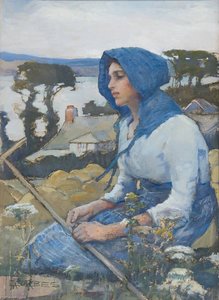
- Notable Works: Paintings from this era include *The Shepherdess*, a serene depiction of Breton rural life, and *The Moorland*, which captures the rugged grandeur of Dartmoor.
Newlyn School and Collaborative Artistic Endeavors
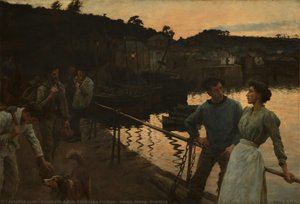
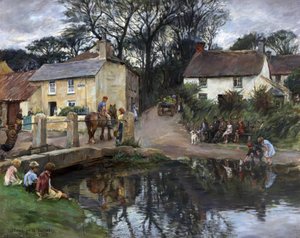
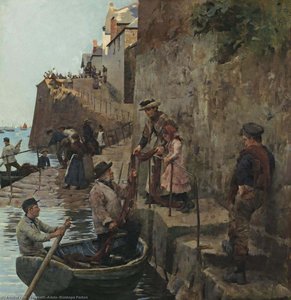
Determined to forge her own path in the art world—a realm dominated by male artists—Forbes established a studio in Newlyn, Cornwall, around 1885. This decision coincided with the burgeoning Newlyn Art Colony, where she joined forces with fellow painter Stanhope Alexander Forbes.Their partnership, marked by mutual admiration and shared artistic goals, fostered an environment conducive to experimentation and innovation.- Collaboration: Forbes and Forbes’s collaborative efforts produced iconic images of Cornish fishing communities—most notably *School Is Out*, which captures the carefree spirit of children at play amidst the coastal scenery.
- Newlyn School Legacy: Together, they founded the Newlyn Art School in 1899—a pioneering institution that nurtured the talents of aspiring artists and cemented Forbes’s reputation as a champion of artistic education.
A Landscape Poet and Recognition
Forbes's oeuvre is characterized by her ability to translate poetic ideas into visual form. Like Whistler, she sought to convey emotion through careful tonal manipulation—a technique that aligns with the broader Romantic tradition of artistic expression.Her landscapes, imbued with a sense of melancholy and contemplation, are not merely representations of scenery but rather meditations on human experience.- Whistler’s Influence: Forbes's etching style bears unmistakable traces of Whistler’s aesthetic principles—demonstrating his profound impact on her artistic vision.
- Awards & Exhibitions: Forbes garnered international acclaim for her work, securing medals at the Paris International Exhibition (1891) and the World’s Columbian Exposition in Chicago (1893). She participated in over 63 exhibitions in London between 1893 and 1899—establishing herself as one of Britain's most respected female artists.
Въпроси и отговори
В кой град и държава е роден/а Елизабет Адела Форбс?
Елизабет Адела Форбс е роден в Кингстън, Канада.
В коя историческа епоха е творил Елизабет Адела Форбс?
Елизабет Адела Форбс е творил в периода на XIX век. Този период определя историческия контекст на творчеството на художника.
Къде и през коя година е роден/а Елизабет Адела Форбс?
Елизабет Адела Форбс е роден в Кингстън през 1859 г.