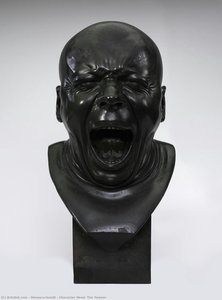
Franz Xaver Messerschmidt (1736-1783): Master Sculptor of Haunting ‘Character Heads’ – Intensely Expressive Busts Exploring Human Emotion & Psychology. A Unique Precursor to Expressionism
Franz Xaver Messerschmidt, born in the Bavarian village of Wiesensteig in 1736, stands apart from his contemporaries as a sculptor whose oeuvre possesses an unsettling blend of technical brilliance and psychological depth. He wasn’t merely responding to stylistic trends—a pivotal figure bridging the opulent Baroque and the nascent Neoclassical eras—but an artist who seemed to anticipate the visceral emotional core of Expressionism decades before its formal articulation. His life, interwoven with artistic ambition and escalating mental instability, constitutes a compelling narrative inextricably linked to his most enduring legacy: the “Character Heads,” busts that capture human emotion in states of raw, almost unbearable intensity. This singular vision distinguishes him from many other sculptors of his time—a testament to his profound engagement with the complexities of the human psyche.Early Years and Artistic Training
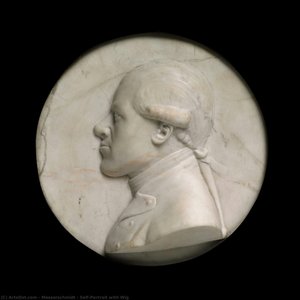
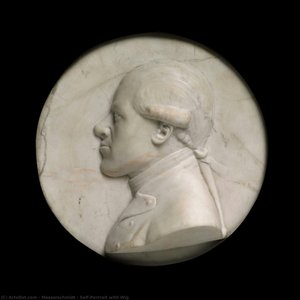
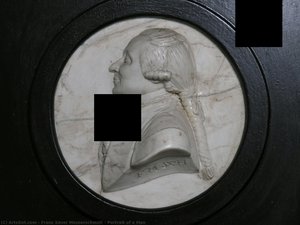
Messerschmidt’s formative years were steeped in familial tradition; he initially honed his craft under the tutelage of Johann Baptist Straub, his uncle, a sculptor residing in Munich. This foundational period instilled within him an unwavering mastery of Baroque techniques—a legacy that would inform his entire artistic trajectory. He continued this training through apprenticeships with Philipp Jakob Straub in Graz and subsequently at the Academy of Fine Arts Vienna, where Jacob Schletterer guided his development. These early commissions for Empress Maria Theresa—bronze busts and reliefs adhering to the conventions of courtly representation favored by artists like Balthasar Ferdinand Moll—demonstrated Messerschmidt’s aptitude for capturing grandeur and status with meticulous detail. He skillfully navigated the stylistic currents of his time, embodying the Baroque ideal of idealized beauty and noble bearing.The Genesis of Disquiet: The Character Heads
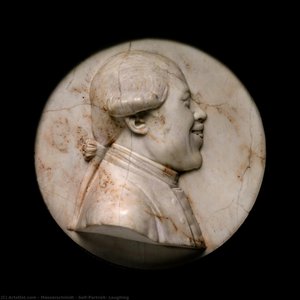
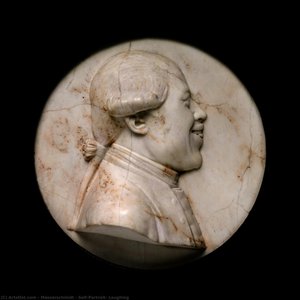
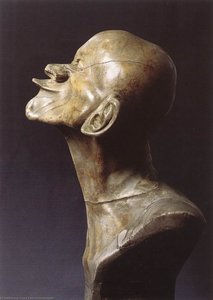
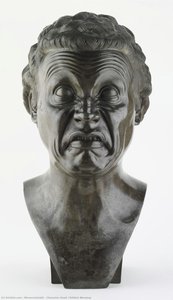
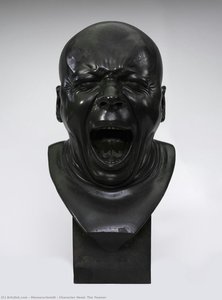
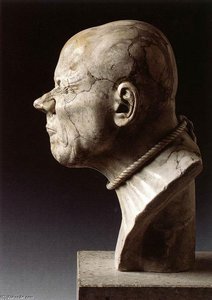
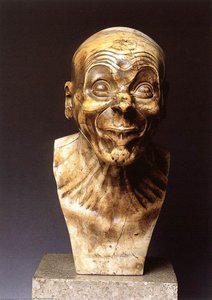
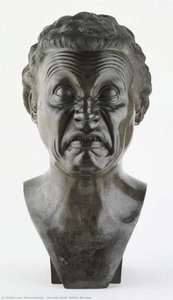
Around 1769-1770, however, a dramatic transformation occurred in Messerschmidt’s artistic sensibility—a rupture that would define his creative output. While accepting traditional portrait commissions remained a part of his practice, he embarked upon the creation of what would become his defining achievement: the “Character Heads.” These weren't portraits in the conventional sense; they eschewed flattering depictions and commemorative grandeur. Instead, they presented faces contorted in extreme emotional expressions—laughter bordering on hysteria, grief etched into every line, grimaces of anguish and despair. The impetus for this radical departure stemmed from Messerschmidt’s own intellectual pursuits—a fascination with Hermetic philosophy and a conviction that he could unlock universal truths about human emotion through artistic representation. Accounts from contemporaries, notably Friedrich Nicolai following his visit to Messerschmidt in 1781, illuminate the artist's peculiar method: he reportedly pinched his ribs, observing the resulting facial contortions in a mirror and attempting to replicate them in marble or bronze—a deliberate effort to access and portray authentic emotional states. This self-experimentation underscores Messerschmidt’s unwavering commitment to capturing the full spectrum of human experience—a departure from prevailing artistic conventions that foreshadowed later developments in Expressionism.A Synthesis of Baroque Tradition and Psychological Insight
Messerschmidt's early sculptures reflected the stylistic norms of his era, skillfully portraying power and nobility with meticulous attention to detail. However, his exploration of emotion transcended mere imitation; it demanded a profound understanding of human psychology—a quest for symbolic representation that anticipated the expressive fervor of Expressionist artists. His unwavering dedication to capturing the essence of human feeling distinguishes him from many sculptors of his time—a testament to his intellectual curiosity and artistic vision. The meticulous anatomical rendering characteristic of his Baroque works contrasts sharply with the unsettling psychological intensity conveyed by his Character Heads, highlighting Messerschmidt’s pioneering role in challenging artistic conventions.Legacy and Influence
Despite his expulsion from the Academy of Fine Arts in 1774—a consequence of his mental instability—Messerschmidt's influence endured beyond his lifetime. Scholars recognized his profound psychological insight embedded within these sculptures, acknowledging him as a precursor to Expressionism and an early explorer of the human psyche. His willingness to confront uncomfortable truths—to depict raw emotion without embellishment—challenged traditional artistic norms and paved the way for future generations of artists who sought to express inner experience rather than simply represent external reality. Today, Franz Xaver Messerschmidt is celebrated as a singular sculptor whose work continues to resonate with audiences captivated by its unsettling beauty and enduring exploration of human emotion—a legacy that transcends stylistic boundaries and affirms the transformative power of art. His Character Heads remain an unparalleled achievement in sculptural expression, embodying both technical mastery and profound psychological insight.Въпроси и отговори
С какви други имена е известен/а Франц Хайзер Мессершмидт?
Франц Хайзер Мессершмидт се появява и под алтернативните имена Мессершмидт.
Кога и къде е роден/а Франц Хайзер Мессершмидт?
Франц Хайзер Мессершмидт е роден в Вайсенштайн през 1736 г.
От коя държава е Франц Хайзер Мессершмидт?
Франц Хайзер Мессершмидт е роден в Бавария.