A Pioneer of Abstraction: The Life and Legacy of Hilla Rebay
Hilla Rebay, a name often overshadowed yet profoundly influential in the development of modern art, was more than just an artist; she was a visionary curator, a passionate advocate, and a pivotal figure in shaping the Guggenheim Museum into one of the world’s most celebrated institutions. Born Hildegard Anna Augusta Elisabeth Freiin Rebay von Ehrenwiesen in Strasbourg, Germany, in 1890, her life unfolded across continents and artistic movements, marked by an unwavering commitment to non-objective aesthetics and a remarkable ability to connect artists with audiences. Her journey began within the confines of aristocratic privilege, but it was a deep-seated creative spirit that ultimately propelled her beyond societal expectations, leading her to become a transformative force in the art world.Early Influences and Artistic Training
Rebay’s early years were steeped in the traditions of German aristocracy, yet from a young age, she demonstrated an exceptional aptitude for artistic expression. Her birthplace, Strasbourg – then part of the German Empire – provided an initial backdrop to a life destined to transcend national boundaries. She received a comprehensive education, initially focusing on traditional fine arts disciplines at the Cologne Kunstgewerbeschule and later at the Académie Julian in Paris. These formative years weren’t merely about mastering technical skills; they were about absorbing the visual language of the past – landscape painting, portraiture, genre scenes, and historical narratives – a foundation she would skillfully utilize before embarking on her radical departure into abstraction. Crucially, it was during this period that she encountered the burgeoning world of modern art in Munich, an encounter profoundly shaped by her exposure to Fritz Erler’s Jugendstil paintings. This experience ignited within her a curiosity about new artistic possibilities and a willingness to challenge established norms.The Seeds of Revolution: Encountering Avant-Garde Movements
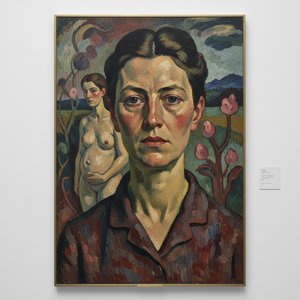
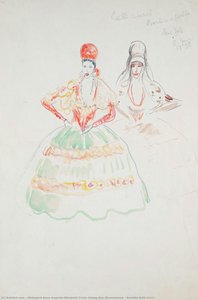
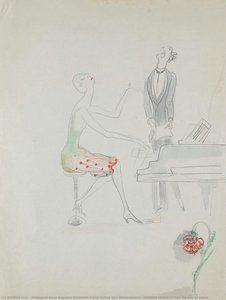
The year 1910 marked a turning point in Rebay's artistic trajectory. Her relocation to Munich exposed her to the vibrant energy of German avant-garde movements, most notably through her engagement with Archipenko and Brâncuși. These encounters were pivotal, prompting her to question traditional artistic conventions and explore new modes of expression. Her participation in exhibitions at the Cologne Kunstverein in 1912 and the Salon des Indépendants in Paris in 1913 brought her into direct contact with a constellation of influential artists – including Chagall, Delaunay, Gleizes, Rivera, and van Rees – further fueling her artistic experimentation. It was during this period that she began to develop her own distinctive style, characterized by bold colors, dynamic compositions, and an exploration of non-representational forms. The influence of Rudolf Bauer, a fellow artist and later lover, proved particularly significant, introducing her to the principles of Kandinsky’s abstract paintings and shaping her understanding of spirituality within art.A Partnership Forged in Vision: Shaping Solomon Guggenheim's Collection
The most consequential chapter in Rebay’s career unfolded when she met Solomon R. Guggenheim in Berlin in 1927. Their initial encounter blossomed into a passionate romance, and Guggenheim quickly recognized Rebay’s discerning eye and her deep understanding of modern art. He entrusted her with the monumental task of curating his burgeoning collection, a responsibility she embraced with unwavering dedication. Rebay didn't simply acquire artworks; she actively sought out groundbreaking artists – including Kandinsky, Bauer, Chagall, Delaunay, and Léger – championing their work and introducing them to American audiences. Her influence extended beyond the acquisition of individual pieces; she meticulously shaped Guggenheim’s overall vision for his collection, advocating for a focus on non-objective art and establishing a framework for its presentation. Her astute guidance was instrumental in transforming Guggenheim's initial holdings into one of the most comprehensive and influential collections of modern art in the world.The Birth of a Museum: Founding the Museum of Non-Objective Painting
In 1939, Rebay’s vision culminated in the establishment of the Museum of Non-Objective Painting – later renamed the Solomon R. Guggenheim Museum – in New York City. This ambitious undertaking represented not only a celebration of abstract art but also a bold statement about its potential to transcend traditional artistic boundaries and offer new pathways for spiritual exploration. Rebay’s role as the museum's first director was multifaceted, encompassing curatorial responsibilities, fundraising efforts, and public outreach initiatives. She oversaw the construction of the iconic building designed by Frank Lloyd Wright, a structure that perfectly embodied the museum’s commitment to modernism and its embrace of non-objective aesthetics. Her leadership ensured that the Guggenheim Museum became a global center for the study and appreciation of abstract art, solidifying her legacy as a pioneering figure in the art world.A Lasting Legacy
Hilla Rebay's impact extends far beyond the walls of the Guggenheim Museum. She was a tireless advocate for non-objective art, fostering dialogue around its aesthetic principles and challenging conventional notions of beauty. Her influence can be seen not only in the museum’s collection but also in the broader cultural landscape, where her vision continues to inspire artists and audiences alike. Despite facing personal challenges later in life, Rebay remained a passionate champion of modernism, leaving behind a remarkable legacy as a visionary curator, a dedicated artist, and a pivotal figure in shaping the course of 20th-century art. Her story serves as a testament to the power of artistic courage, unwavering dedication, and a profound belief in the transformative potential of abstraction.Въпроси и отговори
От коя държава е Hilla von Rebay?
Hilla von Rebay е роден в Франция.
В коя историческа епоха е творил Hilla von Rebay?
Hilla von Rebay е творил в периода на Модерно изкуство. Този период определя историческия контекст на творчеството на художника.