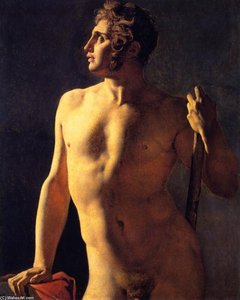
A Legacy of Line and Form: The World of Jean-Auguste-Dominique Ingres
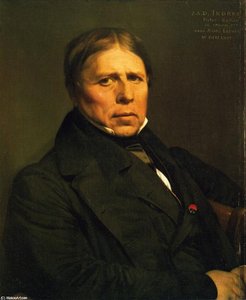
Jean-Auguste-Dominique Ingres, a name synonymous with Neoclassical precision and an almost sculptural approach to painting, occupies a unique position in the history of art. Born in Montauban, France, in 1780, his artistic journey was one of unwavering dedication to classical ideals, tempered by a burgeoning sensuality and a willingness to challenge convention. Ingres wasn’t merely replicating the past; he was engaging in a profound dialogue with it, forging a style that would both define an era and anticipate the revolutions to come. His work remains a testament to his meticulous observation, masterful draftsmanship, and a deep-seated belief in the power of line to convey emotion and form.His early life provided a solid foundation for his future artistic pursuits. His father, Jean-Marie-Joseph Ingres, was himself a painter and sculptor, instilling in young Dominique a love for form and technique from a tender age. This initial training was followed by studies at the Académie Royale de Peinture, Sculpture et Architecture in Toulouse, where he honed his skills under Guillaume-Joseph Roques. However, it was his move to Paris in 1797 and subsequent apprenticeship with Jacques-Louis David that truly set him on his path. David, the leading figure of Neoclassicism, imparted a rigorous discipline and an emphasis on line, form, and historical subject matter – principles that would remain central to Ingres’s work throughout his career.
The Pursuit of Ideal Beauty
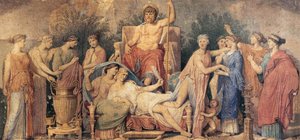
Ingres' artistic philosophy was deeply rooted in admiration for the Italian Renaissance masters—Raphael, in particular, served as a constant source of inspiration. He believed in the power of line to define form and convey emotion, striving for an idealized beauty that transcended mere representation. This pursuit is evident in his early works, such as The Ambassadors of Agamemnon in the Tent of Achilles (1801), which earned him the prestigious Prix de Rome. The painting showcases his meticulous attention to detail, precise draftsmanship, and a clear narrative focus—hallmarks of Neoclassical style. Ingres sought to capture not just the likeness of his subjects but also their essence, imbuing them with an aura of timeless grace and dignity. He meticulously studied anatomy and perspective, striving for perfect harmony between form and space.
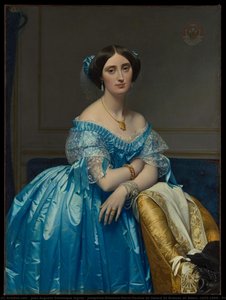
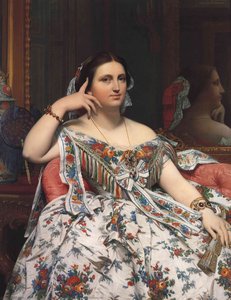
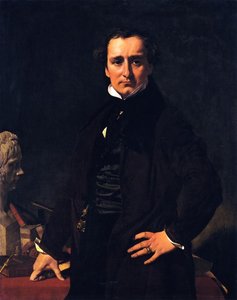
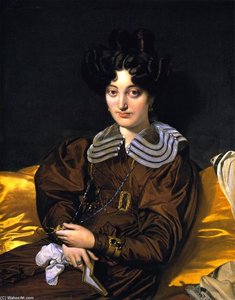
However, Ingres wasn’t simply a copyist of classical models. He gradually developed a distinctive voice, infusing classical principles with a unique blend of sensuality and psychological insight. His portraits, in particular, demonstrate this evolution. While maintaining the formal elegance characteristic of Neoclassicism, he began to subtly distort forms and spaces, creating an unsettling yet captivating effect that foreshadowed the expressive distortions of later movements like Cubism. Portrait of Monsieur Bertin (1833-1834), with its elongated hands and intense gaze, is a prime example of this innovative approach – a study in controlled tension and psychological depth.
Beyond History: Orientalism and Late Masterpieces
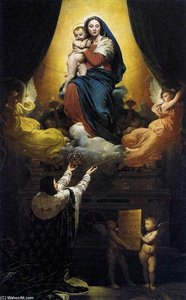
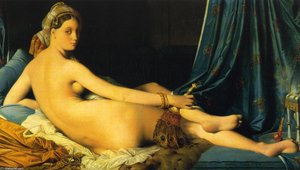
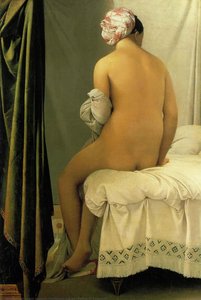
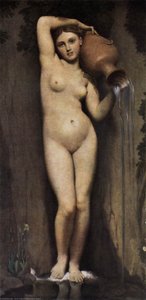
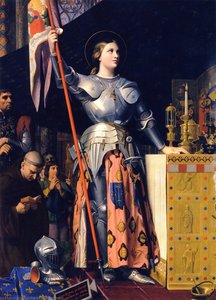
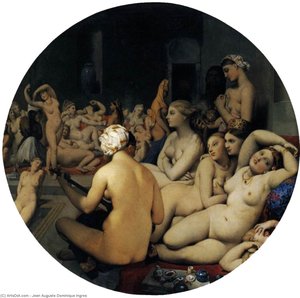
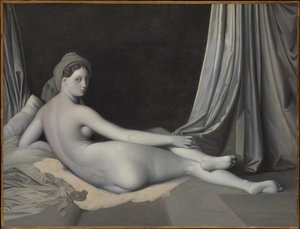
While celebrated for his historical and mythological paintings—like The Vow of Louis XIII (1827)—Ingres also explored other genres, most notably Orientalism. His depictions of exotic scenes and female nudes, such as The Turkish Bath (1862), completed when he was an astonishing 83 years old, reveal a fascination with the sensual and the mysterious. These works, though sometimes criticized for their idealized representations, demonstrate his continued willingness to experiment and push boundaries. He often employed rich colors and dramatic lighting to evoke a sense of atmosphere and intrigue, drawing inspiration from both classical art and his own imaginative vision. Grande Odalisque (1814) is perhaps the most famous example of this period, capturing a moment of languid beauty with remarkable skill and sensitivity.
Ingres’s later career saw him navigate a changing artistic landscape. The rise of Romanticism challenged the dominance of Neoclassicism, but Ingres remained steadfast in his commitment to classical ideals while simultaneously incorporating elements of Romantic sensibility into his work. He became a highly influential teacher, shaping the next generation of artists and solidifying his position as a bridge between tradition and modernity. His influence extended beyond painting, impacting drawing, printmaking, and even architecture.
A Lasting Influence
Jean-Auguste-Dominique Ingres died in Paris in 1867, leaving behind a legacy that continues to resonate today. His emphasis on line, form, and idealized beauty profoundly influenced artists across generations. Remarkably, his work captivated even those who championed radically different styles—artists like Henri Matisse and Pablo Picasso admired his innovative approach to composition and his ability to imbue classical forms with a sense of vitality and emotion. Ingres’s paintings are now housed in major museums around the world, serving as testaments to his enduring artistic vision. He remains a pivotal figure in art history—a master who not only preserved the traditions of the past but also paved the way for the future.
Notable Works
- The Ambassadors of Agamemnon in the Tent of Achilles (1801)
- The Vow of Louis XIII (1827)
- Portrait of Monsieur Bertin (1833-1834)
- The Turkish Bath (1862)
- Grande Odalisque (1814)
Въпроси и отговори
В коя историческа епоха е творил Жан-АUGUST Дьомѝнѝк Ингрѐ?
Жан-АUGUST Дьомѝнѝк Ингрѐ е творил в периода на XIX век. Този период определя историческия контекст на творчеството на художника.
В кой град и държава е роден/а Жан-АUGUST Дьомѝнѝк Ингрѐ?
Жан-АUGUST Дьомѝнѝк Ингрѐ е роден в Монтана, Франция.
Къде и през коя година е роден/а Жан-АUGUST Дьомѝнѝк Ингрѐ?
Жан-АUGUST Дьомѝнѝк Ингрѐ е роден в Монтана през 1780 г.