James Carroll Beckwith (1852-1917): A Life Etched in Realism
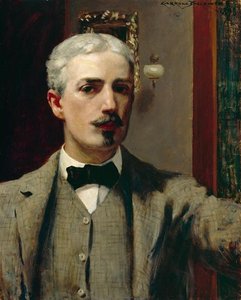
James Carroll Beckwith, born September 23rd, 1852, in Hannibal, Missouri—a town steeped in literary history thanks to Twain’s *Huckleberry Finn*—was an American landscape, portrait and genre painter whose naturalist style cemented his reputation as a respected figure in late nineteenth and early twentieth-century American art. His artistic journey began amidst considerable hardship; the Great Fire of Chicago in 1871 tragically destroyed much of his initial creative endeavors, forcing him eastward toward New York City and ultimately propelling him across the Atlantic to Paris—a pivotal relocation that irrevocably shaped his artistic development.Parisian Refinement and Artistic Foundations
Beckwith’s formative years in Paris (1873-1878) represent a cornerstone of his artistic legacy. Recognizing his prodigious talent, Carolus Duran entrusted him with assisting on a monumental mural project for the Palais du Luxembourg—a commission that exposed Beckwith to the grandeur of large-scale composition and demanded mastery of technique. Simultaneously, he honed his skills under Adolphe Yvon’s tutelage at the École des Beaux Arts and cultivated an enduring friendship with John Singer Sargent, sharing studio space and exchanging artistic philosophies. These influences instilled within Beckwith a profound appreciation for meticulous observation, refined draughtsmanship, and a sophisticated understanding of color and light—qualities that would characterize his mature style and distinguish him from many of his contemporaries. He absorbed the prevailing aesthetic currents of Impressionism and Academic Painting alike, maintaining a distinctly American sensibility while embracing European artistic traditions.A Prominent Voice in American Art
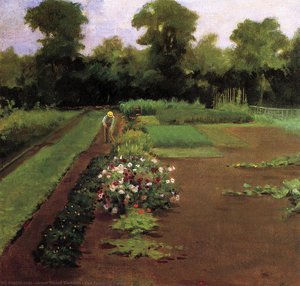
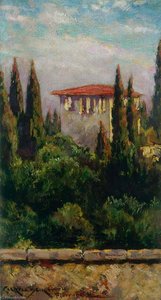
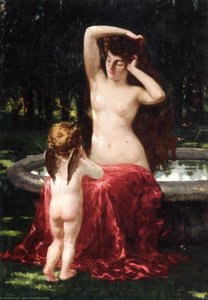
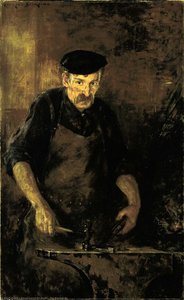
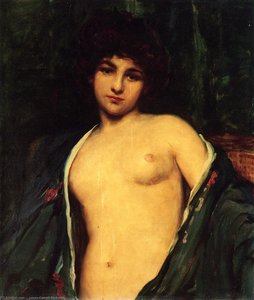
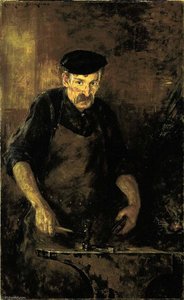
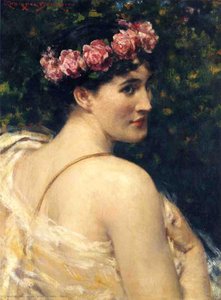
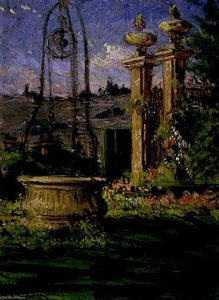
Returning to the United States in 1878, Beckwith swiftly established himself as a leading voice within the burgeoning American art scene. He secured a professorship at the Art Students League of New York—a position he held intermittently for nearly two decades—where he instilled his artistic principles into countless aspiring artists. His dedication to realism and accuracy was evident in his prolific output, encompassing landscapes imbued with atmospheric subtlety alongside portraits that captured not merely physical likenesses but also psychological depth. Beckwith’s canvases frequently depicted serene rural vistas—particularly Normandy—and intimate domestic scenes—such as “Brunette Combing Her Hair”—reflecting a fascination with capturing the beauty of everyday life and conveying nuanced emotional states. He was particularly celebrated for his portraits of prominent figures, including William Merritt Chase, Mark Twain, Theodore Roosevelt, and Thomas Allibone Janvier – works that stand as testament to his exceptional artistic skill and perceptive understanding of human character.Notable Achievements and Artistic Style
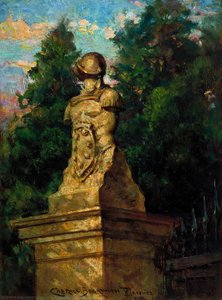
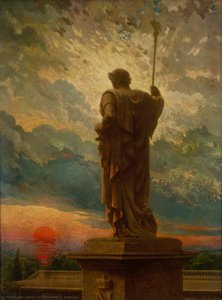
Beckwith’s artistic style—characterized by meticulous detail, tonal harmony, and a masterful command of color—became synonymous with the naturalist tradition. He eschewed the expressive distortions favored by Impressionists, prioritizing instead an objective representation of reality informed by scientific observation. His paintings often featured monumental architectural subjects—such as Notre Dame Cathedral—rendered with breathtaking precision and imbued with solemn grandeur. Beckwith’s artistic output was recognized internationally; he received numerous awards including honorable mentions at the Paris Exposition of 1889 and gold medals at both the Atlanta Exposition in 1895 and the Exposition Universelle in Paris in 1899—affirming his status as one of America's most respected painters. His enduring legacy resides not only in his stunning visual creations but also in his role as a teacher who nurtured artistic excellence and instilled a commitment to truthful representation within generations of students.A Lasting Influence
James Carroll Beckwith’s contribution to American art transcends mere stylistic innovation; it embodies a steadfast devotion to artistic integrity and a profound engagement with the human condition. His paintings continue to inspire admiration for their beauty, accuracy, and emotional resonance—serving as enduring reminders of a remarkable artist who navigated the complexities of his era with grace, intellect, and unwavering conviction. Beckwith’s meticulous approach to artmaking—combined with his humanist sensibilities—solidifies his place among the titans of American realism and ensures that his artistic vision persists for years to come.Въпроси и отговори
В коя историческа епоха е творил Джеймс Каролл Бъквийт?
Джеймс Каролл Бъквийт е творил в периода на XIX век. Този период определя историческия контекст на творчеството на художника.
Къде и през коя година е роден/а Джеймс Каролл Бъквийт?
Джеймс Каролл Бъквийт е роден в Ханнабил през 1852 г.
В кой град и държава е роден/а Джеймс Каролл Бъквийт?
Джеймс Каролл Бъквийт е роден в Ханнабил, Съединени американски щати.