The Life and Art of Marcel Duchamp
Born on July 28, 1887, in Blainville, Normandy, France, Marcel Duchamp entered a world where the impulse to create was deeply embedded in his very blood. He was the fourth of seven children born to Eugene and Lucie Duchamp. This was a household of makers and thinkers; his siblings shared this creative restlessness, as his brothers Jacques Villon and Raymond Duchamp-Villon, along with his sister Suzanne Duchamp-Crotti, all pursued lives as artists. While he would eventually become a French American figure of immense complexity, his origins remained rooted in the quietude of Normandy.
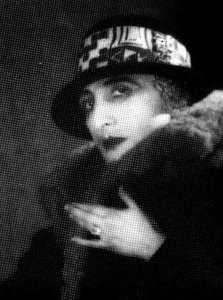
His life was never a singular pursuit of the brush or the chisel. He was a man of many masks and many interests, moving through the world as an artist, an inventor, and a dedicated chess player. He even adopted a female alter ego, Rrose Sélavy, to further complicate the boundaries of identity. This restless spirit drove him to move between the cultural centers of Paris and New York, always seeking to dismantle the certainties of his era. He did not merely want to paint the world; he wanted to rethink the very mechanics of how we perceive it.
His contributions to the modern era were as varied as they were unexpected. He looked toward the machine and the everyday object to find a new language for the intellect. His work often appeared in these forms:
- Fountain
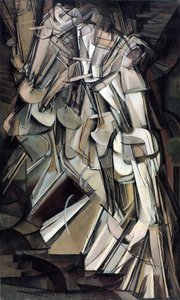
- Nude Descending a Staircase, No. 2
- The Large Glass
- Bicycle Wheel
Early Life, Family and Training
In the quietude of Blainville-Crevon, Normandy, France, a young boy named Henri-Robert-Marcel Duchamp began a life that would eventually unsettle the very foundations of creativity. He was born into a family where art was a familiar language; his brothers, Jacques Villon and Raymond Duchamp-Villon, would both find their own paths as painters and sculptors. This domestic atmosphere of expression nurtured his early inclinations, leading him toward the formal study of art. He sought out the Académie Julian in Paris, where he spent his time between 1904 and 1905, though his heart often wandered toward the billiards table rather than the studio. He also spent a year at the Ecole des Beaux Artes, a period of study that did not result in a long-term commitment to academic tradition.
The colors and forms of his youth were shaped by the shifting tides of the era, as he found himself drawn to the intense palettes of Fauvism and the structural inquiries of Post-Impressionism. However, his path was not a straight line of academic progression. In 1905, the requirements of the state called him to begin his compulsory military service with the 39th Infantry Regiment. During this time, he found himself in Rouen, working for a printer. It was here, amidst the scent of ink and the rhythm of the press, that he mastered the technicalities of typography and various printing processes. These practical skills, learned far from the high salons of Paris, would later inform his understanding of how objects and images are reproduced and perceived.
Artistic Evolution in Paris
As the young artist moved through the streets of Paris, his presence in the art world began to take shape through the major exhibitions of the time. By 1909, he was already showing his work at the Salon des Indépendants and the Salon d’Automne, seeking a place among the creators of his era. He found himself drawn to the ideas of Paul Cézanne, whose approach to form and structure left a mark on his developing vision. This period was not merely about learning to paint, but about finding a way to express the complexities of a changing world.
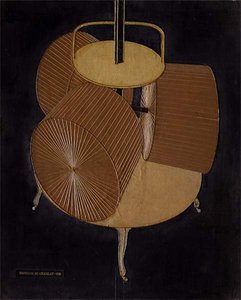
The year 1911 brought a significant shift as he became associated with a Cubist group. This engagement with fragmented forms and multiple perspectives pushed him away from traditional representation. It was during this time that he produced Coffee Mill, a work that signaled his growing interest in the mechanical and the conceptual. He found himself preoccupied with the idea of the fourth dimension, seeking ways to depict motion and time within the static confines of a canvas. This intellectual hunger drove him to look beyond the surface of things, questioning how much of art was truly meant for the eye alone.
The Radical Years in New York
Upon arriving in the United States, Marcel Duchamp found himself in a landscape that was ripe for the disruption he carried in his mind. He had been in the country for less than two years when he would perform his most famous act of subversion. In the bustling intellectual circles of New York, he was welcomed with curiosity, finding a place among thinkers and creators who were eager to push against the boundaries of tradition. To sustain himself during these formative years, he taught French, a practical necessity that allowed him the freedom to pursue his more cerebral interests.
It was within this environment that he became a central figure in the New York proto-Dada movement. He moved through the city alongside Francis Picabia, Man Ray, and Beatrice Wood, contributing to a spirit of rebellion that sought to dismantle the established order. His presence helped to shape the very foundations of the New York Dada movement, turning the city into a laboratory for ideas that challenged the very definition of what an artist might do. He was not merely a participant in this upheaval; he was a catalyst for it.
His connection to the American landscape deepened over the decades. Though he had arrived as a visitor seeking new ways to express the intellect, he eventually became a naturalized American citizen in 1955. This period of his life was defined by a refusal to settle into the comfortable role of a professional painter, choosing instead to engage with the city as a space for profound, often unsettling, conceptual inquiry.
Technique, Style and the Readymade
He grew weary of what he called "retinal art," those works intended only to please the eye with their surface beauty. To escape this trap, he turned his mind toward the concept behind the object, shifting the focus from visual pleasure to the intellect. This transition led him to create the readymades around 1914. These were not chosen for their beauty or their ugliness, but through a sense of visual indifference. By selecting ordinary, manufactured items and presenting them as art, he stripped away the necessity of traditional craftsmanship. He sought to bypass the artist's hand entirely, favoring the power of a deliberate choice over the skill of the brush.
His practice was a restless, shifting thing that refused to settle into a single mode. While he engaged with the fractured perspectives of Cubism, he also moved through the chaos of Dada and the cerebral depths of Conceptual art. He worked with a vast array of mediums, from the tactile nature of sculpture and collage to the fleeting qualities of short films and even the presence of his own body. He often played with the boundaries of identity, using a female alter ego known as Rrose Sélavy to explore the fluidity of gender. Through wordplay and the element of chance, he turned the act of creation into a game of logic and subversion.
- Fountain (1917)
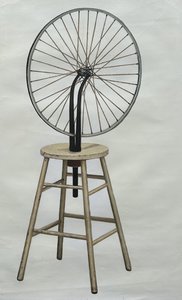
- Bicycle Wheel (1913)
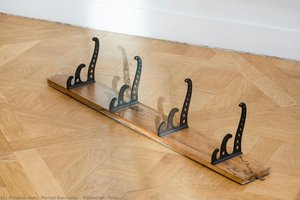
- Bottle Rack (1914)
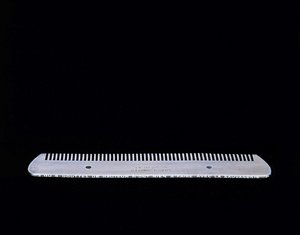
- Comb (1916)
Key Works and Major Innovations
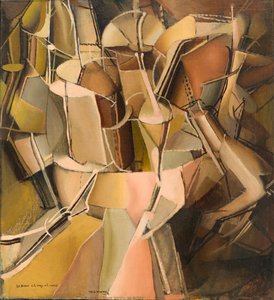
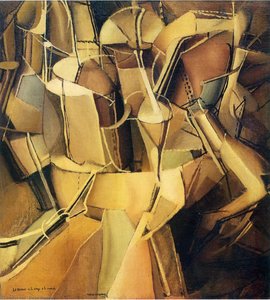
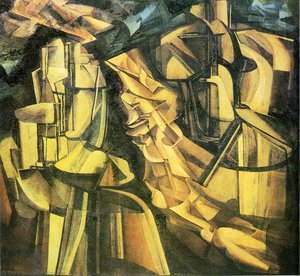
The shift from painting to the conceptual began to take shape through his fascination with motion and the fragmentation of form. In 1912, he produced Nude Descending a Staircase, No. 2, a work that captured the mechanistic motion of a figure through a series of overlapping, superimposed facets. This approach sought to depict movement rather than a static pose. By 1913, his interests moved toward the assembly of found objects, seen in the Bicycle Wheel, where a wheel and fork were mounted upon a wooden stool. This act of selection marked a departure from traditional craftsmanship, favoring the idea over the manual execution of the object.
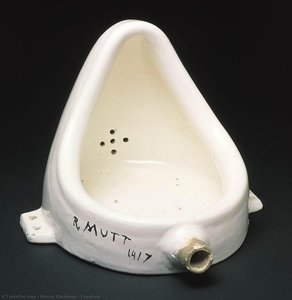
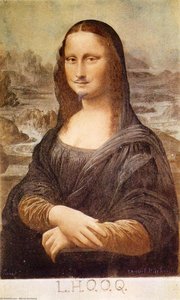
As he moved into the radical atmosphere of New York, his provocations grew more direct. He took an ordinary porcelain urinal, signed it "R. Mutt," and presented it as Fountain in 1917. This readymade sculpture challenged the very definition of what an artist does, suggesting that the act of choosing an object could constitute art. He continued this subversion with the Bottle Rack in 1914, and later, in 1919, he took a postcard of the Mona Lisa and defaced it with a mustache and goatee, calling the work L.H.O.O.Q.. These pieces were intended to disrupt the viewer's expectations and force a reconsideration of aesthetic judgment.
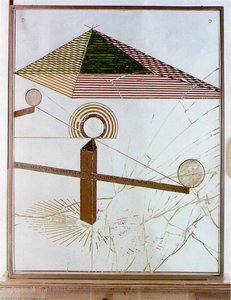
His most complex and enigmatic construction, The Large Glass, occupied his thoughts for many years, as he worked on it between 1915 and 1923. This piece, also known as The Bride Stripped Bare by her Bachelors, Even, utilized lead foil and wire to explore intricate, symbolic imagery. Through these varied experiments, he moved the focus of art away from the eye and toward the mind.
Later Years and Death
After his restless years in America, Duchamp returned to Paris in 1923. He remained in the city until 1942, a period during which he largely stepped away from the traditional art world. The intellectual rigor that once fueled his radical provocations found a new outlet in the quiet, strategic complexities of chess. He spent much of this time focused on the game, a pursuit that demanded the same mental intensity he had once applied to his conceptual inquiries.
In 1954, he found companionship in Alexina Sattler, whom he married in a ceremony in New York City. Their life together was a devoted one, spanning the years as he navigated his place in a changing cultural landscape. He eventually became a naturalized citizen of the United States in 1955, though his roots remained deeply tied to the French soil. He passed away on October 2, 1968, in Neuilly-sur-Seine, France.
Legacy and Enduring Influence
The ripples from his provocations reached far beyond the small circles of the avant-garde, eventually reshaping the very foundations of how we perceive creativity. He is often regarded as the progenitor of conceptual art, a shift that moved the focus away from the physical object and toward the intellect. By prioritizing the idea over the visual result, he fundamentally altered the trajectory of the plastic arts during the opening decades of the 20th century. This change was not a sudden break but a slow, profound transformation that allowed for the emergence of Surrealism, Minimalism, and Pop Art. He helped define a new era where the artist's intent became the primary engine of meaning.
His influence was felt most strongly in the way he dismantled the necessity of traditional skill. He proposed a concept known as the art coefficient, an idea that examined the relationship between what an artist intends and what is actually expressed. This notion laid the groundwork for a later generation of artists who would continue to explore the boundaries of appropriation and the role of the spectator. He did not merely create objects; he created new ways of thinking about the act of creation itself. His presence in the history of art remains a constant, challenging the boundaries of what can be considered a work of art.
- Fountain (1917)
- Nude Descending a Staircase, No. 2 (1912)
- The Large Glass (1915–1923)
- Bicycle Wheel (1913)
Where to See the Works Today
To follow the traces of his restless intellect, one might travel to the Philadelphia Museum of Art. This institution holds the largest collection of his work, preserving the breadth of a career that refused to stay still. It is here that the weight of his influence is most tangible, as the museum keeps a vast assembly of his ideas and objects gathered from across his life.
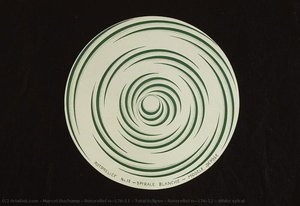
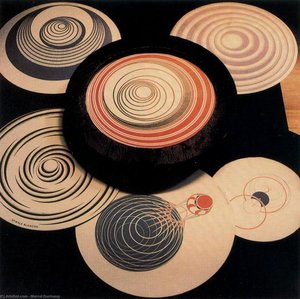
In London, the Tate Modern preserves the porcelain urinal known as Fountain. This object, which once caused such a stir when it was submitted to an exhibition, remains a central part of the city's collection. Meanwhile, the Centre Pompidou in Paris keeps his more experimental, kinetic explorations, including Rotorelief n°11 and Rotorelief n°12. These works reflect his fascination with motion and the way an object might trick the eye.
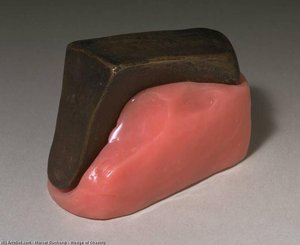
Other pieces have found homes in specialized institutions that reflect his varied interests. The Monnaie de Paris holds Trébuchet (Trap), a work that speaks to his continued engagement with form and concept long after his early years. To see these works is to encounter the physical remnants of a man who sought to move art from the eye to the mind.
- Nude Descending a Staircase, No. 2 (1912)
- The Large Glass (1915–1923)
- Bicycle Wheel (1913)
- Bottle Rack (1914)
Въпроси и отговори
С какви псевдоними или алтернативни имена е известен Марсел Дюшан?
Марсел Дюшан се появява и под алтернативните имена Рроз Селави, Анри-Робер-Марсел Дюшан.
Къде и през коя година е роден/а Марсел Дюшан?
Марсел Дюшан е роден в Блейнвил-сюр-Мер през 1887 г.
От коя държава е Марсел Дюшан?
Марсел Дюшан е роден в Франция.