

A Chronicle of Wonder: The American Museum of Natural History
Stepping into the American Museum of Natural History is akin to embarking on a journey through time itself—a sprawling, breathtaking testament to humanity’s enduring fascination with the natural world and our place within it. More than simply a repository of specimens, the AMNH stands as a vibrant, living chronicle, meticulously assembled over centuries and radiating an almost palpable sense of discovery. Founded in 1869 by naturalist Albert S. Bickmore, driven by a profound belief that scientific knowledge should be freely accessible to all, the museum’s evolution has been as remarkable as its collection—a story etched into the very architecture of its twenty-one interconnected buildings. From its humble beginnings within Central Park's Arsenal, the AMNH blossomed through deliberate design, mirroring the boundless curiosity that fuels its mission. The initial Romanesque arches, a nod to the museum’s early commitment to classical scholarship, intertwine with Beaux-Arts grandeur, culminating in the Rose Center for Earth and Space’s futuristic silhouette—each edifice whispering tales of geological epochs and artistic innovation. This architectural tapestry isn't merely aesthetic; it’s a carefully orchestrated narrative mirroring the museum's own expansive story—a testament to both scientific rigor and the enduring human desire to understand our origins.
Dinosaur Halls: Giants Frozen in Time
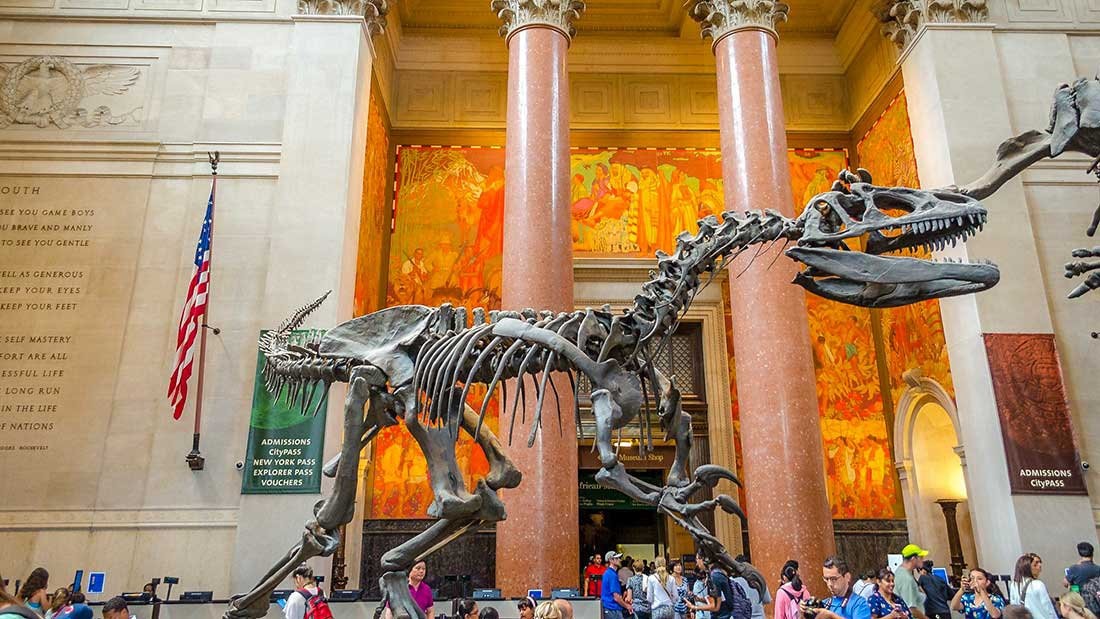
These iconic spaces are undoubtedly the museum’s most celebrated feature. Towering *Tyrannosaurus rex* and *Stegosaurus* skeletons command attention, but it's the meticulous reconstruction of these prehistoric giants—the painstaking detail in their bones, the vibrant colors applied to their skin – that truly captivates. The recent discovery of “Apex,” a remarkably complete *Stegosaurus*, exemplifies the museum’s ongoing commitment to paleontological research and public engagement. More than just static displays, these halls are brought to life through the artistry of Charles Robert Knight, whose detailed dinosaur paintings established a visual language for paleontology, transforming these ancient creatures into tangible realities. The sheer scale of these behemoths evokes a sense of awe and wonder, reminding us of the immense forces that shaped our planet’s history – a testament to both scientific accuracy and artistic interpretation.
Ocean Life: A Submerged World
Descend into the Hall of Ocean Life and be transported to an underwater realm teeming with life. From colossal blue whales, dwarfing entire buildings, to shimmering coral reefs bursting with color, this hall showcases the astonishing diversity of marine ecosystems. The immersive exhibits highlight the delicate balance of these environments and the urgent need for conservation – a poignant reminder of our responsibility as stewards of the planet’s oceans. The museum's commitment extends beyond mere observation; it seeks to educate visitors about the complex interactions within marine habitats, fostering a deeper appreciation for the fragility of this vital ecosystem.
The Rose Center for Earth & Space: A Window to the Cosmos
Rising majestically above the museum’s sprawling grounds is the Rose Center for Earth and Space—a mesmerizing journey into astrophysics and cosmology. Designed by Michael Graves, the building's distinctive geodesic sphere dominates the skyline, inviting visitors to contemplate the scale of the universe and fostering a profound appreciation for our place within cosmic grandeur. Inside, interactive displays bring complex scientific concepts to life, allowing visitors to explore the formation of stars, the expansion of the universe, and the search for extraterrestrial life. The Hayden Planetarium, housed within the sphere, offers breathtaking views of the night sky—a truly unforgettable experience that ignites a sense of wonder and curiosity. The Rose Center isn’t simply an exhibition space; it's a hub for research and education, attracting scientists from around the world who contribute to our understanding of the cosmos. The center’s commitment extends beyond public displays, fostering a deeper engagement with scientific inquiry through lectures, workshops, and collaborative projects.
A Legacy Forged in Exploration & Artistic Inspiration
The AMNH's story is inextricably linked to the spirit of exploration that characterized the 19th and 20th centuries. Early expeditions, spearheaded by figures like Charles Robert Knight, brought back specimens from remote corners of Earth—from the jungles of South America to the icy plains of Antarctica—fueling scientific breakthroughs and captivating public imagination. Knight’s dinosaur paintings established a visual language for paleontology, transforming these ancient creatures into tangible realities. Furthermore, James Lippitt Clark's animal sculptures and wildlife filmmaking revolutionized how we perceive the natural world, capturing its essence with remarkable fidelity. The museum’s archives hold a wealth of original artwork, photographs, and field notes documenting these pioneering expeditions—offering a rare glimpse into the lives and work of the individuals who shaped our understanding of the planet. Today, the AMNH champions diverse voices and perspectives – as evidenced in exhibitions like “Shaping the Future Through Tradition,” featuring multimedia works by Indigenous artists – a powerful reminder of cultural preservation and artistic innovation. The museum’s architecture itself—a masterful blend of historical styles and modern design—is a testament to this enduring legacy, inviting visitors to lose themselves in a world of discovery and inspiration.