
The Library of Trinity College Dublin – A Sanctuary of Knowledge
The very approach to Trinity College Dublin prepares one for an encounter with something extraordinary, but it is the Old Library that truly commands attention—Thomas Burgh’s masterpiece completed in 1732. Its imposing facade isn't merely architecture; it’s a symbolic gateway to centuries of accumulated wisdom and artistic achievement, hinting at the treasures held within its walls. Founded alongside the college in 1592, the Library’s story is inextricably linked with the cultural evolution of Ireland itself, evolving from a scholarly haven into both a vital academic resource and a national treasure trove. To step inside is to enter a space where time seems to slow, and the weight of history becomes palpable. The air hums with the quiet energy of countless minds engaged in study and contemplation across the ages.- A Legacy of Scholarship: From its earliest days as a monastic scriptorium to its transformation into Ireland’s premier university library, Trinity College Dublin has fostered intellectual curiosity and nurtured generations of scholars.
- The Architectural Marvel: Burgh's Old Library stands as a testament to Palladian design—a deliberate echo of classical ideals—characterized by symmetrical proportions, grand windows, and meticulous ornamentation. Its soaring ceilings and marble busts inspire awe and reverence in visitors.
- Iconic Treasures: Among its holdings are the Book of Kells, arguably Ireland’s most celebrated manuscript; the Long Room, housing over 200,000 volumes dating back to the 17th century; and the Brian Boru Harp—a symbol of Irish identity and musical heritage.
- A Pivotal Role in Irish History: The Library witnessed key moments in Ireland’s struggle for independence, hosting a copy of the Proclamation of Independence and serving as a focal point for intellectual debate during periods of upheaval.
- Contemporary Engagement: Today, Trinity College Dublin continues to champion learning and creativity through its diverse collections and exhibitions—a vibrant blend of tradition and innovation that reflects Ireland’s evolving cultural landscape.
The Book of Kells – An Explosion of Color and Detail
At the heart of this remarkable institution resides arguably its most famous inhabitant: *The Book of Kells*. This 9th-century illuminated manuscript is not simply a religious text, but an explosion of vibrant color and intricate detail—a testament to the profound devotion and unparalleled skill of Celtic monks. The Gospel of Mark, Matthew, Luke, and John are brought vividly to life through painstaking artistry, transporting viewers back to Ireland’s Golden Age. Standing before its pages feels like encountering a sacred object, imbued with spiritual power and artistic genius. Each folio is adorned with meticulously crafted borders, interwoven with stylized animals—lions, eagles, serpents, and unicorns—representing virtues and theological concepts. The vibrant pigments—derived from minerals such as lapis lazuli, cinnabar, and azurite—were painstakingly applied using quill pens and brushes, resulting in a breathtaking visual spectacle that continues to captivate audiences worldwide.- Celtic Symbolism: The intricate borders and animal motifs reflect Celtic cosmology and symbolism—beliefs about the cosmos, divine beings, and the interconnectedness of all things.
- Technique and Craftsmanship: The creation of *The Book of Kells* demanded extraordinary technical skill—the ability to grind pigments into powders, prepare inks, and apply them with precision onto parchment using specialized tools.
- A Window Into Medieval Ireland: Studying *The Book of Kells* provides invaluable insight into the artistic sensibilities and intellectual pursuits of medieval Ireland—a period marked by religious fervor, scholarly innovation, and a flourishing cultural tradition.
The Long Room – A Cathedral of Books
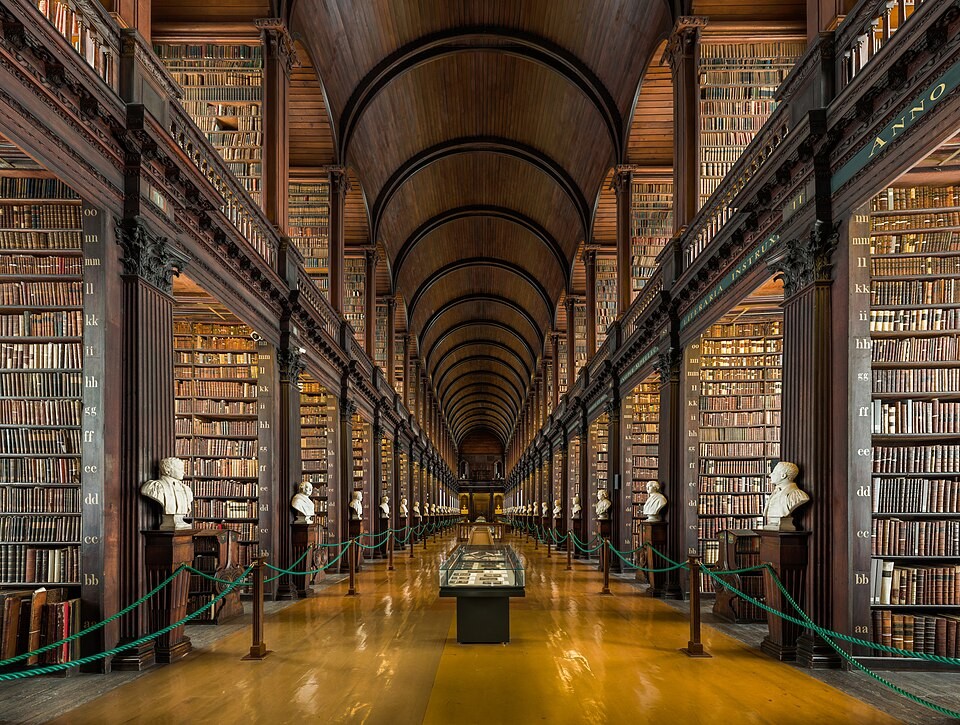
The Long Room, a magnificent two-story hall housing over 200,000 of the library’s oldest books, offers an experience unto itself. Towering shelves stretch towards arched ceilings, lined with ancient volumes that whisper tales of forgotten eras. Marble busts of prominent figures gaze down upon visitors, creating an atmosphere of awe and reverence. The room's central chandelier—a masterpiece of Georgian craftsmanship—illuminates the books with a warm glow, casting shadows that dance across the walls. Constructed in 1732 as part of Burgh’s Old Library, it embodies the grandeur and elegance of Palladian architecture—a deliberate homage to classical ideals. Visitors can marvel at the sheer scale of the collection—spanning centuries of literary history—and contemplate the enduring legacy of scholarship and intellectual curiosity.- Palladian Influence: The Long Room’s design reflects the Palladian style—characterized by symmetry, proportion, and grandeur—a stylistic choice that underscored Trinity College’s commitment to upholding classical traditions.
- A Showcase of Rare Books: Among its treasures are first editions of Shakespearean plays, manuscripts penned by Irish poets such as Yeats and Joyce, and volumes documenting the history of Ireland—testaments to the enduring power of literature and scholarship.
- Atmosphere and Inspiration: The Long Room’s serene ambiance—enhanced by the soft glow of candlelight—creates an environment conducive to contemplation and intellectual exploration—a space where visitors can reconnect with the spirit of learning and creativity.
Brian Boru Harp – A Symbol of Irish Identity
The Brian Boru Harp, a medieval Gaelic harp representing one of only three surviving examples from that period—a poignant symbol of Irish identity and musical heritage—is housed in the Eavan Boland Library. Dating back to the 12th century, this instrument embodies the artistic traditions of Ireland’s early medieval era—characterized by craftsmanship, ornamentation, and melodic expression. The harp's intricate carvings depict stylized animals—lions, eagles, serpents, and unicorns—reflecting Celtic symbolism and cosmological beliefs. Its delicate strings vibrate with haunting melodies—a testament to the enduring legacy of Irish music and storytelling.- Celtic Tradition: The harp represents a cornerstone of Irish musical heritage—a tradition that stretches back millennia and continues to inspire musicians and artists today.
- Medieval Craftsmanship: The harp’s construction demanded exceptional skill—the ability to carve intricate designs into wood, stretch strings with precision, and tune instruments accurately—reflecting the advanced craftsmanship of medieval artisans.
- Cultural Significance: The Brian Boru Harp serves as a powerful reminder of Ireland’s cultural past—a period marked by artistic innovation, religious devotion, and a rich oral tradition—a legacy that continues to resonate in contemporary Irish culture.
Architectural Dialogue – Tradition Meets Innovation
The Library’s significance extends far beyond its artistic treasures; it is deeply intertwined with pivotal moments in Irish history. A copy of the 1916 Proclamation of the Irish Republic, a document declaring Ireland's independence from British rule, resides within its walls—a powerful reminder of the nation’s struggle for freedom and self-determination. The Library has not remained static throughout its long existence. While the Old Library stands as a testament to classical architecture, subsequent additions reflect evolving styles and needs. The Eavan Boland Library, originally constructed in 1967 and recently renamed in 2024 after the celebrated Irish poet, presents a striking Brutalist contrast. Modern expansions like the Lecky Library and James Ussher Library offer contemporary study spaces while seamlessly integrating with the historic core of the complex. This architectural dialogue—between tradition and innovation—speaks to the Library’s enduring relevance and its commitment to serving both present and future generations.- Contrasting Styles: The juxtaposition of Burgh's Old Library—a Palladian masterpiece—with more recent additions—such as Brutalist structures—demonstrates Trinity College Dublin’s willingness to embrace new architectural approaches while preserving its historic identity.
- Spatial Harmony: Careful consideration has been given to the layout and design of each building—creating spaces that foster collaboration, contemplation, and intellectual exploration—reflecting the evolving needs of students and researchers alike.
- A Reflection of Irish History: The architectural developments throughout Trinity College Dublin’s history mirror broader trends in Irish society—from the Enlightenment to the Postmodern era—providing a tangible record of Ireland's cultural transformation.