

Introduction
The decade between 2010 and 2019 marked a transformative era for the British art scene, characterized by a profound tension between traditional craftsmanship and the disruptive influence of street art and digital culture. As the United Kingdom navigated significant social and political shifts, its artists responded with a diverse visual language that moved seamlessly from the gritty, subversive messages of urban landscapes to the deeply psychological explorations of contemporary portraiture. This period was defined by a refusal to be pigeonholed, where the boundaries between high-end gallery aesthetics and public intervention became increasingly blurred.
During these years, the creative output from the United Kingdom reflected a sophisticated dialogue with the past. While some practitioners embraced the raw, gestural energy of neo-expressionism, others utilized the canvas to interrogate identity, race, and the human condition through a lens of modern abstraction. This era was not merely about a specific style, but about a shared spirit of inquiry—a way of seeing the world that was simultaneously rooted in the historical weight of British art history and propelled by the rapid, often chaotic, pulse of the 21st century.
These works remain vital today because they capture a specific cultural zeitgeist, documenting a moment when the art world was redefining what constitutes a masterpiece in a globalized, interconnected age. They serve as visual chronicles of a decade that challenged the status quo and expanded the boundaries of what can be expressed through paint, stencil, and mixed media. The following selection highlights ten significant works and artists from this prolific period, offering a window into the diverse and powerful voices that shaped the British aesthetic during the 2010s.
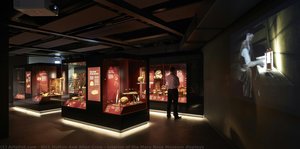
Interior of the Mary Rose Museum displays - Nick Hufton And Allan Crow
 Interior of the Mary Rose Museum displays - Nick Hufton And Allan Crow
In this evocative black and white photograph, the viewer is immediately drawn into the structured, layered environment of the Mary Rose Museum. The composition leads the eye through a series of curated exhibits, where historical artifacts, sculptures, and paintings are presented within a sophisticated architectural framework. A striking element of the scene is the presence of at least thirteen individuals dispersed throughout the space; some linger near the displays while others recede into the distance, providing a vital sense of scale and human connection to the maritime history on view. A solitary clock on the wall serves as a quiet, functional anchor within the frame, grounding the scene in a specific moment of observation.
Created in 2013, this work exemplifies the contemporary British photographic movement of the 2010s. Through the lens of Nick Hufton and Allan Crow, the museum is transformed into a study of light, shadow, and form. By utilizing a monochromatic palette, the artists strip away the distraction of color to emphasize the textures of the artifacts and the dramatic lines of the museum's interior, capturing the reflective atmosphere of a space where history is held in quiet suspension.
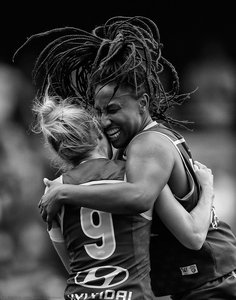
AFLW 2017 Grand Final - Brisbane v Adelaide - Michael Andreas Willson
 AFLW 2017 Grand Final - Brisbane v Adelaide - Michael Andreas Willson
Created in 2017, this monochromatic work by Michael Andreas Willson stands as a poignant representative of British contemporary photography within the 2010s. The piece captures a singular, high-stakes instance of human connection during the AFLW Grand Final, focusing on a celebratory embrace between two female athletes. By stripping away the vibrant colors of the Brisbane and Adelaide teams, Willson utilizes a black and white aesthetic to emphasize the interplay of light and shadow, elevating a sporting event into a study of raw emotion and camaraderie.
The composition employs a shallow depth of field, causing the stadium background to recede into a soft blur. This technical choice isolates the subjects, forcing the viewer to confront the tactile textures of the scene: the grit of the court, the fabric of the athletic uniforms, and the intense physical presence of the players. Through this documentary-style approach, the image transcends mere sports journalism, serving instead as a powerful portrait of resilience and the profound joy found in collective triumph. It remains a significant visual record of the emotional weight defining the inaugural AFLW season.
Shop Until You Drop - Banksy
 Shop Until You Drop - Banksy
Created in 2012, Shop Until You Drop serves as a quintessential example of the subversive street art that defined British visual culture during the 2010s. This piece utilizes Banksy's signature stencil technique, a method characterized by its graphic immediacy and ability to deliver sharp social commentary within urban environments. The composition is defined by a dynamic, diagonal trajectory of a woman seemingly plummeting through the air, clutching a shopping cart overflowing with groceries. This sense of uncontrolled descent is anchored by the structured, geometric forms of the cart against the organic, flowing lines of the human figure.
The color palette is intentionally restrained, relying heavily on grayscale tones and muted blue-grey hues that contrast against the weathered, textured backdrop of vertical wooden planks. This juxtaposition of flat, stencil-applied spray paint and the rough, tactile quality of the wood emphasizes the theme of urban decay. Through this minimalist approach, the work offers a biting satire on consumerism, suggesting that the act of shopping serves as a form of consolation amidst the chaotic momentum of modern capitalism.
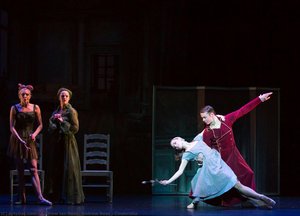
Cinderella - Andrew Ian Ross, Andrew Ross
 Cinderella - Andrew Ian Ross, Andrew Ross
Created in 2015, Cinderella is a compelling example of British contemporary photography from the 2010s, capturing the ephemeral grace of live ballet. The work freezes a high-tension moment of theatrical storytelling, where the stage is alive with electric energy and dramatic lighting. The composition is defined by a dynamic diagonal movement, as a male dancer in a striking red jacket reaches toward a female dancer whose light blue dress catches the spotlight. This interplay of primary colors—red and blue—against a dark, grounding background of shadows creates a profound sense of romantic enchantment.
Technically, the piece utilizes a shallow depth of field to isolate the central performers, rendering their fluid, curvilinear poses in sharp focus while the background recedes into a soft, atmospheric blur. This technique emphasizes the physical exertion and the emotional intensity of the choreography. Through the careful use of theatrical spotlights and contrasting textures—from the smooth fabric of the costumes to the polished stage floor—the work transforms a fleeting gesture into a permanent study of light, shadow, and human connection.
Maze - Andrew Ian Ross, Andrew Ross
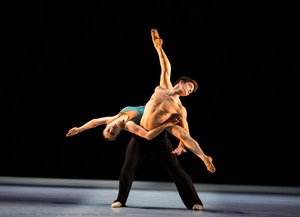 Maze - Andrew Ian Ross, Andrew Ross
Created in 2015, Maze is a compelling example of contemporary British photography from the 2010s. This work, attributed to Andrew Ian Ross and Andrew Ross, captures a singular, high-tension moment of balletic partnership. Set against a profound, matte black void, the composition strips away all environmental distractions, forcing the viewer to confront the raw physicality of the dancers. The male dancer serves as a steady, architectural pillar, providing the essential support required for the female dancer to extend into a graceful, arabesque-like position.
The visual language of the piece is defined by dynamic geometry and chiaroscuro-style lighting. Strong diagonal lines are formed by the interlocking limbs of the performers, creating organic shapes that cut through the darkness. The dramatic spotlighting emphasizes the musculature and the subtle sheen of skin, highlighting the themes of strength, trust, and absolute coordination. By isolating the subjects in a void, the work transforms a fleeting performance into a timeless study of human connection and poise, making it a significant representative of the decade's photographic explorations of movement.
Condor and The Mole - Lynette Yiadom Boakye
 Condor and The Mole - Lynette Yiadom Boakye
Lynette Yiadom Boakye’s 2011 piece, Condor and The Mole, serves as a profound example of the evocative portraiture emerging from the United Kingdom during the 2010s. This work captures a serene, almost timeless moment between two young girls standing near a rocky shoreline. The composition is defined by a calm atmosphere, where the subjects appear to be sharing a quiet, focused observation of something just beyond the frame. The palette is anchored by a dominant rosy brown tone, which lends a warmth and organic depth to the scene, contrasting with the starker elements of the beach setting.
The artist’s technique is characterized by a masterful use of color and form to create figures that possess a striking, direct presence. In this specific work, the presence of an orange bag provides a subtle, vibrant puncture to the more muted, natural tones of the landscape. Through her signature approach, Yiadom Boakye moves beyond mere likeness, using the medium of oil to explore identity and narrative through a lens of raw, expressive color and light.
Love Interruption - Benjamin Flynn
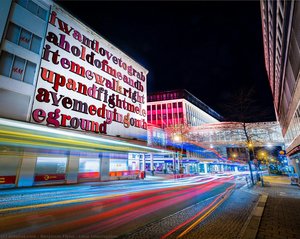 Love Interruption - Benjamin Flynn
Created in 2012, Love Interruption serves as a striking testament to the evolution of British street art during the 2010s. This piece highlights the career of Benjamin Flynn, the London-based artist also known as Ben Eine, who transitioned from a three-decade history in graffiti writing to becoming a global figure in large-scale muralism. This specific work belongs to the 2010s group of British art due to its emergence during this decade of urban transformation, where graphic lettering moved from clandestine tags to monumental public statements.
The work captures a vibrant nighttime scene in an urban setting, characterized by a bustling atmosphere of pedestrians and city transit. Dominating the composition is a monumental mural of imposing red letters, a signature of Flynn's style, which stands in sharp contrast against the dark, nocturnal backdrop. The interplay between the bold, graphic typography and the lively movement of the city street creates a sense of visual tension, turning a piece of architecture into a profound, large-scale visual statement that defines the aesthetic energy of the era.
Tambourine - Lynette Yiadom Boakye
 Tambourine - Lynette Yiadom Boakye
Lynette Yiadom Boakye’s Tambourine serves as a profound example of the creative evolution occurring within British art during the 2010s. This work exemplifies the artist's unique approach to portrait painting, where she moves beyond mere likeness to construct imagined characters. Unlike traditional portraiture, these figures are not tied to specific historical identities or settings, but exist in a timeless, psychological space.
In Tambourine, the subject is a man seated on the ground, his posture relaxed with hands behind him, wearing a white shirt that stands out against a deep, monochromatic background. His subtle smile and casual stance lend a sense of warmth and humanity to the composition. Utilizing a technique she describes as "one-shot painting," Yiadom Boakye often completes her works in a single day, resulting in a raw, immediate energy. The stark contrast between the subject and the dark palette emphasizes the figure's presence, showcasing a mastery of light and shadow that defines her contribution to the contemporary British canon.
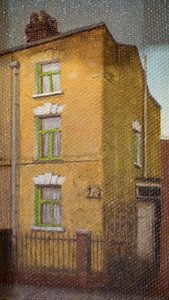
25 Cromwell Street - Robert Priseman
In his 2011 oil painting, 25 Cromwell Street, Robert Priseman offers a compelling study of the British domestic landscape, a work that exemplifies the nuanced Contemporary Realism prevalent in United Kingdom art during the 2010s. The piece captures a three-story residence, characterized by a vibrant yellow facade and contrasting green trim, rendered with a rhythmic precision that elevates the mundane to the monumental. Through a sophisticated application of oil on canvas, Priseman transforms a simple street scene into a meditation on architectural permanence and the quiet dignity of urban life.
The composition is defined by its symmetrical windows and twin chimneys, which provide a sense of structural stability and calm. Priseman, an artist whose work often navigates complex socio-political themes, demonstrates a remarkable ability here to find beauty in the everyday. The interplay of sunny yellows and deep greens creates a visual harmony that evokes a profound sense of nostalgia. This work stands as a significant example of how 2010s British painters utilized traditional mediums to explore the intersection of memory, place, and the enduring character of the built environment.
The Arcadia Spider - Sarah Ginn
 The Arcadia Spider - Sarah Ginn
Created in 2017, The Arcadia Spider stands as a striking example of contemporary photography within the landscape of British art from the 2010s. This work by Sarah Ginn captures a massive mechanical spider sculpture, utilizing a low-angle perspective that emphasizes the machine's imposing, industrial scale. The composition is characterized by a dynamic, almost chaotic energy, as a crowd of figures moves through the foreground, grounding the immense structure against the organic complexity of the human form.
The visual language of the piece is defined by a dramatic interplay of light and shadow. A monochromatic intensity, dominated by a warm clay tone, settles over the scene, punctuated by flashes of amber, saffron, and gold that cling to the metallic surfaces. These warm hues contrast sharply against the darker surroundings, carving out the spider's rigid, angular geometry. The result is a still record of a monumental moment, evoking a sense of awe and spectacle through its bold chromatic unity and the tension between mechanical rigidity and human movement.
Conclusion
The diverse expressions found within this collection of British works from the 2010s reveal a decade of profound stylistic evolution, ranging from the subversive street art of Banksy to the nuanced, figurative explorations of Lynette Yiadom Boakye. Each artist contributes a unique perspective to the contemporary British canon, whether through the textured abstraction of Robert Priseman or the evocative, atmospheric compositions of Sarah Ginn. Together, these pieces capture a moment in time where traditional techniques met modern social commentary and experimental aesthetics, creating a rich tapestry of visual storytelling. For those looking to explore more from this era, you can browse our full collection. At Mus3ums.com, we invite you to bring these powerful movements into your own living space through our museum-quality, hand-painted oil reproductions, meticulously crafted to preserve the soul and texture of these modern masterpieces.