The Mathematical Vision of Felix Klein
Felix Klein, born in Düsseldorf, Germany, in 1849 and passing away in Göttingen in 1925, was far more than a mathematician; he was a visionary who reshaped our understanding of geometry and its relationship to art and the physical world. While not a painter himself, his profound theoretical work provided a framework for visualizing complex forms that deeply resonated with artists exploring abstraction and non-Euclidean spaces in the late 19th and early 20th centuries. His life was dedicated to unifying disparate branches of mathematics under elegant, overarching principles, a quest that ultimately led to breakthroughs impacting fields far beyond academia. Klein’s initial studies at the University of Bonn were followed by doctoral work focusing on non-Euclidean geometry – a radical departure from traditional mathematical thought. This early fascination with geometries that challenged Euclid's axioms would become a defining characteristic of his career. He wasn’t simply interested in proving these new systems existed, but in understanding their inherent properties and how they related to the familiar Euclidean world.
Erlangen Program and Geometric Transformation
Klein is most celebrated for his *Erlangen Program*, presented as his habilitation thesis in 1872. This groundbreaking work proposed a revolutionary way of classifying geometries not by their specific metric properties (like distance or angles), but by the types of transformations that leave them invariant. Imagine, for instance, a shape remaining unchanged when rotated, reflected, or scaled – these are geometric transformations. Klein argued that each geometry is defined by its unique group of symmetries. Euclidean geometry, he explained, is characterized by transformations preserving distances and angles; projective geometry by those preserving straight lines; hyperbolic geometry by those preserving cross-ratios. This abstract approach provided a powerful unifying language for the entire field. The implications were enormous. It wasn’t about choosing *the* correct geometry, but recognizing that all geometries are equally valid, each possessing its own internal logic and aesthetic qualities. This concept of transformation would later prove crucial in understanding concepts like perspective in art and the warping of space-time in physics.
Impact on Visual Representation
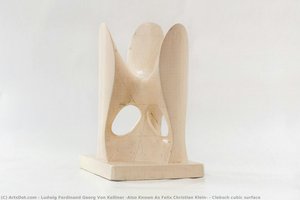
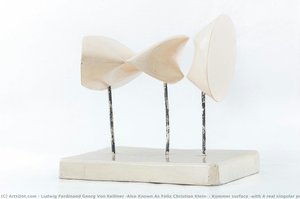
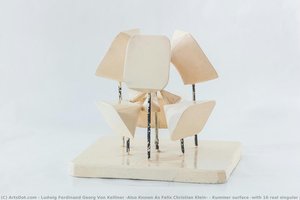
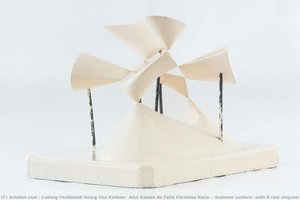
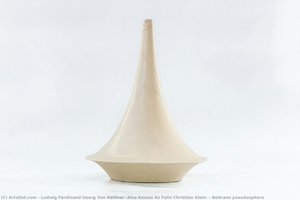
Although Klein didn’t directly create artworks, his mathematical models—particularly those illustrating non-Euclidean geometries and surfaces—had a significant impact on visual culture. His visualizations of complex forms, such as the *Kummer surface* (with both 4 and 16 real singular points) and the *Beltrami pseudosphere*, offered artists new ways to conceptualize space and challenge traditional notions of perspective and representation. These weren’t merely abstract diagrams; they were explorations of previously unseen worlds. Artists like M.C. Escher, though not directly influenced by Klein's work in a documented way, intuitively grasped the principles of geometric transformation that Klein formalized. The distortions, impossible constructions, and tessellations found in Escher’s art can be seen as visual manifestations of the ideas explored within the Erlangen Program. Furthermore, his work laid the groundwork for understanding fractal geometry, which would become central to computer-generated imagery and digital art decades later.
Later Life and Legacy
Klein's influence extended beyond pure mathematics. He became a leading figure in German education, advocating for a more intuitive and visual approach to teaching mathematical concepts. He served as director of the Mathematical Institute at Göttingen, attracting some of the brightest minds of his generation and fostering a collaborative environment that propelled mathematical research forward. His textbooks were widely adopted and helped shape generations of mathematicians. He also made significant contributions to other areas of mathematics including group theory, number theory, and function theory.
- Kummer Surface Studies: Klein’s detailed investigations into the Kummer surface provided a visual and mathematical framework for understanding complex algebraic surfaces.
- Group Theory Research: His work on group theory had profound implications for crystallography, physics, and other scientific disciplines.
- Felix Christian Klein's Influence on Art: While not an artist himself, his mathematical models inspired new ways of visualizing space and challenging traditional representation.
Historical Significance
Felix Klein’s legacy is one of unification and abstraction. He didn’t just solve problems; he fundamentally changed the way mathematicians *thought* about geometry. The Erlangen Program remains a cornerstone of modern mathematical thought, providing a powerful framework for understanding the relationships between different geometric systems. His emphasis on visualization and intuitive understanding made mathematics more accessible and inspired generations of researchers to explore new frontiers.
His work continues to resonate today, bridging the gap between abstract theory and concrete visual experience, reminding us that mathematics is not merely a collection of formulas but a powerful language for describing and interpreting the world around us.