The Radiant Legacy of Josefa de Óbidos
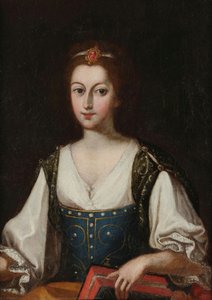
Josefa de Óbidos, born as Josefa de Ayala Figueira, remains one of the most luminous and enduring figures of the Portuguese Baroque era. Though her journey began in the vibrant, sun-drenched atmosphere of Seville, Spain, in 1630, her artistic soul was irrevocably shaped by the landscapes and traditions of Portugal, where she moved at the tender age of four. Raised under the watchful eye and tutelage of her father, an artist whose influence provided the essential foundation for her technical prowess, Josefa emerged not merely as a student but as a master in her own right. Her work, often signed with the evocative name 'josefa em óbidos' or 'josefa de ayalla', carries the profound weight of a deep connection to her adopted homeland, blending Spanish vitality with a uniquely Portuguese intimacy and grace.A Tapestry of Still Life and Sacred Devotion
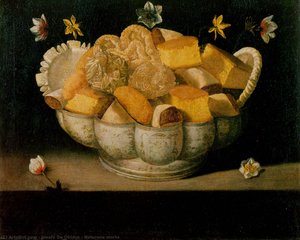
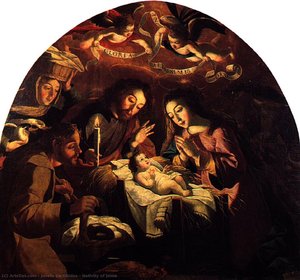
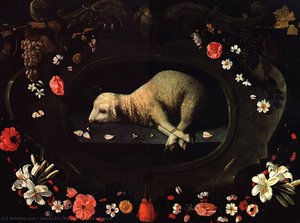
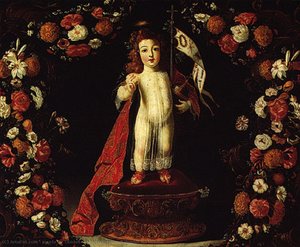
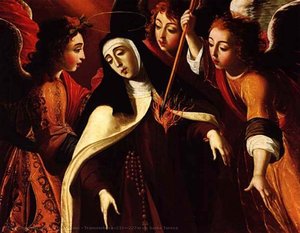
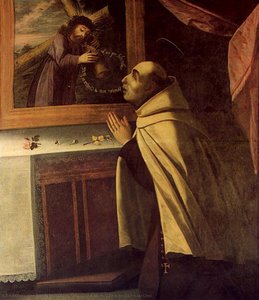
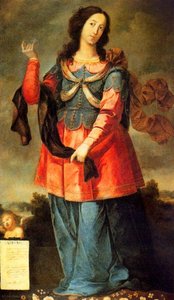
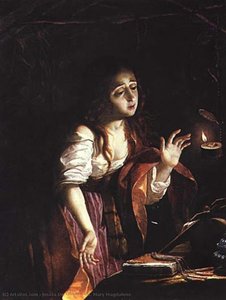
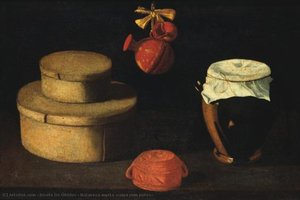
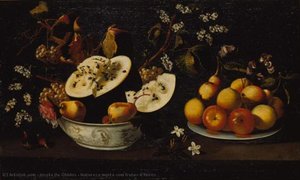
Her oeuvre is a breathtaking testament to the Baroque spirit, characterized by an extraordinary attention to detail and a masterful command over light and texture. Josefa possessed a rare ability to breathe life into the inanimate, transforming simple floral arrangements and fruit displays into profound meditations on beauty, abundance, and mortality. In her celebrated still lifes, every petal, leaf, and dewdrop seems to pulse with a quiet, captured energy, inviting the viewer into a world of sensory richness. Beyond the botanical, her religious compositions offer a window into the spiritual fervor of the 17th century. These works are marked by a delicate tenderness, where sacred figures are rendered with an approachable humanity that resonates deeply with the soul.The technical brilliance of her work is found in the subtle interplay of shadow and illumination. She utilized the dramatic elements of the period to create depth and volume, yet she infused these techniques with a softness and a precision that were uniquely hers. Whether capturing the sheen of a silver vessel or the ephemeral velvet of a rose petal, her brushwork achieved a level of realism that solidified her reputation as one of the most prolific and skilled artists of her generation.
An Enduring Presence in Art History
The historical significance of Josefa de Óbidos cannot be overstated, as she stands as a pillar of Portuguese art history. In an era where female voices were often silenced, she commanded attention through the sheer volume and quality of her output. Her legacy is defined by several key achievements:- A prolific career resulting in approximately 150 attributed works that shaped the aesthetic landscape of 17th-century Portugal.
- The seamless integration of Spanish heritage with Portuguese cultural identity, creating a unique regional style.
- The mastery of diverse genres, ranging from intimate portraits and religious iconography to highly detailed still life paintings.
Otázky a odpovědi
Pod jakými dalšími jmény je Josefa De Óbidos známý/á?
Josefa De Óbidos se vystupuje även pod alternativními jmény Josefa De Obidos.
Odkud pochází Josefa De Óbidos?
Josefa De Óbidos se narodil(a) v zemi Spain.
V jakém městě a z jaké země pochází Josefa De Óbidos?
Josefa De Óbidos se narodil(a) ve městě Seville v zemi Spain.