The Poetics of the Andean Landscape: The Vision of Magdalena Correa
Magdalena Correa’s artistic journey began in the vibrant, textured atmosphere of Santa Marta, Colombia. Born in 1956, her early years were steeped in the rich tapestry of Colombian folklore and the profound traditions of the Andean culture. This formative environment instilled in her a deep-seated sensitivity to the natural world and an innate ability to perceive the stories hidden within landscapes. Her work is not merely a collection of images but a continuous dialogue with the earth, shaped by a childhood where color and texture were as much a part of the air as the mountain mist.
As her practice evolved, photography emerged as her primary vessel for expression. Eschewing the modern temptation for heavy digital manipulation, Correa has remained steadfast in her commitment to realism. She approaches the camera with the patience of an observer and the precision of a scholar, focusing her lens on the delicate interplay between light and shadow. For Correa, the magic lies in the unadelineated truth—the way a single beam of light can transform a weathered stone or how the starkness of monochrome can strip a scene down to its raw, emotional bones.
Exploring the Frontiers of Human Resilience
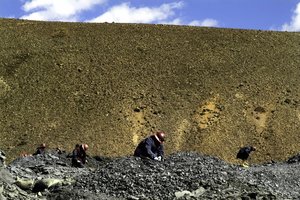
The true hallmark of Correa’s oeuvre is her profound exploration of geographical and human territories that exist on the fringes of the known world. She is drawn to spaces that are isolated, precarious, and often forgotten by the rapid march of modern civilization. Her breakthrough series, ‘La Rinconada, Peru,’ serves as a definitive testament to this fascination. In documenting this high-altitude mining settlement, she captures the harrowing beauty of life perched on the edge of survival. Through her lens, the viewer witnesses the monumental struggle of laborers navigating a landscape of geological grandeur and human hardship.
In these works, the distinction between the human spirit and the environment begins to blur. Her photography functions as a form of visual anthropology, where each frame acts as evidence of endurance. Whether she is capturing the rhythmic movement of workers against massive piles of stone or the quiet dignity of a landscape shaped by toil, her work invites a deep reflection on the resilience of life. She possesses a rare ability to elevate the "invisible" spaces of the world, turning remote mining camps and desolate terrains into stages for profound human drama.
Technique, Texture, and the Essence of Place
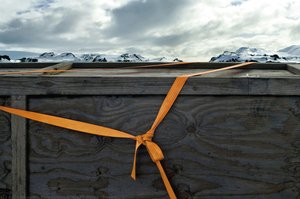
Correa’s technical mastery is characterized by an exquisite attention to detail and a sophisticated use of composition. In series such as ‘Níveo,’ she explores the striking juxtapositions between man-made structures and the overwhelming power of nature, such as weathered piers set against snow-capped peaks. Her ability to manipulate texture—making the viewer almost feel the grit of the earth or the coldness of the snow—is central to her aesthetic impact. She utilizes light not just to illuminate, but to sculpt, creating a sense of depth and atmosphere that pulls the observer into the frame.
The significance of her work lies in its ability to foster awareness and empathy. By focusing on the textures of weathered skin, stone, and ice, she bridges the gap between the viewer and the distant, often inaccessible, realities of the Andes. Her legacy is one of profound connection; through her meticulous documentation of the earth's most challenging environments, she reminds us of the enduring strength found in the most isolated corners of our planet. Her art remains a powerful testament to the beauty that persists even in the face of geological and human indifference.
Otázky a odpovědi
Odkud pochází Magdalena Correa?
Magdalena Correa se narodil(a) v Colombia.
V jakém městě a z jaké země pochází Magdalena Correa?
Magdalena Correa se narodil(a) ve městě Santa Marta v zemi Colombia.