


Origins and History of the Basilica
The history of the Basilica di San Marco begins with a calculated act of theft. In 828, Venetian merchants traveled to Alexandria, Egypt, to acquire the body of Saint Mark the Evangelist. According to legend, the remains were transported back to Venice in barrels, hidden beneath layers of pork to bypass guards. This acquisition necessitated the construction of a dedicated structure in the 9th century to house the sacred relics.
The building underwent several iterations before reaching its current form. The version of the Basilica di San Marco that exists today was consecrated in 1094. For much of its history, the site functioned as a private chapel for the Doge, maintaining a close connection to the seat of Venetian power. This exclusive use continued until 1807, when the building's role transitioned away from its status as a ducal sanctuary.
The physical fabric of the church reflects the city's maritime expansion and the spoils of various campaigns. Many of the architectural elements, including the columns and various carvings, were brought from the East. These materials were often integrated into the structure to serve both aesthetic and practical purposes, such as balancing the weight of ships returning from trade or military expeditions. The presence of these artifacts marks the Basilica di San Marco as a repository of the Republic's historical acquisitions.
The Architecture and Design of the Basilica
The structure is a complex amalgamation of Romanesque, Byzantine, Gothic, and Renaissance styles. This layering of architectural movements reflects the shifting influences encountered through Venice's historical trade routes. The interior is defined by more than 500 columns and capitals. Many of these Byzantine elements date between the 6th and 11th centuries. Some classical capitals from the 3rd century are integrated into the design alongside Egyptian porphyry columns. These materials were often brought from the East as spoils of war or through maritime trade.
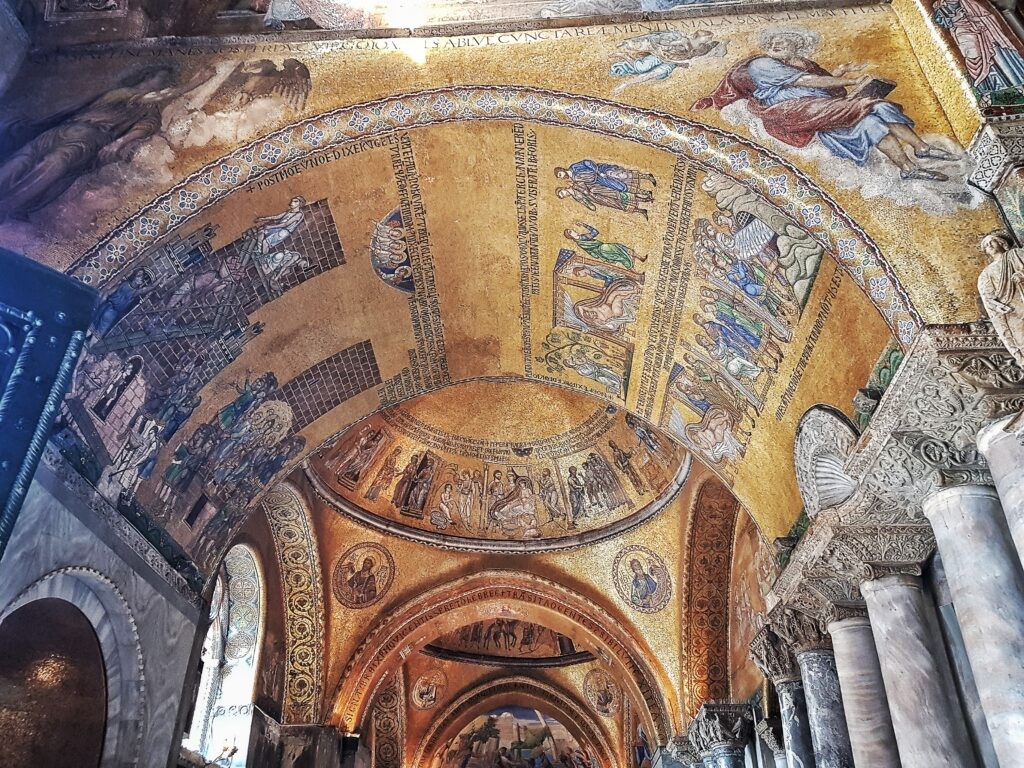
Light plays a specific role in the presentation of the interior surfaces. The mosaics cover an area equivalent to over 1.5 American football fields. These panels are constructed using real gold leaf sandwiched between two layers of clear glass. This technique allows the light to interact with the gold from within the tesserae. The scale of the decoration is matched by the physical presence of the bronze horses, which were originally positioned on the facade but are now kept inside the basilica.
- Pala d’Oro, 14th century - various artists
- Quadriga - 2nd or 3rd century
Masterpieces of the Museum Collection
The Museo Marciano houses the sacred and historical treasures of the Basilica. Among these is the Quadriga, four bronze horses seized from Constantinople in 1204. These figures, likely Roman in origin and dating from the 2nd or 3rd century AD, were once positioned atop the Basilica before being moved to the interior. They arrived in Venice following the Fourth Crusade and represent the material spoils of the era.
The Pala d’Oro, a Byzantine altar screen, is composed of gold and studded with hundreds of precious stones. The assembly includes 1,300 pearls, 300 emeralds, 300 sapphires, 400 garnets, and 100 amethysts. This object reflects the wealth and religious patronage of the Venetian Republic through its use of rare materials and intricate enamel work.
The collection also contains significant liturgical objects and manuscripts. These include chalices, reliquaries, and vestments used in religious services. The museum also preserves a selection of illuminated manuscripts, which provide insight into the spiritual and daily life of Venice's historical elite.
- Rediscovery of the Relics of St Mark, about 1345 - Paolo Veneziano
- Baptismal Font, 1545 - Jacopo Sansovino
- Dormition of the Virgin, 1448 - Andrea del Castagno
- A Scene from the Life of St Mark, about 1345 - Paolo Veneziano
- Allegory of Redemption, 1546 - Jacopo Sansovino
- Nativity, 1732 - Giambattista Tiepolo
Exhibitions and Ongoing Preservation
The Museo Marciano hosts temporary exhibitions designed to examine specific facets of Venetian art and architecture. These programs often focus on the historical exchange between Venice and the East, examining how cultural contact shaped the city's visual language. Recent exhibition themes have centered on the technical requirements of mosaic restoration. These displays provide insight into the meticulous process of matching the color and texture of individual glass tesserae to ensure the longevity of the decorative surfaces.
Preservation efforts extend beyond the exhibition halls into active research and educational programming. The museum maintains a commitment to safeguarding the collection through rigorous conservation studies. These initiatives aim to protect the physical integrity of the liturgical objects and manuscripts held within the site. By documenting the evolution of these materials, the institution ensures that the technical skill of past Venetian artisans remains understood by future generations.