
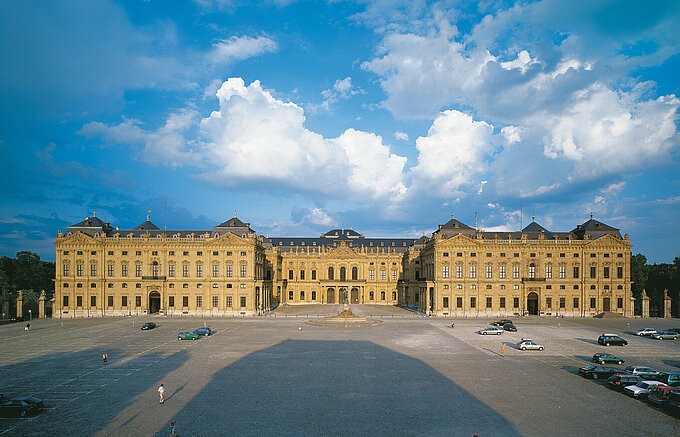


A Symphony of Baroque Grandeur
To step into the Staatsgalerie Würzburg is to surrender oneself to the breathtaking splendor of the eighteenth century. Nestled within the UNESCO World Heritage Site of the Würzburg Residence, this museum is far more than a mere gallery; it is an immersive journey through an era where architecture and painting breathed as one. The museum’s soul is inextricably linked to the palace itself, a masterpiece of Baroque ambition designed by the visionary Balthasar Neumann. As visitors wander through soaring halls adorned with intricate stucco work, they are not merely observing art but are enveloped by it. The very walls serve as a canvas, reflecting a period when the boundaries between structural design and decorative mastery were beautifully blurred.
The crown jewel of this cultural sanctuary is undoubtedly the monumental legacy of Giovanni Battista Tiepolo. His legendary fresco, “Apollo and the Continents,” which graces the Imperial Hall, remains one of the most profound achievements in the history of Western art. This breathtaking panorama, where mythological figures dance amidst a luminous, detailed landscape, captures the essence of the Baroque spirit—its scale, its light, and its dramatic movement. For the art lover, witnessing this work is a transformative experience, as the ceiling seems to dissolve into an infinite sky, pulling the viewer upward into a celestial realm of color and myth.
The Venetian Light and Regional Mastery
Beyond the celestial heights of Tiepolo, the Staatsgalerie offers a profound exploration of the Venetian tradition, a movement defined by its unparalleled mastery of light and pigment. The collection serves as a vibrant dialogue between the masters of Venice and the local German landscape. Through exceptional works by artists such as Paolo Veronese, Antonio Bellucci, and Federico Bencovich, one can trace the rhythmic pulse of color that characterized the Venetian zenith. These paintings, with their dramatic chiaroscuro and rich, emotive palettes, bring a sense of cosmopolitan elegance to the heart of Bavaria, showcasing how artistic innovations traveled across borders to define an entire epoch.
This dialogue extends into the regional nuances of Bavarian art, providing a deeper, more intimate look at the cultural landscape of 18th-century Germany. The museum meticulously preserves works that reflect local traditions, offering a grounded counterpoint to the grand international narratives of the Baroque. This duality—the cosmic scale of Tiepolo contrasted with the delicate, regional mastery of Bavarian painters—creates a rich tapestry of history. For collectors and interior designers alike, the collection provides endless inspiration, demonstrating how the interplay of light, texture, and historical narrative can define the atmosphere of a space.
A Living Legacy of Artistic Preservation
What truly distinguishes the Staatsgalerie Würzburg is its evolution from a princely showcase for the Wittelsbach monarchs to a public treasure dedicated to the preservation of human creativity. The museum does not merely exist in the past; it actively fosters a conversation between historical masterpieces and contemporary perspectives through carefully curated exhibitions. This commitment to continuity ensures that the grandeur of the Baroque remains relevant, inviting modern audiences to find echoes of ancient beauty in the art of today. It is a place where history is not static but is a living, breathing entity, preserved within the magnificent shell of Neumann’s architectural triumph.