



Origins and History of The Frick Collection
The Frick Collection began with the private acquisitions of Henry Clay Frick, an American industrialist, financier, and art patron. His collection was brought together through a discerning eye for European art, eventually forming the basis of a public institution. In 1920, the trustees of his estate established The Frick Collection Inc. to ensure the preservation and care of these works. This decision transformed a private assembly of objects into a permanent legacy for public viewing.
The institution was officially established in 1935. It is situated within the Henry Clay Frick House, located at 1 East 70th Street on Fifth Avenue in New York City. This Upper East Side Manhattan location places the collection in a setting that was originally a private residence. As of 2021, the collection encompasses approximately 1,500 pieces. The presence of these works within a domestic space allows for an intimate encounter with the art, as the objects remain closely tied to the history of the house itself.
The Building and Its Architecture
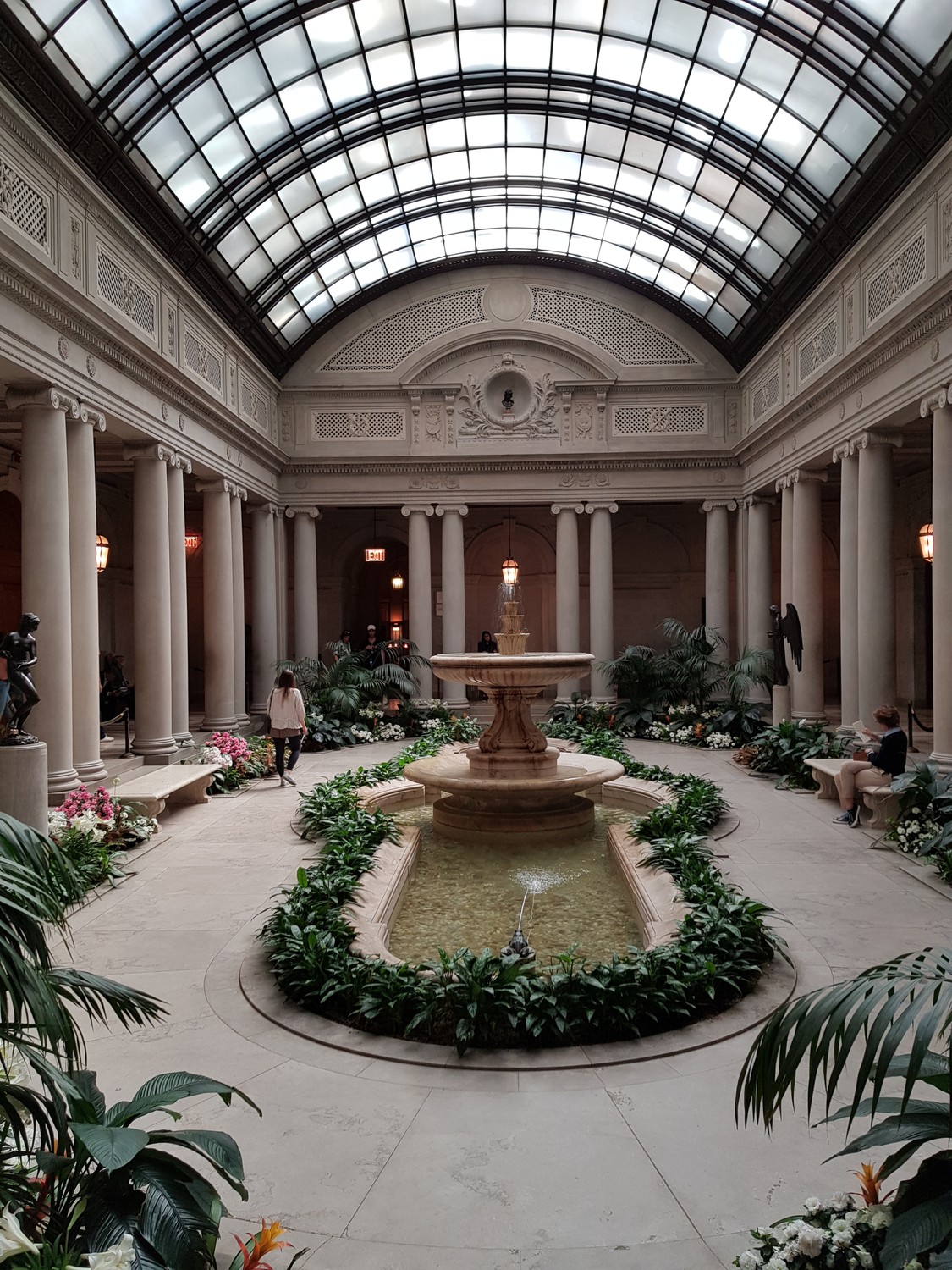
The Henry Clay Frick House occupies a significant position on Fifth Avenue, serving as the southernmost point of the Museum Mile in New York City. Completed in 1914, the mansion was designed by Thomas Hastings in the Beaux-Arts style. Construction of the residence took place between 1912 and 1914, resulting in a structure that maintains a sense of private domesticity despite its public role. The limestone facade is characterized by a three-story arrangement that feels integrated into the urban fabric of Manhattan.
A distinct separation exists between the street and the residence, as an elevated garden buffers the house from the activity of Fifth Avenue. This architectural choice creates a quietude essential for the contemplation of the works held within. The interior layout reflects the original residential purpose, with the first floor containing communal spaces and the second floor housing private rooms. The building's design ensures that the architecture and the art exist in a continuous dialogue, where the scale of the rooms remains intimate.
European Fine and Decorative Arts Collection
The collection offers intimate encounters with one of the foremost assemblages of European fine and decorative arts. Spanning from the 14th to the 19th centuries, the holdings include significant paintings, ceramics, sculpture, and furniture. These objects exist within a space where the distinction between viewing area and artwork often blurs, allowing for a direct presence before the objects themselves.
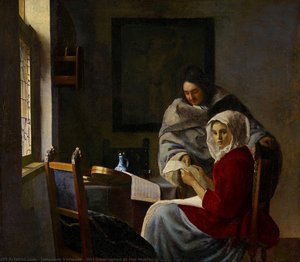
The paintings represent a deliberate evolution of artistic ideals. Works by Bellini, Fragonard, Rembrandt, and Vermeer are held here, alongside pieces by Gainsborough and Goya. These canvases are arranged within the rooms of the mansion, often in the manner originally intended by the collector. The presence of these works is felt through the specific way light interacts with the surfaces of the oil and the textures of the frames.
Beyond the canvases, the collection encompasses a wide range of decorative arts. This includes fine furniture and various forms of sculpture that complement the painted works. The arrangement of these pieces contributes to a cohesive atmosphere, where the material quality of the ceramics and the carving of the wood are as central to the experience as the fine art on the walls.
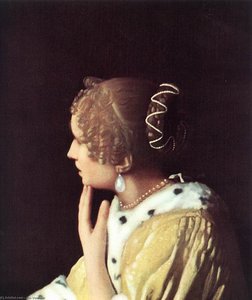
- Lady with Her Maidservant Holding a Letter (detail), about 1667 - Johannes Vermeer
- The Polish Rider, 1655 - Rembrandt van Rijn
- St. Jerome, 1600 - El Greco
Masterpieces of the Collection
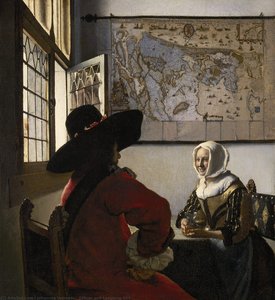
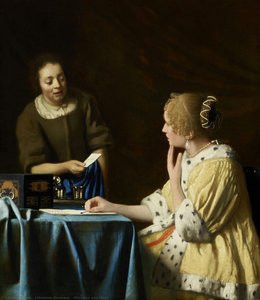
The presence of Johannes Vermeer’s works within these walls offers a quiet study in light and domesticity. Officer and Laughing Girl, dated about 1657, meets Mistress and Maid, from about 1666, in a shared atmosphere of stillness. These paintings demand a slow gaze to fully register the subtle shifts in shadow and the weight of the subjects' gazes. Nearby, the 1460 Polyptych of St Augustine: St Monica by Piero della Francesca provides a different kind of gravity, its formal precision anchoring the room in a sense of spiritual permanence.
Rembrandt van Rijn’s contributions are felt through the psychological depth of his portraiture. Portrait of a Young Artist, from about 1650, and The Polish Rider, dated about 1655, demonstrate a command of light that defines the character of the sitter. There is a tangible sense of the artist's hand in the way light catches a sleeve or a face. Similarly, the portraits by Hans Holbein the Younger, including Sir Thomas More (1527) and Thomas Cromwell (1533), possess a clarity that makes the figures feel immediate and present.
The collection also holds works that capture specific moments of light and labor, such as Jean-François Millet’s Woman Sewing by Lamplight, from about 1870. Each piece exists in a dialogue with the others, creating a sequence of visual encounters that reward patience. The following works are also held within the collection:
- Lady with Her Maidservant Holding a Letter (detail), about 1667 - Johannes Vermeer
- Officer with a Laughing Girl (detail), about 1657 - Johannes Vermeer
Exhibitions and Research
Beyond the quiet presence of the permanent collection, the institution functions as a center for scholarly inquiry. The Frick Art Research Library, established in 1920 by Helen Clay Frick, provides access to world-class art historical resources. Within its walls, researchers encounter vast repositories of knowledge, including sales catalogs, books, periodicals, and photographs. This collection offers a depth of information that supports the study of Western art history from the Renaissance through the Impressionist era.
The museum's engagement with the public extends through a variety of programmed events. Temporary exhibitions bring fresh perspectives to the galleries, while academic symposiums foster intellectual discourse. The space also hosts concerts and classes, allowing for a multifaceted connection to the arts. These activities ensure the collection remains a living subject of study rather than a static display.
Recent Projects and Expansion
The institution has recently undergone a significant period of transformation, with a renovation and expansion spanning from 2020 to 2025. During this time, the museum maintained its presence in Manhattan through Frick Madison, which operated at 945 Madison Avenue from 2021 until March 2024. This interim period allowed for the necessary work to be completed within the historic structure, ensuring the continuity of its mission while the primary site was prepared for its next chapter.
The reopening of the Frick House in April 2025 marks the conclusion of these extensive efforts. The expansion was designed to provide much better access and control for those visiting the collection. These physical improvements were achieved with a focus on preserving the unique presentation of the mansion. The architectural integrity of the space remains intact, allowing the art to be viewed within the original context of the residence.