

Introduction
The landscape of contemporary art in the 21st century has been profoundly reshaped by a generation of painters from China who navigate the complex intersection of ancient heritage and rapid modern transformation. These artists are united by a unique dialogue between the traditional ink-wash legacies of their ancestors and the bold, often disruptive, visual languages of global abstraction and hyper-realism. As the country underwent unprecedented social and urban shifts during this century, their canvases became vital spaces for processing the tension between the individual and the collective, the rural past and the high-tech future.
Historically, this movement represents a departure from the rigid academicism of previous eras, embracing instead a fluid, experimental approach to medium and subject. Whether through the delicate application of ink or the heavy, textured layers of oil, these painters have moved beyond mere representation to explore the psychological depths of modern existence. Their work remains essential today because it captures a pivotal moment in human history, documenting a culture in constant flux through a lens that is both deeply rooted and unapologetically contemporary.
This exploration leads us through the diverse visions of ten pivotal figures, including the intricate compositions of Shao Fan, the expressive calligraphy of Wang Dongling, and the evocative portraiture of Xiang Jing, each offering a distinct perspective on what it means to create art in the 21st century.
Shao Fan
 Rabbit Portrait - Mountain Item - Shao Fan
A central figure in the landscape of 21st century Chinese painters, Shao Fan represents a sophisticated bridge between ancestral heritage and the avant-garde. Born in Beijing in 1964 to parents who taught Soviet-style oil painting at the Central Academy of Fine Arts, his upbringing was steeped in the profound traditions of calligraphy and classical furniture. This deep-rooted connection to Chinese history allows him to navigate the complexities of contemporary expression with an authority few can claim. His practice is defined by a refusal to adhere to rigid categories, seamlessly blurring the boundaries between sculpture, painting, and design.
In his 2020 work, Rabbit Portrait - Mountain Item, Shao Fan demonstrates his mastery of texture and form. The piece transforms a traditionally delicate creature into a figure of immense gravitas, utilizing dense, rhythmic brushstrokes that mimic the layering of ink on paper. Through a meticulous interplay of high-density lines and ethereal white space, he creates a sense of materiality that feels both ancient and startlingly modern. By deconstructing traditional motifs and reconstructing them through a contemporary lens, Shao Fan remains a vital voice in the evolution of Chinese visual culture.
Wang Dongling
 Dark (Heaven) and Yellow (Earth) - Wang Dongling
Wang Dongling stands as a transformative figure in contemporary art, bridging the rigorous discipline of classical Chinese calligraphy with the spontaneous energy of Western abstract expressionism. Born in Rudong, China, his artistic foundation was laid at the Zhejiang Academy, where he mastered the intricate control of ink and brushwork essential to traditional writing. As a prominent voice among 21st century Chinese painters, Dongling has spent the current century redefining the boundaries of ink art, moving beyond mere text to create a unique visual language that resonates in a globalized era.
His most significant contribution to the modern canon is the development of "calligraphic paintings." These works are not mere exercises in writing but are monumental, gestural abstractions that treat the brush as an extension of the body. In his 2005 masterpiece, Dark (Heaven) and Yellow (Earth), he untethers composition from linguistic meaning, utilizing large mop-size brushes to execute powerful, rhythmic strokes. This piece exemplifies his ability to balance the spontaneous intensity of action painting with the profound philosophical concept of balancing void and form, a hallmark of his celebrated 21st-century practice.
Xiang Jing
 Anger in Motion - Xiang Jing
A prominent figure in the landscape of 21st century Chinese painters and sculptors, Xiang Jing has redefined contemporary figurative art through her profound exploration of the female psyche. Born in Beijing in 1968 and trained at the Central Academy of Fine Arts, her practice emerged during a period of immense social transformation in China. Her work is essential to the 21st-century canon because it moves beyond traditional representation to offer a satirical, introspective critique of modern womanhood, consumerism, and the quiet rebellions inherent in contemporary life.
Her mastery of form is vividly captured in the representative work Anger in Motion. Part of her evocative S series, this piece demonstrates her ability to utilize metaphoric shapes to explore the kinetic mutability of the body. While her earlier works often leaned toward the tender, this series embraces fierce, threatening forms that challenge the viewer. Through works like this, Xiang Jing transcends mere aesthetics, using the physical language of movement to navigate the complex tension between public engagement and private solitude, marking her as a vital voice in the evolution of modern Chinese art.
Hong Lei (Diplomat)
 Speak, Memory of Dog - Hong Lei (Diplomat)
A prominent figure in the landscape of 21st century Chinese painters, Hong Lei (Diplomat) offers a profound visual dialogue between the weight of tradition and the complexities of modern life. Born in Fuyang, Zhejiang, in 1969, his dual identity as a high-ranking diplomat and a visual artist provides him with a unique vantage point. Having graduated from Beijing Language and Culture University in 1991, his professional trajectory through the Ministry of Foreign Affairs—including roles as a spokesperson and Consul General—has deeply informed the sophisticated, often symbolic nature of his contemporary realism.
His work is characterized by a meticulous attention to detail that bridges the gap between classical Chinese aesthetics and modern photographic sensibilities. In his representative work, Speak, Memory of Dog (2005), he engages with the long-standing tradition of Chinese still life, utilizing symbolic imagery to elevate the subject matter. His ability to capture the essence of nature and everyday objects is further exemplified in pieces such as Speak, Memory of Plum Blossoms and Speak, Memory of Pomegranate. Through these compositions, Hong Lei explores themes of memory and cultural heritage, cementing his place as a vital voice in contemporary Chinese art.
Qiu Shihua
 Untitled - Qiu Shihua
A visitor recognizes a work by Qiu Shihua through a profound sense of minimalism and the evocative use of negative space. His practice is defined by a departure from traditional, detailed landscape representation in favor of an impressionistic distillation of nature. His canvases often feature a muted, ethereal palette where light and atmosphere take precedence over solid form, creating a meditative experience for the viewer. This focus on the essence of the landscape—often referred to as his "white landscapes"—emphasizes emptiness and the quietude of the natural world.
As a prominent figure among 21st century Chinese painters, Qiu Shihua’s contemporary relevance lies in his ability to bridge the gap between classical Chinese ink traditions and Western impressionism. His work reflects a modern, philosophical realignment that seeks the "beginning" of all things through abstraction. In his 2002 piece, Untitled, this technique is masterfully displayed; the composition provides a strong intimation of sunlight piercing through a dense fog, reflecting softly off a foreground expanse of water in delicate, rosy brown tones.
Li Chevalier
 Solitude Qui Habite L'homme - Li Chevalier
In the evocative ink and wash painting Solitude Qui Habite L'homme (2016), a monochromatic world of swirling grays and stark blacks unfolds. The composition features figures moving through a porous landscape of smoke-like clouds, where a rider on horseback and a solitary figure on a hill appear caught in a moment of profound stillness. This work exemplifies the artist's mastery of light and shadow, using a restricted palette to explore the tension between presence and absence.
Li Chevalier, born in Beijing in 1961, represents the contemporary evolution of Chinese art through her unique dual identity as a Chinese-French painter and calligrapher. Her practice, which has been exhibited at the National Art Museum of China and the Royal Academy, bridges traditional Chinese ink techniques with a Western philosophical depth. Having studied at the Sorbonne and Central St. Martins, her work navigates the complexities of cultural heritage and displacement. As a prominent figure in the 21st century Chinese painter landscape, Chevalier utilizes expressive brushwork and lyrical abstraction to transform themes of loneliness and introspection into deeply resonant visual meditations on the human condition.
Wu Jian’An
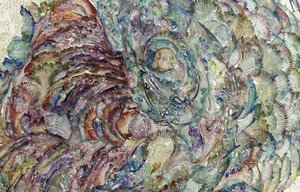 The Thousand-year-old Shapeshifting Herring (details) - Wu Jian’An
A graduate of the Central Academy of Fine Arts in Beijing in 2002, Wu Jian’An represents the vibrant evolution of Chinese contemporary art in the 21st century. His practice moves beyond mere representation, instead engaging in a sophisticated dialogue between ancient folklore and modern structural experimentation. As a prominent figure in this century's artistic landscape, he utilizes a unique visual language that blends the delicate tradition of paper-cutting and shadow puppetry with a contemporary, almost scientific approach to form.
This mastery of metamorphosis is most strikingly realized in his representative work, The Thousand-year-old Shapeshifting Herring. In this piece, the artist explores the boundaries of Taoist cultivation and myth, depicting a spiritual evolution through a mesmerizing technique. The imagery is constructed from a vast tapestry of 186 distinct types of characters, which act like biological cells to form a living, breathing organism. By transforming ordinary subjects into extraordinary, mythological entities, Wu Jian’An captures the essence of 21st-century Chinese creativity—a seamless fusion of deep-rooted cultural identity and avant-garde, global sensibilities.
Chaokun Wang
 bamboo - Chaokun Wang
Born in Hefei in 1992, Chaokun Wang represents the evolution of Chinese visual storytelling in the 21st century. His practice is a compelling bridge between ancient heritage and the digital frontier, making him a quintessential voice of this contemporary era. While his work is deeply rooted in the spiritual essence of traditional shan shui landscape painting, Wang utilizes modern digital tools to achieve a dreamlike, impressionistic quality that distinguishes his generation from the masters of the past.
His representative work, bamboo (2015), serves as a profound study of monochromatic tranquility. In this piece, Wang moves beyond simple replication of nature to explore its very essence. The composition features a dense, vertical arrangement of stalks emerging from a dark, indistinct background, creating a rhythmic interplay of light and shadow. By employing a restricted palette of blacks, whites, and varying greys, he emphasizes the texture of the segmented bark and the soft, diffused light that permeates the forest. This mastery of negative space and atmospheric depth allows the viewer to experience a sense of vastness and resilience, proving that even through digital means, the soul of Chinese naturalism remains vibrant and transformative in the modern age.
Xu Lei
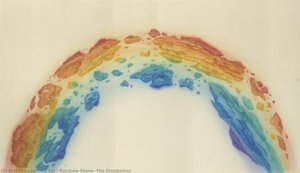 Rainbow Stone: The Dissipation - Xu Lei
A viewer can instantly recognize a work by Xu Lei through his masterful command of Gongbi, a traditional technique characterized by meticulous precision and fine, delicate brushwork. His compositions often exist in a state of poetic realism, where the hyper-detailed textures of nature meet a surreal, dreamlike atmosphere. He is a defining figure among 21st century Chinese painters due to his ability to synthesize the rigorous discipline of ancient ink traditions with the expressive, emotive color palettes of modern avant-garde movements.
In his representative masterpiece, "Rainbow Stone: The Dissipation" (2015), Xu Lei explores the intersection of stability and flux. The work features a monumental stone that appears to be dissolving into a prismatic spectrum of vibrant reds, blues, and purples. Through painstaking detail, he creates a tactile illusion that bridges the gap between the physical weight of the object and an ethereal, shifting light. This ability to reimagine classical subjects through a contemporary, mystical lens ensures his lasting relevance in the modern era of Chinese art.
Hsiao Chin
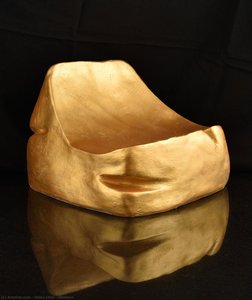 Glorious - Hsiao Chin
In the bronze sculpture Glorious (2013), the boundaries between functional form and human identity dissolve, as a face is seamlessly integrated into the backrest of a gold-colored chair. This work exemplifies the artist's ability to move into a "space beyond space," where three-dimensional objects serve as vessels for spiritual energy and symbolic meaning. Through the use of rhythmic lines and a striking metallic sheen, the piece achieves a balance between the material and the metaphysical.
Hsiao Chin, born in 1935, remains a vital figure in the landscape of 21st-century Chinese painters due to his profound ability to synthesize traditional Chinese techniques with modern Western influences. Having honed his skills at the Guangzhou Academy of Fine Arts before becoming a central figure in the Taiwan art scene, his practice bridges historical motifs with contemporary abstraction. His signature style is defined by bold brushstrokes and a vibrant, powerful palette that seeks to expand the life energy of the subject. Whether through large-scale canvases or intricate sculptural forms, his work continues to resonate in the 21st century, representing a sophisticated evolution of cultural identity through the lens of contemporary art.
Conclusion
The evolution of contemporary Chinese art in this century is defined by a profound dialogue between ancestral traditions and the rapid pulse of modern life. From the delicate, ink-inspired nuances of Shao Fan and Wang Dongling to the striking, sculptural presence of Xiang Jing, these artists have collectively redefined the visual language of the East. Whether through the surrealist echoes of Hong Lei, the minimalist precision of Qiu Shihua, or the vibrant, cross-cultural textures of Li Chevalier and Chaokun Wang, this group represents a masterful synthesis of heritage and innovation. Each painter contributes a unique layer to a shared narrative of identity, memory, and the shifting landscapes of the 21st century.
At Mus3ums.com, we invite you to bring this dynamic era into your own living space. Our artisans specialize in creating museum-quality, hand-painted oil reproductions that capture the specific brushwork, depth, and soul of these contemporary masters. You can explore the breadth of this movement by browsing our full collection and find the perfect piece to transform your home or office with the timeless elegance of modern Chinese art.


