Early Life and Influences
- Born: Barcelona, Spain (1923)
- Died: 2012
- Son of a lawyer and Catalan nationalist, Josep Tàpies i Mestre.
- Grew up in an environment exposed to Catalan public life and republicanism.
- First introduced to contemporary art through the magazine *d’ací i d’allà* at age 17.
- Suffered a near-fatal heart attack at 17 due to tuberculosis, spending two years convalescing in the mountains where he pursued his interest in art.
- Studied law for three years before dedicating himself solely to painting from 1943 onwards.
- Early influences included Paul Klee and Joan Miró.
Artistic Development and "Pintura Matèrica"
- Co-founded the avant-garde movement *Dau al Set* in 1948, connected to Surrealism and Dadaism.
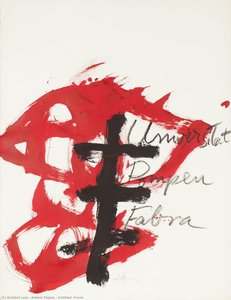
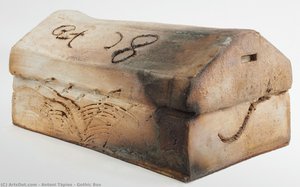
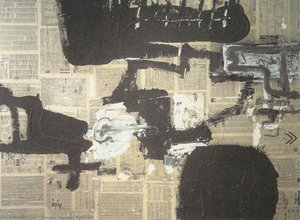
- Developed a distinctive style known as *pintura matèrica* (matter painting).
- Experimented with non-traditional materials like clay, marble dust, waste paper, string, rags, and burned canvas.
- Incorporated philosophical ideas, particularly from Sartre and Eastern thought.
- Became a prominent figure in Spanish Informalism, alongside artists like Enrique Tàbara, Antonio Saura, and Manolo Millares.
- His work is associated with both Tachisme and Abstract Expressionism.
Major Themes and Techniques
- Catalan Identity: Often incorporated symbols of Catalan identity in his works, particularly during periods of political oppression under Franco.
- Matter as a Medium: Explored the transformative qualities of matter, using it to evoke solidity, mass, and a sense of history.
- Textural Exploration: Created rich textures through layering materials and experimenting with unconventional techniques.
- Symbolism: Employed symbolic imagery, often drawing from Eastern philosophy and personal experiences.
- Later Works: Incorporated objects into his paintings and explored themes of man-nature identity and the denial of dualism.
Recognition and Legacy
- Gained international recognition by the late 1950s, with exhibitions in major museums worldwide.
- Received the Praemium Imperiale in 1986.
- Established the Fundació Antoni Tàpies in Barcelona to promote contemporary art.
- Represented Spain at the Venice Biennale in 1993, winning the Golden Lion.
- His work has had a significant influence on painting, sculpture, etching, and lithography.
- Considered one of Spain's most renowned artists of the second half of the 20th century.
Historical Significance
- A key figure in the development of Art Informel, contributing significantly to abstract art movements after World War II.
- Pioneered the use of non-traditional materials and techniques in painting, influencing subsequent generations of artists.
- His exploration of Catalan identity provided a powerful artistic expression during times of political repression.
- His work continues to be exhibited and studied worldwide, solidifying his place as an important figure in modern art history.
Ερωτήσεις και Απαντήσεις
Από πού προέρχεται ο/η Antoni Tàpies;
Ο/Η Antoni Tàpies γεννήθηκε στην/στη Ισπανία.
Πού και πότε γεννήθηκε ο/η Antoni Tàpies;
Ο/Η Antoni Tàpies γεννήθηκε στην/στη Βαρκελώνη το 1923.
Σε ποια πόλη και χώρα γεννήθηκε ο/η Antoni Tàpies;
Ο/Η Antoni Tàpies γεννήθηκε στην/στη Βαρκελώνη, στο/στη Ισπανία.