banka maruyama: Bridging Tradition and Innovation in Japanese Landscape Painting
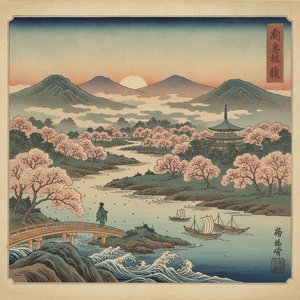
banka maruyama (1867-1942) occupies a unique position within the annals of nihonga, Japan’s celebrated landscape painting tradition. Born in Nagano Prefecture, his artistic trajectory unfolded against a backdrop of profound intellectual engagement with both Eastern Buddhist philosophy – embodied by kodama katei – and Western art advancements championed at kaiga gakusha and shogido. This dual exposure profoundly shaped his distinctive approach to visual expression, marking him as a true innovator who dared to synthesize seemingly disparate influences into a singular artistic vision. His early years nurtured an unwavering reverence for the majesty of nature and its capacity to inspire spiritual contemplation – sentiments deeply rooted in Japanese art history spanning centuries. However, maruyama’s ambition transcended mere preservation; he actively pursued a harmonious fusion between nanga's contemplative core and the vibrant dynamism of impressionism and plein air painting techniques. This courageous experimentation yielded canvases that captured ephemeral beauty while steadfastly upholding the fundamental aesthetic principles characteristic of nanga. The transformative journey undertaken during his travels across Europe and America in the early 20th century broadened maruyama’s artistic perspective considerably. These experiences fueled an ardent desire to foster collaborative endeavors amongst artists, culminating in the establishment of the taiheiyo gakai society in 1918 – a pioneering institution dedicated to cultivating dialogue between Eastern and Western art movements. Furthermore, he played a pivotal role in establishing the new nihonga society in 1918, passionately advocating for the safeguarding and enrichment of traditional Japanese painting practices. Maruyama’s distinguished participation in prominent exhibitions such as the bunten (1907) and meiji bujutsukai solidified his stature as a respected figure within Japan's artistic community. His artworks consistently demonstrated an unparalleled mastery of color palettes and brushwork, meticulously portraying atmospheric conditions with remarkable accuracy – a testament to the indelible imprint of impressionistic influence. Particularly noteworthy is ‘Landscape with Cherries in Full Blossom,’ a watercolor masterpiece that exemplifies maruyama’s ability to distill the essence of Japanese landscape art into a serene and emotionally resonant image. This piece showcases his masterful blending of nanga's contemplative spirit with Western plein air techniques, securing its place as an enduring symbol of artistic innovation. Ultimately, banka maruyama’s legacy extends beyond individual artworks; he served as a catalyst for stylistic convergence and contributed significantly to the solidification of nihonga as Japan’s premier visual art form. His pioneering efforts continue to inspire artists today, ensuring that his contribution to Japanese art history remains vividly alive.Ερωτήσεις και Απαντήσεις
Πού και πότε γεννήθηκε ο/η Μπάνκα Μαρουγιάμα;
Ο/Η Μπάνκα Μαρουγιάμα γεννήθηκε στην/στη Ναγκόκο το 1867.
Σε ποια ιστορική περίοδο δραστηριοποιήθηκε ο/η Μπάνκα Μαρουγιάμα;
Ο/Η Μπάνκα Μαρουγιάμα δραστηριοποιήθηκε κατά την περίοδο του/της 19ος αιώνας. Η συγκεκριμένη εποχή τοποθετεί τη δραστηριότητα του/της καλλιτέχνη/στη στην ιστορία.