Jean Arp: A Pioneer of Organic Abstraction
- Early Life and Artistic Education
- Dadaism and the Birth of Biomorphic Forms
- Surrealist Visions and Sculptural Explorations
- Recognition and Legacy
Early Life and Artistic Education
Hans Peter Wilhelm Arp, born September 16, 1886, in Strasbourg, Germany—now France—was a German-French sculptor, painter, and poet who stands as one of the foremost figures of European avant-garde art during the first half of the twentieth century. His heritage was marked by duality: his mother, Marguerite Arp Hagenbach, descended from Huguenot nobility fleeing persecution during the Reformation; his father, Wilhelm Arp, was a German civil servant. This geographical and cultural confluence profoundly shaped his formative years, instilling within him an awareness of conflicting identities—a characteristic that would permeate his entire artistic trajectory. He began his artistic training at the École des Arts et Métiers in Strasbourg in 1900, immersing himself in the burgeoning currents of Impressionism and Symbolism. Subsequently, he pursued studies at Weimarer Kunstschule in Germany, where he honed his skills alongside fellow artists grappling with Expressionist ideals. The encouragement of his uncle, Carl Arp—a landscape painter who championed artistic freedom—proved instrumental in nurturing his passion for art. A decisive move to Paris in 1908 propelled him into the epicenter of artistic innovation, enrolling at the Académie Julian and encountering luminaries like Pablo Picasso and Henri Matisse. This exposure to Parisian intellectual life solidified his commitment to experimentation and broadened his artistic horizons.Dadaism and the Birth of Biomorphic Forms
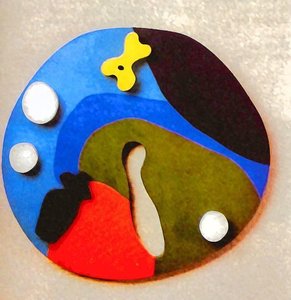
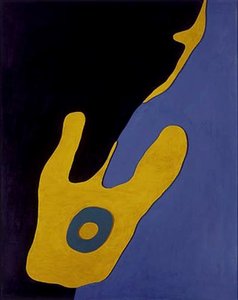
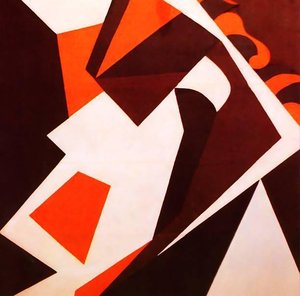
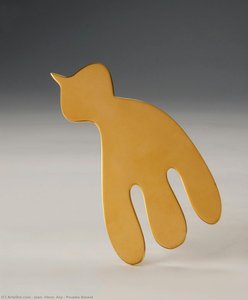
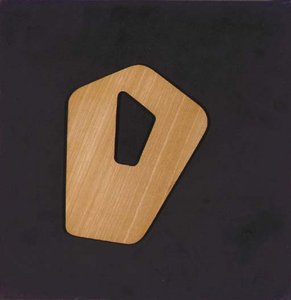
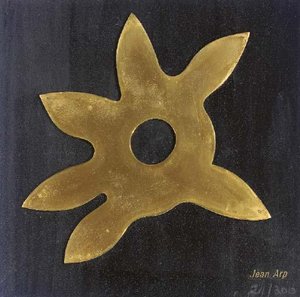
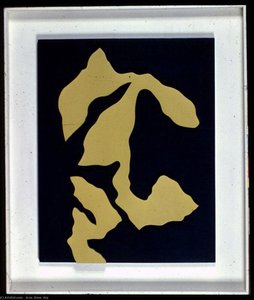
The eruption of World War I irrevocably altered Arp’s worldview, triggering a profound disillusionment with societal norms and rational thought. Driven by this conviction, he embraced Dada—a movement born from outrage against the senseless brutality of conflict—around 1915. Dada wasn't merely an aesthetic stance; it represented a radical rejection of artistic conventions, a defiant assertion of chaos as a response to disorder. Arp joined forces with fellow artists and intellectuals in neutral Switzerland—Hugo Ball, Tristan Tzara, Marcel Janco—who sought to dismantle established artistic hierarchies. He actively participated in Dada exhibitions alongside the Gruppe D, demonstrating his unwavering dedication to challenging accepted dogma. During this period, he pioneered “chance collages,” meticulously crafted by dropping paper fragments onto a surface and adhering them where they landed—a technique embodying Dada’s rejection of conscious control. Simultaneously, Arp embarked on an exploration of biomorphic forms—abstract shapes reminiscent of organic life—which would become the hallmark of his artistic style. These weren't simply decorative designs; they hinted at hidden energies, mirroring fundamental principles of existence and reflecting a subconscious connection to nature.Surrealist Visions and Sculptural Explorations
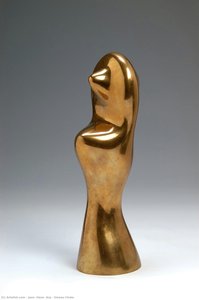
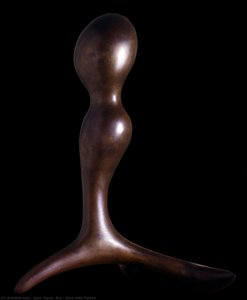
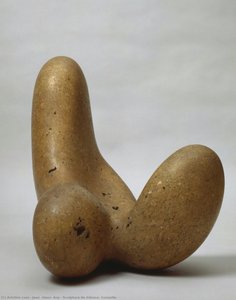
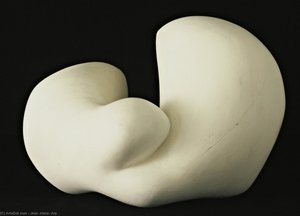
As Dada’s influence waned, Arp’s artistic path converged with Surrealism in 1925. He debuted at the Galerie Pierre in Paris—a pivotal moment marking his affiliation with this movement that delved into the realm of dreams and the subconscious. However, Arp didn't adopt Surrealism passively; he infused it with his distinctive sensibility. He transitioned decisively from relief sculptures to freestanding forms, refining his vision of organic abstraction through meticulous material experimentation. His “Human Concretion” series—characterized by smooth, rounded sculptures evoking ambiguous references to both human anatomy and natural contours—exemplified this stylistic evolution. Arp’s exploration of materials—marble, bronze, glass, and wood—further amplified the expressive potential of his art. Notably, he collaborated closely with Sophie Taeuber-Arp, forging a partnership that yielded groundbreaking artistic achievements.Recognition and Legacy
Jean Arp’s impact on twentieth-century art is undeniable. His pioneering role in organic abstraction—his embrace of chance operations—and his unwavering commitment to exploring the fundamental forces of life secured his place as a pivotal figure within the avant-garde. He received considerable acclaim during the postwar era, culminating in the Grand Prize for Sculpture at the Venice Biennale in 1954 and extensive retrospective exhibitions at the Museum of Modern Art in New York (1958) and the Musée National d’Art Moderne in Paris (1962). His monumental relief sculpture for Harvard University stands as a testament to his enduring legacy—a symbol of artistic innovation and intellectual curiosity that continues to inspire generations of artists. Arp's distinctive style—characterized by elegant simplicity and profound symbolism—remains influential, cementing his position as one of the most important sculptors of the 20th century.Ερωτήσεις και Απαντήσεις
Με τι άλλα ονόματα ή ψευδώνυμα είναι γνωστός/η Γιάννης Αρπ;
Ο/Η Γιάννης Αρπ είναι γνωστός/η επίσης ως Χανς Αρπ.
Σε ποια πόλη και χώρα γεννήθηκε ο/η Γιάννης Αρπ;
Ο/Η Γιάννης Αρπ γεννήθηκε στην/στη Στρασβούργο, στο/στη Γερμανία.
Πού και πότε γεννήθηκε ο/η Γιάννης Αρπ;
Ο/Η Γιάννης Αρπ γεννήθηκε στην/στη Στρασβούργο το 1886.