
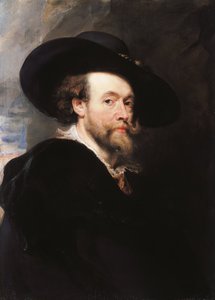
Origins and History of the Courtauld Gallery
The Courtauld Gallery emerged in 1932, established as an integral part of the Courtauld Institute of Art. Its foundation is deeply connected to the vision of Samuel Courtauld, whose personal collections provided the initial substance for the institution. This legacy was further expanded through the significant bequests of Lord Lee of Fareham, Sir Robert Witt, and Thomas Gambier Parry, the latter of whom contributed works from the medieval and Renaissance periods.
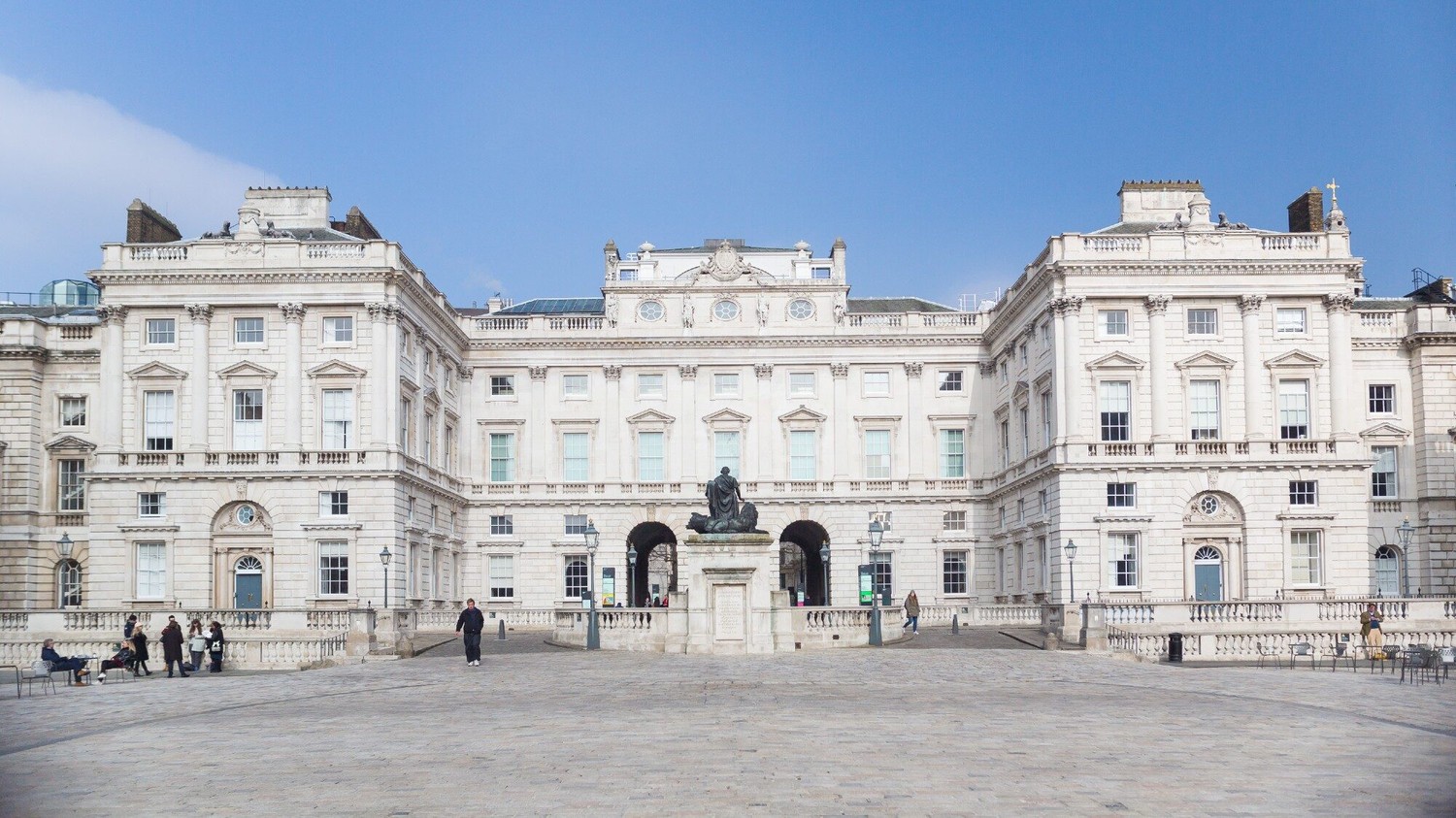
The collection spans a vast chronological range, encompassing works from the medieval period through to the present day. While the institution has evolved through various redevelopments, including the recent modernization completed in 2021, its core remains rooted in the specific acquisitions of its founding benefactors. Since 1989, the gallery has been housed within the neoclassical framework of Somerset House on London’s Strand.
The presence of these works within the gallery reflects a history of private patronage transitioning into a public resource. The holdings include:
- Medieval and Renaissance fine and decorative arts
- Impressionist and Post-Impressionist paintings
- Old Master works
- British drawings
- 20th-century art
The Architecture of Somerset House
Designed by William Chambers in the late 18th century, the building provides a neoclassical framework for the art within. The structure is defined by a symmetrical design and elegant facades that command the space around them. Inside, the proportions are marked by soaring ceilings and spacious interiors that allow for a sense of quietude. The architecture does not merely house the collection; it dictates the rhythm of the experience through its formal geometry.
Light is a fundamental element of the setting. Sunlight streams through large windows, casting a natural glow across the rooms. This illumination is a deliberate feature, intended to highlight the textures and colors of the canvases. The interplay between the structured shadows of the neoclassical rooms and the shifting light from the windows creates a specific atmosphere for viewing the works. The physical environment remains in constant, subtle dialogue with the paintings it contains.
The Impressionist and Post-Impressionist Collections
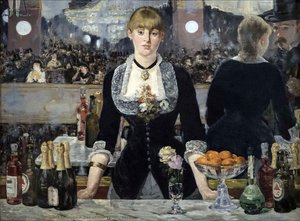
The collection finds its core in the Impressionist and Post-Impressionist movements, presenting a focused depth of work that defines the era. The presence of Édouard Manet is felt in the atmosphere of his depictions of Parisian nightlife, such as A Bar at the Folies-Bergère, about 1882. Nearby, the light and form explored by Paul Cézanne offer a study in perception. His works, including Mont Sainte-Victoire (about 1887) and The Card Players (about 1892), demonstrate a meticulous attention to the structure of the landscape and the human figure.
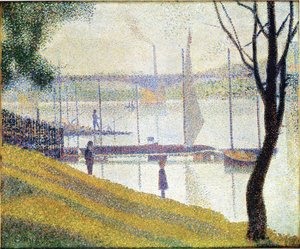
The breadth of the holdings extends through the late nineteenth and early twentieth centuries. Works by Claude Monet, Berthe Morisot, Pierre-Auguste Renoir, and Edgar Degas populate the rooms, alongside the intense, personal brushwork of Vincent van Gogh. The collection also encompasses the structural inquiries of Georges Seurat and the color palettes of Paul Gauguin. Beyond these, the presence of Amedeo Modigliani and Ben Nicholson marks the transition into more modern sensibilities. This assembly is not limited to canvas; it includes drawings, prints, sculpture, and decorative arts that reflect the evolving aesthetic of the period.
- A Bar at the Folies-Bergère, about 1882 - Édouard Manet
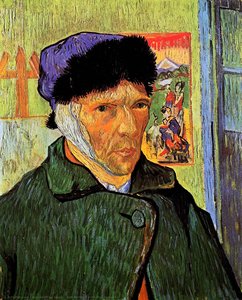
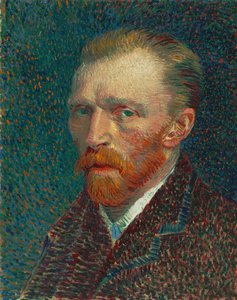
- Self Portrait with Bandaged Ear, about 1889 - Vincent Willem Van Gogh
- The Card Players, about 1892 - Paul Cézanne
- Mont Sainte-Victoire, about 1887 - Paul Cézanne
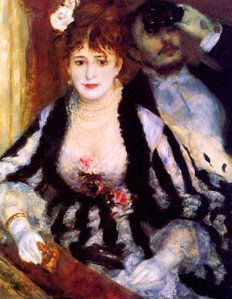
- The Theater Box, about 1874 - Pierre-Auguste Renoir
- Bridge at Courbevoie, about 1887 - Georges Seurat
Masterpieces of the Courtauld Collection
The presence of Édouard Manet’s A Bar at the Folies-Bergère, about 1882, commands the room. It captures a specific atmosphere of Parisian nightlife through a subtle dance between observer and observed. Nearby, the raw intensity of Vincent Willem Van Gogh’s Self Portrait with Bandaged Ear, about 1889, offers a glimpse into a troubled soul through swirling brushstrokes. These works exist as physical presences that demand a quiet, sustained attention.
The collection moves through different eras and textures. Paul Cézanne’s The Card Players, about 1892, provides a study in form and perception. In contrast, the light in Pierre-Auguste Renoir’s The Theater Box, about 1874, creates a different sense of space. Older traditions are represented by Jacopo Tintoretto’s Adoration of the Shepherds, 1578, and Rembrandt van Rijn’s Saskia Sitting up in Bed, Holding a Child, 1635. Each piece holds its own weight within the gallery's focused depth.
- A Bar at the Folies-Bergère, about 1882
- Self Portrait with Bandaged Ear, about 1889
- The Card Players, about 1892
- The Theater Box, about 1874
- Adoration of the Shepherds, 1578
- Saskia Sitting up in Bed, Holding a Child, 1635