
The Art Institute of Chicago Overview
The Art Institute of Chicago is a private, nonprofit art museum located in Chicago, Illinois, United States of America. Since its founding in 1879, the institution has grown into a significant presence within Grant Park. The physical footprint of the museum now reaches nearly one million square feet, encompassing a variety of spaces that house a vast assembly of human expression. This scale allows for a quiet encounter with works spanning many centuries and continents.
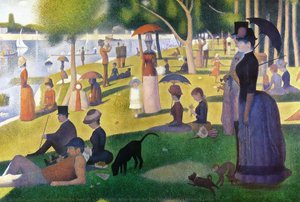
Within these walls, the collection holds nearly 300,000 works. The sheer volume of the holdings allows for a deep study of diverse movements, from ancient Egyptian antiquities to twentieth-century American modernism. One might find themselves standing before the textured canvases of Vincent van Gogh or the meticulous dots of color in a Georges Seurat. The presence of these objects creates a dialogue between the viewer and the history of visual language.
The museum's holdings include several notable pieces that define its character:
- A Sunday Afternoon on the Island of La Grande Jatte, 1886 - Georges Seurat
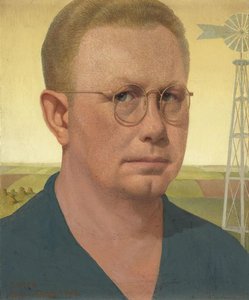
- American Gothic, 1930 - Grant Wood
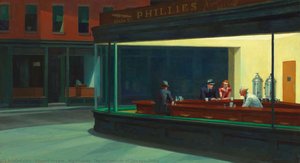
- Nighthawks - Edward Hopper
- The Child's Bath, 1893 - Mary Cassatt
Origins and Historical Evolution
The roots of this institution trace back to 1866, with the founding of the Chicago Academy of Design. This early iteration faced significant hardship when the Great Chicago Fire of 1871 left the predecessor struggling with debt. The path toward the current organization required a period of transition and reconstruction. In 1879, the Chicago Academy of Fine Arts acquired assets at auction, providing the foundation for the institution that exists today. This process of recovery and growth eventually led to a formal change of name on December 23, 1882, when it became the Art Institute of Chicago.
The institution has grown to become one of the oldest and largest art museums in the United States. Its development is tied to the very history of Chicago, evolving from a small academy into a massive repository of human expression. The scale of the collection and the breadth of its holdings reflect a long-standing commitment to the preservation of art through decades of urban change and expansion.
Architecture and Building Design
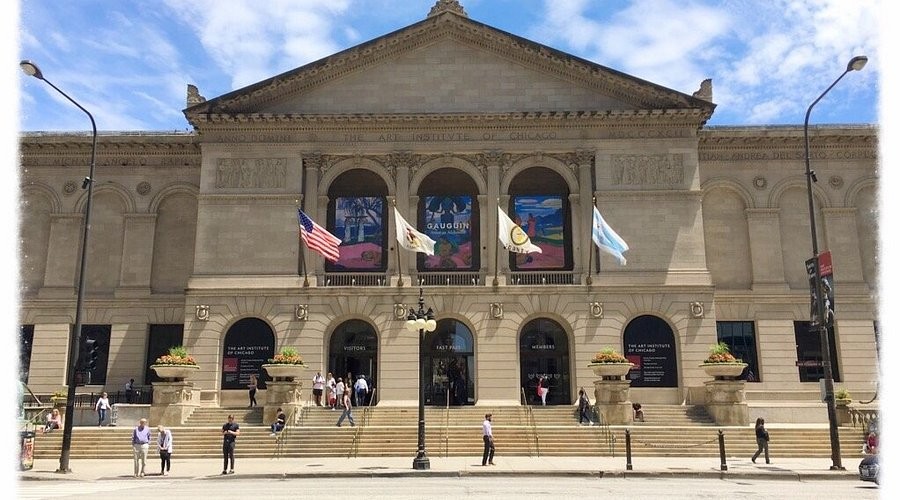
The main structure was originally intended for the 1893 World’s Columbian Exposition. Designed by Shepley, Rutan and Coolidge, the building presents a grand Italian Renaissance facade to Michigan Avenue. The arcaded entry loggia features three large Palladian arches supported by Corinthian half-columns, creating a formal threshold that leads into a complex of galleries. This historic core engages in a direct dialogue with the Modern Wing, a structure of glass and steel designed by Renzo Piano that opened in 2009 to expand the footprint.
The architecture reflects a transition from the opulent details of the late nineteenth century to a contemporary focus on natural light and sustainable design. The heavy masonry of the original halls meets the transparent, airy volumes of the modern expansion. This juxtaposition mirrors the evolution of the city itself, moving from a frontier outpost to a global metropolis. The building's footprint now reaches nearly one million square feet, encompassing various additions such as the Fullerton Auditorium and the Ryerson Library.
Impressionist and Post-Impressionist Collections
The collection holds significant pieces of the Impressionist movement, where the study of light becomes a primary subject. Claude Monet’s Floden captures the atmosphere of the French landscape, reflecting the artist's focus on how light transforms natural settings. Nearby, Pierre-Auguste Renoir’s Lady at the Piano offers a study in domestic tranquility. The work uses soft pastel hues to render a sun-drenched afternoon, focusing on the way light filters through a window to illuminate the seated figure and the polished surface of the instrument.
The transition into Post-Impressionism is marked by a shift toward profound emotion and textured surfaces. Vincent van Gogh’s La Berceuse, Portrait of Madame Roulin demonstrates this intensity through a highly tactile application of paint. These works move away from mere observation toward a more personal expression of the subject. Georges Seurat’s A Sunday Afternoon on La Grande Jatte provides a different approach to light and form, utilizing meticulous dots of color to construct a scene of Parisian leisure.
- Floden, about 1868
- Lady at the Piano, 1875
- La Berceuse, Portrait of Madame Roulin, 1889
- A Sunday Afternoon on La Grande Jatte, 1886
Masterpieces of the Permanent Collection
The presence of Grant Wood’s American Gothic offers a study in rural gravity and stark composition. Nearby, Edward Hopper’s Nighthawks captures the quietude of urban solitude through its specific play of light and shadow. These works exist as physical anchors within the galleries, inviting a slow observation of their formal qualities.
The collection also holds significant examples of Impressionist and Post-Impressionist practice. Claude Monet’s Water Lilies presents a focus on light and color, while Mary Cassatt’s The Child's Bath renders a scene of domestic peace through soft pastel hues. These paintings allow for a direct encounter with the brushwork and textures that defined their respective movements.
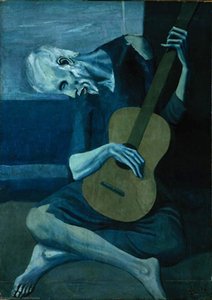
In the quieter corners, Pablo Picasso’s The Old Guitarist appears in its somber tones, a work that holds a distinct weight within the assembly of human expression. Each piece remains a specific point of focus for those who linger in the presence of the original canvases.
- American Gothic, 1930
- Nighthawks
- The Child's Bath, 1893
- Water Lilies, 1906
- The Old Guitarist
Exhibitions and Scholarly Research
The institution maintains a rigorous commitment to the preservation and study of its holdings through a dedicated conservation and conservation science department. Within this framework, five conservation laboratories provide the technical environment necessary to protect the physical integrity of the collection. These facilities ensure that the material reality of each object remains intact for future observation.
Scholarly inquiry is anchored by the Ryerson and Burnham Libraries. As one of the largest repositories for art history and architecture in the nation, these libraries provide the essential intellectual foundation for the museum's research activities. The depth of these archives supports the ongoing study of the works held within the galleries. Beyond the permanent collection, the museum hosts more than 30 special exhibitions mounted yearly, offering a rotating focus on specific movements or historical periods.