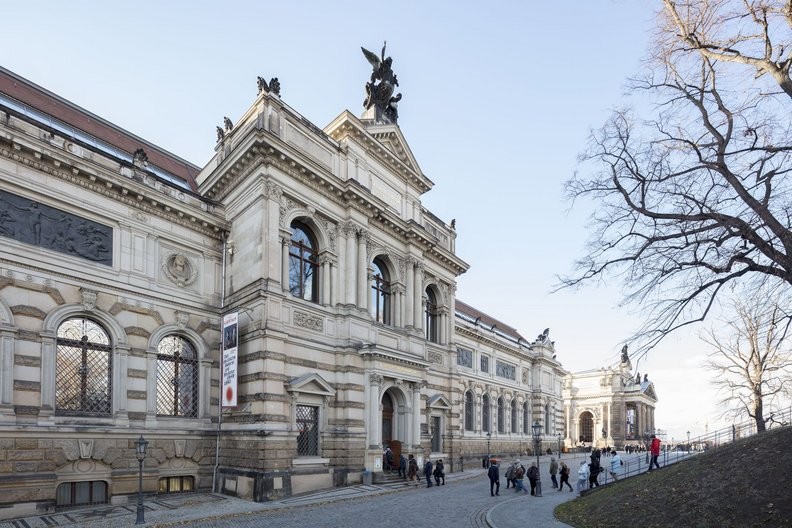




A Legacy of the Staatliche Kunstsammlungen Dresden
The Staatliche Kunstsammlungen Dresden represents a long continuity of collecting that traces back to the 16th century. These collections originated from the private holdings of the Saxon electors, who gathered objects of significance over several centuries. In 1560, Augustus I, Elector of Saxony, established the electoral Kunstkammer, creating a foundation for what would eventually become a vast institutional presence in Dresden, Germany. This institution is owned by the State of Saxony and has grown from those early royal chambers into a complex of fifteen distinct museums.
The scale of the institution reflects the historical ambitions of its former owners. What began as a repository for the electors has evolved into a structured network of specialized collections. Each of the fifteen museums within the Staatliche Kunstsammlungen Dresden offers a specific perspective on the history of art and material culture. The presence of these works in Dresden is a direct result of the systematic acquisition efforts of the Saxon rulers, whose influence shaped the artistic landscape of the region.
The historical weight of the collection is felt in the physical presence of the objects themselves. These are not merely items of study but are the actual artifacts gathered by the electors. The transition from private royal property to a state-owned institution ensures that the continuity of the Saxon legacy remains intact within the city's cultural fabric.
The Grand Architecture of the Zwinger Palace
The Zwinger exists as a palatial complex with gardens in Dresden, Germany. Designed by architect Matthäus Daniel Pöppelmann, the structure remains one of the most significant buildings of the Baroque period in Germany. It was originally conceived as a hunting lodge for Augustus the Strong, a purpose that dictated its initial relationship with the surrounding landscape. The layout integrates architecture with formal gardens, creating a space where stone and nature meet.
The soaring domes and grand staircases provide a sense of Baroque grandeur. These elements define the physical presence of the complex, offering a scale that reflects the ambitions of its patron. The architecture does not merely occupy space; it organizes it through precise symmetry and movement. The interplay of light across the facades and the verticality of the domes create a specific atmosphere within the courtyard.
The site has endured significant history, including the destruction caused by the bombing of Dresden in 1945. Subsequent reconstruction has preserved the architectural intent of Pöppelmann. Today, the buildings within the complex house various collections, including the Gemäldegalerie Alte Meister and the Dresden Porcelain Collection. The architecture remains a central part of the city's urban fabric, maintaining its original Baroque character through careful restoration.
The Masterpieces of the Gemäldegalerie Alte Meister
Established in 1560, the Gemäldegalerie Alte Meister holds a collection of 750 paintings within the heart of Dresden, Germany. The gallery's layout follows a chronological progression, allowing for a steady observation of artistic development through the ages. This arrangement provides a sense of how styles and techniques shifted over centuries, moving from the early modern period through the Renaissance and into the Baroque era.
Certain works possess a particular presence that demands a quiet moment of observation. Raphael’s Sistine Madonna offers a study in divine grace, while Rubens’ Birth of Venus presents a significant example of the High Renaissance and Baroque transition. These paintings are not merely objects of study but are physical presences that have occupied these halls for generations.
The collection also includes works that reflect the specific evolution of European painting styles, from the Northern Renaissance to the Mannerist period. Each canvas offers a window into the technical precision and aesthetic shifts of its era.
- Raphael, Sistine Madonna
- Rubens, Birth of Venus
The Opulence of the Green Vault
Housed within the Dresden Castle, the Grünes Gewölbe presents a spectacle of royal splendor. The collection offers a display of jewels, intricate goldwork, and ceremonial objects that reflect the immense wealth of Saxony’s rulers. These treasures are not merely objects of value but are physical presences that speak to the ambitions of the electors. Each vault is organized around specific historical periods or artistic movements, creating a structured encounter with the past.
The arrangement of the space allows for a quiet observation of precious artifacts. Light catches the facets of gemstones and the fine detail of goldwork, revealing the skill of the craftsmen who shaped them. The atmosphere within the vaults is one of concentrated history, where the weight of the objects is felt through their sheer material density and the complexity of their design. It is a place where the splendor of the court is preserved in metal and stone.
The World-Renowned Porcelain Collection
The institution holds one of the most significant porcelain collections in existence. Much of this importance stems from the development of European hard-paste porcelain, a pursuit that began near Dresden around 1708. This scientific endeavor sought to replicate the translucent qualities of East Asian wares, eventually leading to the establishment of the Sächsische Porzellan-Manufaktur Dresden in 1710 by Augustus the Strong. The resulting pieces represent a shift in European material history, moving from imitation toward a distinct, local aesthetic.
A particular emphasis is placed on the delicate artistry of Meissen porcelain. These objects reflect the ambitions of the Saxon court, where the material was treated as a medium for both functional luxury and sculptural expression. The collection contains various forms, from intricate figurines to ceremonial tableware, many of which were shaped by the technical breakthroughs of the eighteenth century. The presence of these works allows for a direct encounter with the precision of early European ceramic production.
- The Swan Service
Current and Upcoming Special Exhibitions
The seasonal program at the Staatliche Kunstsammlungen Dresden offers a sequence of focused inquiries into history and form. At the Residenzschloss, the Rüstkammer presents Masks and Crowns, an exploration of court festival culture and representations of power, which remains on view from 28/03/2026 to 03/01/2027. Nearby, the Grünes Gewölbe hosts the exhibition Down the hatch! from 16/07/2026 to 03/01/2027, centered on welcoming cups. These displays allow for a close study of how objects functioned within the social structures of the Saxon court.
The Gemäldegalerie Alte Meister at the Zwinger offers a different perspective through the exhibition Correggio. Movingly Human, running from 19/09/2026 to 10/01/2027. This presentation focuses on the specific qualities of human expression. Meanwhile, the Münzkabinett at the Residenzschloss presents Crypto, what? from 03/10/2026 to 29/08/2027. Each exhibition provides a specific lens through which to view the collections, moving between the intimate scale of coinage and the grander narratives of courtly ritual.