Introduction
Imagine stepping into a sun-drenched Parisian café or standing on a bustling boulevard in the mid-19th century, where the air feels electric with the pulse of modern life. To look upon the works of Édouard Manet is to step directly into that heartbeat. He was the great provocateur of his age, a man who dared to look at the world not as a polished, idealized stage, but as a vibrant, sometimes jarring, and beautifully immediate reality. His brush didn't just apply paint; it captured the very essence of a changing era, bridging the gap between the old traditions of the masters and the radical energy of Impressionism.
Born into an affluent Parisian family, Manet’s journey was one of beautiful defiance. After failing to follow his father’s wishes for a career in law or the navy, he turned his gaze toward the Louvre, spending countless hours absorbing the light and form of the Old Masters. Yet, he refused to simply mimic them. Instead, he revolutionized the canvas by embracing facture—the visible, energetic application of pigment—and a bold, spontaneous technique that favored the raw truth of a moment over the seamless perfection of the Academy. He traded heavy, three-dimensional illusions for a striking, modern flatness and a dramatic play of light and shadow that felt startlingly new to the eyes of his contemporaries.
Today, Manet’s influence is felt in every corner of modern art. His ability to find profound meaning in the everyday—the quiet gaze of a woman, the fleeting light on a landscape, or the social complexities of a crowded room—continues to resonate with anyone who seeks to find beauty in the authentic. His paintings are not just historical artifacts; they are living windows into the soul of modernity, offering a sense of immediacy that still feels fresh and daring in our own fast-paced world.
As we guide you through this curated selection, prepare to encounter the masterpieces that defined a revolution. From his most scandalous social commentaries to his breathtakingly atmospheric landscapes, we invite you to discover the top 25 works of Édouard Manet—a journey through color, light, and the very spirit of Paris.
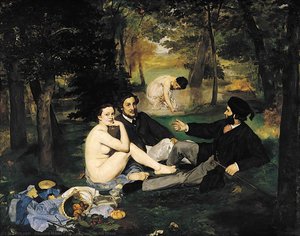
The Luncheon on the Grass - Édouard Manet
To encounter The Luncheon on the Grass is to witness the exact moment the art world shifted on its axis. This 1863 masterpiece is not merely a painting; it is a revolutionary manifesto that secured Édouard Manet’s legacy as the bridge between the grounded truth of Realism and the shimmering light of Impressionism. One of the most significant pieces among the top 25 artworks of Édouard Manet, it captures a sun-dappled forest glade where the boundaries of social convention are as fluid as the brushstrokes themselves.
Manet’s signature style is on full display here: the composition feels spontaneous, almost daringly immediate, eschewing meticulous detail for a bold, expressive application of pigment. The dramatic interplay of light and shadow—the way sunlight filters through the canopy to illuminate the figures—creates a mysterious, sophisticated atmosphere. For the modern collector, this work brings a sense of intellectual depth and refined rebellion to a living space. It is a piece that doesn't just decorate a room; it commands it, offering a timeless connection to the very spirit of modern art.
Olympia - Édouard Manet
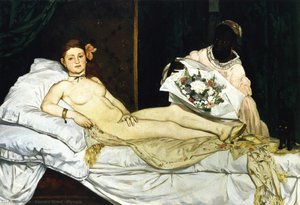 Olympia - Édouard Manet
To stand before Olympia is to meet a gaze that refuses to look away. In this 1863 masterpiece, Édouard Manet shattered the conventions of the Parisian Salon, replacing idealized goddesses with a woman of striking, unapologetic modernity. This isn't a distant myth; it is a visceral encounter with the real. Through bold, visible brushstrokes and a daring use of light and shadow, Manet captures the textured reality of crumpled sheets and the stark, rosy-brown tones of a contemporary Parisian interior. The composition, characterized by its fascinatingly flattened perspective and dramatic, directional lighting, serves as a cornerstone of his transition from Realism toward Impressionism.
As one of the most significant pieces in our collection of the top 25 artworks of Édouard Manet, Olympia offers a profound psychological depth that continues to captivate. Bringing this dramatic work into your home transforms a living space into a gallery of reflection, inviting a sense of sophisticated, modern energy. It is more than a painting; it is a bold statement of presence and human complexity.
A Bar at the Folies-Bergere - Édouard Manet
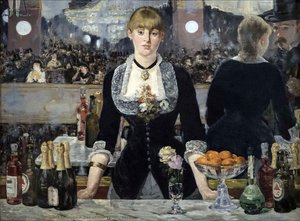
Step into the shimmering, electric atmosphere of 1882 Paris with Édouard Manet’s most captivating masterpiece, A Bar at the Folies-Bergere. This isn't just a painting; it is a sensory immersion into the heart of Parisian nightlife. As you stand before it, you don't just see the scene—you feel the hum of the crowd and the cool touch of glass. Manet, the master who bridged the gap between Realism and Impressionism, uses light as a language here, composing it with a bold, direct brushwork that feels startlingly modern.
The composition is a brilliant puzzle of perspective. While the barmaid stands with a poised, almost melancholic gaze, the mirror behind her creates a dreamlike, flattened space, reflecting a world of movement and artificial gaslight. The palette, anchored by deep phthalo greens and luminous highlights, captures a fleeting moment of urban isolation amidst the revelry. It is this exquisite tension—the vibrant energy of the cabaret clashing with the quiet solitude of the individual—that makes this one of the top 25 artworks of Édouard Manet. It is a timeless window into modernity, ready to bring a sense of sophisticated, nostalgic depth to your own living space.
The Fifer - Édouard Manet
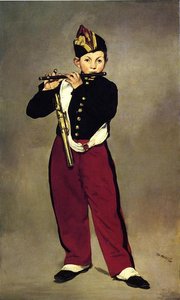 The Fifer - Édouard Manet
What story does the stark, minimalist void behind the young musician tell? In 1866, Édouard Manet answered this by stripping away the cluttered, dramatic backdrops of traditional academic art, leaving us with nothing but the pure presence of a boy and his flute. This bold decision is why The Fifer is essential to any collection of the top 25 artworks of Édouard Manet. By drawing inspiration from the monumental simplicity of Velázquez, Manet broke the rules of his time, moving away from idealized beauty toward a raw, modern immediacy.
The painting is a masterclass in texture; the thick, energetic impasto creates a tactile surface that makes the boy’s uniform feel almost tangible. His mischievous expression and the vibrant splashes of color against a muted, monochrome background create a sense of calm yet profound focus. For the modern home, this piece offers a sophisticated 'escape'—a window into a quiet, historical moment that brings a sense of curated history and artistic soul to a living space. It is a quintessential example of Manet’s ability to bridge the gap between Realism and the dawn of Impressionism.
The Balcony - Édouard Manet
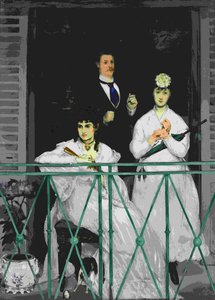 The Balcony - Édouard Manet
In Manet’s 1869 masterpiece, The Balcony, a sophisticated palette of muted creams and deep, shadowy tones creates an atmosphere of quiet, melancholic elegance. The composition is anchored by subtle shifts in light that dance across the figures, a hallmark of why this work remains one of the top 25 artworks of Édouard Manet. By moving away from the heavy, dark shadows of traditional academic painting, Manet uses a more flattened, modern light that captures the very essence of Parisian leisure and social isolation.
This painting is a quintessential example of the artist's genius, bridging the gap between Realism and Impressionism through his bold, direct brushwork and a focus on contemporary life. For those looking to curate a meaningful home, the soft, diffused lighting and the sophisticated, neutral color scheme make this an ideal centerpiece for a modern living room or a refined dining space. It brings a sense of historical depth and calm, inviting a contemplative mood into your personal sanctuary.
Music in the Tuileries Garden - Édouard Manet
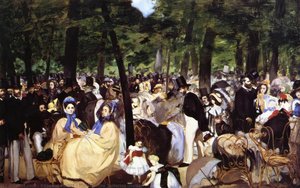
Step into the vibrant pulse of 19th-century Paris with Music in the Tuileries Garden, a masterpiece that secures its place among the top 25 artworks of Édouard Manet. This sweeping scene captures a fleeting, sun-drenched afternoon, where the air feels thick with the hum of conversation and the spirit of leisure. Manet moves away from the rigid, polished traditions of the past, instead using energetic, broken brushstrokes to mimic the dappled light filtering through the lush, phthalo green canopy of the trees.
What makes this work a quintessential example of Manet’s genius is his ability to bridge the gap between Realism and Impressionism. He doesn't just paint a crowd; he captures the very essence of social interaction and modern life. The composition is a beautiful, dense tapestry of elegant figures and shifting tones, creating a sense of movement that feels incredibly contemporary. For the modern collector, this piece brings a nostalgic, sophisticated ambiance to a living room, offering a window into a world of timeless Parisian elegance and the effortless beauty of a moment caught in time.
Nana - Édouard Manet
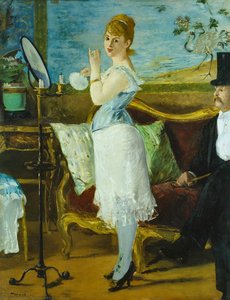 Nana - Édouard Manet
What story does the intimate, sun-drenched boudoir in Nana tell about the shifting social tides of 19th-century Paris? In this 1877 masterpiece, Édouard Manet invites us into a private moment of vanity and observation, bridging the gap between the grounded truth of Realism and the fleeting light of Impressionism. As a pivotal entry in our collection of the top 25 artworks of Édouard Manet, this piece captures the very essence of his revolutionary spirit: the courage to paint modern life exactly as it was lived.
The composition is a masterclass in atmosphere, where the soft, diffused light from a distant window dances across a palette of elegant whites and deep, phthalo greens. We see a woman lost in her own reflection, her presence balanced by a man in formal attire, creating a scene of quiet, reflective tension. For the modern collector, Nana offers more than just decor; it provides a sophisticated escape into a world of historical luxury and psychological depth. It is a painting that doesn't just hang on a wall—it transforms a living room into a curated sanctuary of Parisian elegance.
Chez Tortoni - Édouard Manet
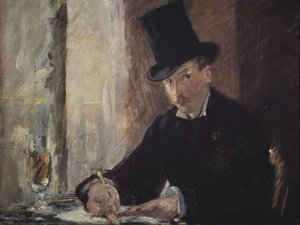 Chez Tortoni - Édouard Manet
There is a quiet, reflective gaze in Chez Tortoni that seems to follow you—not with judgment, but with a profound sense of understanding. This isn't merely a portrait of Monsieur Georges Rivière; it is a mirror held up to the soul of Belle Époque Paris. As one of the most captivating pieces in our collection of the top 25 artworks of Édouard Manet, it captures a fleeting moment of intellectual solitude amidst the buzz of a Parisian café.
Manet, the master who bridged the gap between Realism and Impressionism, eschews the polished finish of the academies for something far more human. Through his signature bold, direct brushwork, we feel the warmth of the candlelight and the elegant weight of the Victorian era. The palette, dominated by sophisticated grays and deep blacks, creates a mood of contemplative elegance that feels incredibly modern. To hang this piece in your living room is to invite that same sense of refined, quiet storytelling into your own home—a gentle reminder that even in a bustling world, there is beauty in the stillness of a single, thoughtful moment.
Jeanne (Spring) - Édouard Manet
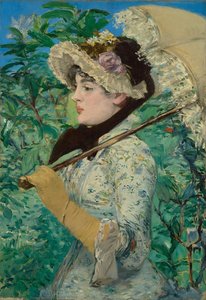 Jeanne (Spring) - Édouard Manet
There is a certain magic in the way light dances through a Parisian afternoon, frozen forever in the delicate strokes of Édouard Manet’s Jeanne (Spring). This 1881 masterpiece is a cornerstone of his legacy, capturing the very essence of renewal through the charming actress Jeanne DeMarsy. As one of the fleeting moments of Impressionism, this work stands out in our collection of the top 25 artworks of Édouard Manet for its breathtaking ability to blend the structured grace of a portrait with the spontaneous energy of nature.
Manet’s signature technique is on full display here; his bold, direct brushwork breathes life into the lush greenery and the soft, floral accents of Jeanne’s hat. The composition feels alive, with birds fluttering in the background and the gentle presence of a parasol suggesting a serene stroll through a sun-drenched garden. For the modern home, this piece brings a sense of calm sophistication, its harmonious palette of soft grays and vibrant spring hues making it a perfect centerpiece for a living room designed for tranquility and elegance.
The Railway - Édouard Manet
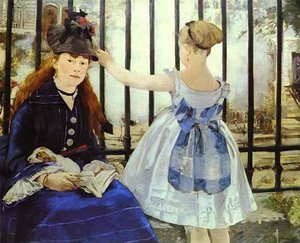 The Railway - Édouard Manet
Owning a piece of art history like The Railway is an investment in a legacy of sophisticated taste, securing a connection to the very pulse of 19th-century Parisian life. As one of the top 25 artworks of Édouard Manet, this masterpiece captures the bittersweet essence of modernity through a nostalgic, melancholic lens. Manet masterfully bridges the gap between Realism and Impressionism, using a palette of muted putty, deep blues, and soft purples to evoke a dreamlike atmosphere. The composition, featuring Victorine Meurent against a wrought-iron fence, utilizes loose, visible brushstrokes to create a sense of fleeting time and urban movement.
The painting’s profound influence on the evolution of modern art makes it a cornerstone for any serious collection. For the contemporary home, a high-quality reproduction of this work brings an unparalleled aesthetic authority to a living room, offering a sense of quiet, intellectual luxury. It is not merely decor; it is a window into a transformative era, perfect for those who seek to surround themselves with art that possesses both soul and status.
Rue Mosnier with Flags, J. Paul Getty Museum, Ma - Édouard Manet
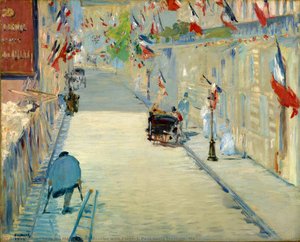 Rue Mosnier with Flags, J. Paul Getty Museum, Ma - Édouard Manet
Bathed in a nostalgic, rosy brown warmth, this masterpiece captures a fleeting moment of Parisian celebration that feels both grand and intimate. In Rue Mosnier with Flags, Édouard Manet masterfully bridges the gap between Realism and Impressionism, using a vibrant palette of festive reds and yellows that dance against cool, atmospheric blues. This sophisticated play of light and color is precisely why this work stands among the top 25 artworks of Édouard Manet; it captures the very soul of urban movement through energetic, visible brushstrokes.
For the modern decorator, this piece offers a wonderful way to infuse a living room or dining area with a sense of storied history and lively energy. The composition’s rhythmic, receding perspective creates an illusion of depth, making it a perfect focal point for a wide wall. Whether you are drawn to its patriotic fervor or its dreamlike, shimmering textures, this painting brings a touch of 19th-century Parisian elegance and a warm, inviting glow to any contemporary home.
Spring (Study of Jeanne Demarsy) - Édouard Manet
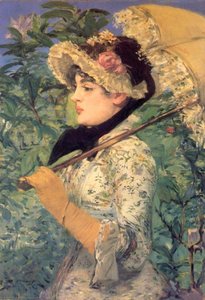 Spring (Study of Jeanne Demarsy) - Édouard Manet
In Spring (Study of Jeanne Demarsy), we witness a breathtaking moment of transition where Manet’s realist roots blossom into pure Impressionism. The composition is a masterclass in organic geometry; the soft, flowing lines of Jeanne’s silhouette and the delicate arc of her parasol create a rhythmic, diagonal movement that breathes life into the canvas. This structural harmony, framed by lush, sap-green foliage, achieves a sense of timeless perfection that secures its place among the top 25 artworks of Édouard Manet.
There is a quiet prestige in how Manet uses light and texture to capture a fleeting, serene afternoon. The visible, energetic brushstrokes create a tactile depth, offering a dreamlike quality that feels both spontaneous and deeply composed. Interestingly, this balance between subject and space mirrors the principles of modern minimalist design—using purposeful, clean movement to ground a scene. For the contemporary collector, this piece brings a tranquil, sophisticated energy, making it an ideal centerpiece for a living room seeking a touch of Parisian elegance and light-drenched warmth.
Boating, Metropolitan Museum of Art, New York - Édouard Manet
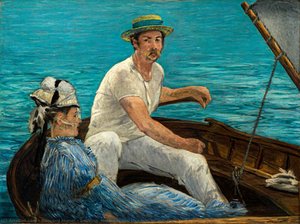 Boating, Metropolitan Museum of Art, New York - Édouard Manet
In Boating, the canvas becomes a living surface where the light of the Seine is not just seen, but felt. As one of the top 25 artworks of Édouard Manet, this 1874 masterpiece captures a fleeting summer afternoon through a revolutionary, tactile application of paint. Rather than the polished, invisible finish of the Academy, Manet employs energetic, broken brushstrokes that create a rhythmic texture across the water and the figures. This alla prima technique allows the colors to dance, capturing the very essence of light and atmosphere that defines the Impressionist spirit.
The work exemplifies Manet’s genius by bridging the gap between Realism and modernism, turning a simple moment of leisure into a profound study of companionship and serenity. At Mus3ums.com, we believe such masterpieces deserve to be experienced in their full, sensory glory. Our handmade oil reproductions are meticulously crafted to honor this materiality, using thick, visible brushwork and rich pigment to bring the three-dimensional soul of Manet’s vision directly into your living space, ensuring the quiet tranquility of the river follows you home.
Isabelle Lemonier, Woman with golden hairpin - Édouard Manet
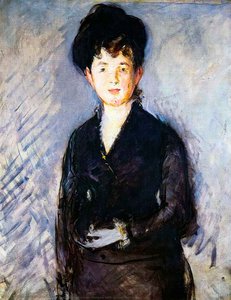 Isabelle Lemonier, Woman with golden hairpin - Édouard Manet
In Isabelle Lemonier, Woman with golden hairpin, the canvas breathes through a masterful display of Impressionistic texture. Rather than seeking the polished perfection of the Academy, Manet utilizes a loose, energetic application of pigment, where visible brushstrokes dance across the surface to capture a fleeting moment of serenity. This tactile, alla prima technique creates a luminous, layered effect, particularly in the soft, diffused light that graces the subject's face and hands against a somber, muted palette of rosy browns and deep shadows.
This piece stands among the top 25 artworks of Édouard Manet because it perfectly encapsulates his role as the bridge between Realism and the modern era. He moves away from rigid lines, favoring an emotional, atmospheric depth that prioritizes the feeling of a moment over mere photographic accuracy. At Mus3ums.com, we honor this revolutionary spirit through our hand-painted oil reproductions. Our artists meticulously recreate these essential brushstrokes and the physical depth of the paint, ensuring that the soulful, three-dimensional essence of Manet’s genius is preserved for your own home.
The Execution of the Emperor Maximilian of Mexico - Édouard Manet
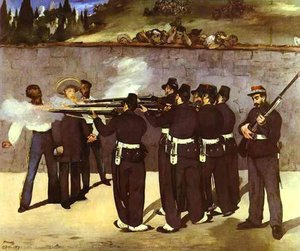 The Execution of the Emperor Maximilian of Mexico - Édouard Manet
In this profound masterpiece, a somber palette of walnut browns and muted grays establishes a heavy, contemplative mood, capturing the gravity of a tragic historical turning point. Manet’s mastery of color is what secures this piece's place among the top 25 artworks of Édouard Manet; he eschews traditional, idealized beauty for a stark, realistic truth. By utilizing a dramatic, high-contrast lighting scheme, he creates a sense of theatrical tension that feels both immediate and eternal.
For the modern decorator, this work offers a sophisticated way to anchor a room. The deep, earthy tones and dramatic atmosphere make it a stunning focal point for a formal dining room or a quiet, moody study, providing a sense of quiet prestige and intellectual depth. This painting perfectly exemplifies the essence of Manet’s genius—his ability to bridge the gap between Realism and a more modern, direct way of seeing. It is not just a depiction of an execution, but a powerful study of light, shadow, and the human condition, making it a cornerstone of his legendary career.
Portrait of Stéphane Mallarmé, Musée d'Orsay, Pa - Édouard Manet
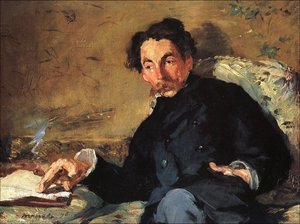 Portrait of Stéphane Mallarmé, Musée d'Orsay, Pa - Édouard Manet
A quiet moment of intellectual repose, captured in a dance of light and shadow. In this 1876 masterpiece, Édouard Manet moves beyond mere likeness to create a profound window into the soul of the Symbolist poet, Stéphane Mallarmé. This work is an essential inclusion in our collection of the top 25 artworks of Édouard Manet because it perfectly captures his role as the bridge between Realism and Impressionism.
Manet utilizes a sophisticated, muted palette of creams and soft greys, employing loose, gestural brushstrokes that prioritize atmosphere over rigid detail. The subject, lost in a book, evokes a sense of deep contemplation and calm—a mood that brings a serene, scholarly elegance to any modern living space. By favoring the alla prima technique, Manet captures the fleeting essence of a private thought, turning a simple seated figure into a timeless study of light and intellect. It is this ability to blend the physical reality of paint with the ephemeral nature of a mood that makes this portrait a cornerstone of modern art history.
The balcony, Musee d'Orsay, Paris - Édouard Manet
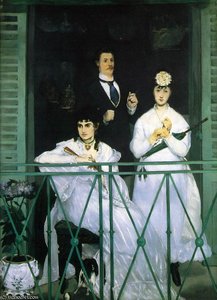 The balcony, Musee d'Orsay, Paris - Édouard Manet
Imagine standing on a quiet, shaded terrace as the vibrant energy of a bustling city hums just out of sight. There is a palpable sense of sophisticated leisure, a moment of pause amidst the rapid pulse of 19th-century Paris. In The Balcony, Édouard Manet captures this exact intersection of intimacy and urbanity. This masterpiece is a cornerstone of his legacy, perfectly illustrating why he is considered the bridge between Realism and Impressionism. Rather than a staged historical drama, Manet presents a snapshot of modern life, using bold, direct brushwork to define his subjects.
The composition is a masterclass in his signature style: a striking play of light and shadow, where the deep, phthalo green tones of the setting contrast beautifully with the elegant attire of the figures. It is a scene of quiet reflection and social grace that feels remarkably contemporary. Bringing a work of this caliber into your own living room does more than decorate a wall; it invites a sense of timeless Parisian elegance and soulful depth into your daily sanctuary, turning a simple space into a curated gallery of human connection.
The Monet Family in the Garden - Édouard Manet
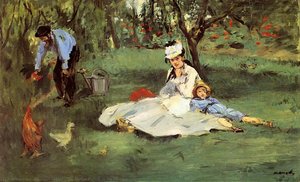 The Monet Family in the Garden - Édouard Manet
At Mus3ums.com, we believe in democratizing beauty, ensuring that the profound emotional resonance of a masterpiece is never out of reach. The Monet Family in the Garden is a cornerstone of our curated collection, earning its place among the top 25 artworks of Édouard Manet through its breathtaking ability to capture the fleeting essence of domestic bliss. This 1874 masterpiece transcends the traditional family portrait, offering a serene window into a sun-drenched afternoon in Argenteuil.
Manet’s genius is on full display here; he moves away from heavy, academic shadows to embrace a luminous, Impressionistic palette. With energetic, loose brushstrokes, he depicts Camille and her children amidst lush greenery and apple trees, creating a sense of movement that feels remarkably alive. The presence of simple details—a bucket, a wandering chicken—grounds this high-art moment in the beautiful reality of everyday life. This work exemplifies Manet’s role as a bridge to modernity, trading stiff formality for spontaneous light. You can bring this transformative, calm presence into your own living room or personal gallery through our high-fidelity, hand-painted oil reproductions, turning a historic moment into a timeless part of your home.
Monk at Prayer - Édouard Manet
 Monk at Prayer - Édouard Manet
Imagine a quiet, dimly lit corner where time seems to stand still. In 1865, Édouard Manet captured this exact stillness in Monk at Prayer, a masterpiece of profound spiritual reflection. This evocative work transcends simple portraiture, pulling the viewer into an intimate encounter with a Franciscan monk lost in solemn contemplation. Bathed in dramatic light that emerges from an espresso-toned, shadowy background, the monk’s bowed head and textured brown robes create a powerful sense of presence and weight.
What makes this piece a quintessential example of Manet’s genius is his masterful use of chiaroscuro. By prioritizing the raw essence of devotion over photographic perfection, his expressive, visible brushstrokes hint at the transition from Realism toward the spontaneity of Impressionism. The inclusion of a skull at the monk's feet introduces a poignant memento mori, adding a layer of melancholic beauty to the scene. For a modern home, such a piece brings a sense of soulful depth and quietude, making it a perfect anchor for a living room designed for reflection and calm.
Masked Ball at the Opera - Édouard Manet
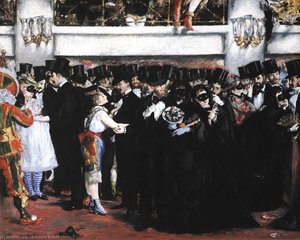 Masked Ball at the Opera - Édouard Manet
Imagine stepping into the flickering candlelight of 1873 Paris, where the air is thick with the scent of perfume and the rustle of silk. In Édouard Manet’s Masked Ball at the Opera, you are no longer a mere observer but a guest amidst the swirling shadows of a crowded opera house. This masterpiece captures the very essence of Parisian modernity, where identity dissolves behind porcelain masks and social performance begins.
Manet’s signature style is on full display here, bridging the gap between Realism and Impressionism through bold, direct brushwork. He uses light as a sculptor, catching the sheen of satin and the pale curves of masks against a sea of velvety blacks. This dramatic play of light and shadow creates a sense of electric, fleeting energy. For the modern collector, bringing this piece into your home adds a layer of sophisticated mystery and cinematic depth, transforming a quiet corner into a window onto the vibrant, high-society pulse of the 19th century.
Monet in his Studio Boat - Édouard Manet
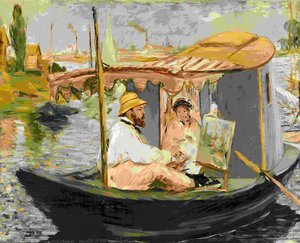 Monet in his Studio Boat - Édouard Manet
In the shimmering summer of 1874, Édouard Manet captured a profound artistic dialogue on canvas with Monet in His Studio Boat. This masterpiece is far more than a portrait of a colleague; it is a breathtaking window into the very soul of the Impressionist movement. Seated within the intimate confines of his floating studio, Claude Monet is depicted deeply immersed in his craft, surrounded by the tranquil waters of the Seine.
Manet’s signature style shines through here, moving away from rigid academic polish toward a more spontaneous, energetic application of pigment. The work is a masterclass in capturing the fleeting nature of light, using loose brushstrokes and a luminous palette of phthalo greens and soft river tones to evoke a sense of serene vitality. For the collector, this piece offers a reflective, intellectual depth, transforming a living room into a gallery of the soul. It stands as a testament to the camaraderie of genius, bridging the gap between the real and the sublime.
The Horsewoman - Édouard Manet
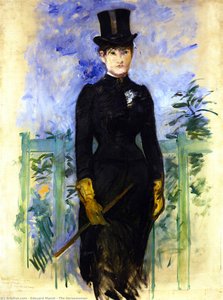 The Horsewoman - Édouard Manet
There is a profound, quiet tension in a portrait where the central subject is defined by what is missing. In The Horsewoman by Édouard Manet, the absence of the equestrian companion only serves to heighten the presence of the woman herself. Painted in 1882, this work stands as a masterful testament to why Manet remains a cornerstone of the top 25 artworks of Édouard Manet. He captures a moment of restrained elegance, presenting a figure poised in formal black attire, her silhouette punctuated by the startling, vibrant yellow of her gloves.
The painting exemplifies Manet’s genius in bridging the gap between the structured precision of Realism and the atmospheric spontaneity of Impressionism. His brushwork is energetic yet deliberate, using short, choppy strokes to suggest the texture of fabric against a soft, celadon-toned background of blurred foliage. This interplay of light and shadow creates a melancholic, introspective mood that transcends simple portraiture. For the modern collector, such a piece brings a sense of sophisticated mystery and timeless grace to a living space, proving that even a century later, Manet’s vision continues to transform the very air of a room.
Plum - Édouard Manet
 Plum - Édouard Manet
Have you ever wondered what secrets are whispered in the quiet moments of a Parisian afternoon? In 1878, Édouard Manet captured such a moment in his evocative masterpiece, Plum. This painting is far more than a simple still life; it is a beautifully composed tableau that invites us into a world of reflection and elegance. As one of the top 25 artworks of Édouard Manet, this piece exemplifies his unique ability to bridge the gap between Realism and Impressionism through bold, direct brushwork and a masterful play of light and shadow.
The scene features a pensive woman seated at a table adorned with delicate details—a wine glass, fine cakes, and a fruit bowl—all rendered with the spontaneous, energetic application of pigment that defined his style. The driftwood tones and soft, atmospheric light create a sense of timelessness, making it an ideal centerpiece for a dining room seeking a curated, historical escape. For those looking to bring a touch of French modernism into their own home, Plum offers a soulful connection to the vibrant, shifting light of 19th-century Paris.
The Promenade - Édouard Manet
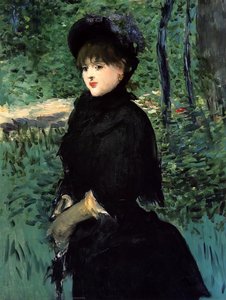 The Promenade - Édouard Manet
While many remember Manet for the scandalous, bustling café scenes of Paris, his later works often retreated into a profound, quiet intimacy. The Promenade is a masterclass in this emotional shift, capturing a moment of pure, melancholic serenity. In this exquisite 1880 work, a woman in a striking black dress sits amidst the lush greenery, her pensive gaze drifting toward an unseen horizon. It is a scene of leisure, yet there is a weight to her stillness that speaks to the fleeting nature of time.
Technically, this piece exemplifies why Manet is a cornerstone of the transition from Realism to Impressionism. His brushwork is bold and direct, using rich textures to define the interplay of light on fabric and the soft dappling of the grass. The composition, anchored by deep espresso tones and a sense of calm, creates a sophisticated atmosphere. Much like the focused ambition required to master such a delicate balance of light and shadow, hanging this masterpiece in a modern study or home office invites a sense of contemplative productivity and timeless elegance into your space.
Lilac in a glass - Édouard Manet
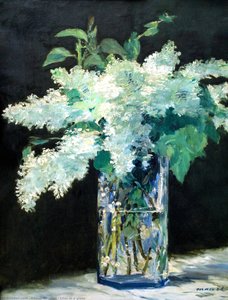 Lilac in a glass - Édouard Manet
Imagine a quiet afternoon where the air feels heavy with the scent of spring, and the only sound is the soft play of light against a windowpane. This is the atmosphere Édouard Manet invites us into with Lilac in a glass. Painted in 1882, this exquisite still life is a masterclass in capturing the ephemeral; it is a meditation on beauty that refuses to stay still. As one of the greatest still life paintings, it marks a pivotal moment in art history where Manet bridged the gap between the structured world of Realism and the luminous, fleeting spirit of Impressionism.
The work earns its place among the top 25 artworks of Édouard Manet through its breathtaking technical soul. Using a palette of cool whites, lavender, and deep phthalo greens, Manet uses loose, energetic brushstrokes to prioritize the impression of light over photographic perfection. The way light refracts through the glass vase creates a sense of depth and tranquility that can transform a modern living room into a sanctuary of calm. It is more than a painting; it is a nostalgic whisper of life's delicate, passing moments, brought to life through the artist's signature, bold touch.
Conclusion
As the light fades on our journey through the world of Édouard Manet, we find that his legacy is far more than a collection of names in a history book or silent figures behind museum glass. His work represents a profound shift in how we perceive the world—a move toward the immediate, the honest, and the beautifully unpolished. Manet didn't just paint scenes; he captured the pulse of modern life, teaching us to find depth in a sudden glance, drama in a play of light, and soul in the everyday moments that define our existence.
Today, these masterpieces continue to breathe life into our most personal spaces. Whether it is the bold, energetic brushstrokes of an impressionist landscape or the quiet, sophisticated poise of a portrait, Manet’s influence echoes through our homes, turning simple walls into windows of inspiration. His ability to balance tradition with rebellion allows us to bring a piece of that timeless dialogue into our own lives, bridging the gap between the grand galleries of Paris and the intimate sanctuary of our living rooms.
We invite you to continue this discovery and find the piece that speaks to your own story. Explore our full collection and let the spirit of Manet transform your space into a living testament to the enduring power of art.