


I. Introduction: The Undervalued Role of Scale in Artistic Impact
For the discerning art collector, the acquisition extends beyond mere possession; it’s a communion with history, emotion, and the artist's intent. Yet, amidst considerations of provenance, technique, and aesthetic merit, one crucial element often receives insufficient attention: scale. The dimensions of an artwork are not simply measurements—they are fundamental to its perceptual power, dictating how we experience its presence, interpret its narrative, and ultimately, connect with its soul. Throughout the ages, artists have intuitively understood this principle, manipulating size to evoke specific responses, from the monumental grandeur intended to inspire awe in Renaissance frescoes to the intimate introspection fostered by Dutch Golden Age cabinet paintings. To overlook scale is to diminish the artwork’s potential, to mute a vital voice within its composition.
Mus3ums's commitment extends beyond faithful reproduction; it encompasses a deep respect for these nuanced considerations. We believe that every piece deserves to be presented in a manner that honors the artist’s original vision and maximizes its impact on your space—and, crucially, on your emotional landscape. This begins with understanding the profound interplay between art and perception.
II. Perceptual Psychology & Art: How Size Shapes Emotional Response
The field of perceptual psychology offers invaluable insights into this relationship. Pioneering work by James J. Gibson highlighted the concept of “affordances”—the perceived utility or potential for interaction within our environment. An artwork, then, doesn’t exist in isolation; it *affords* certain experiences based on its physical characteristics, including size. A large-scale canvas commands attention, physically dominating a room and triggering an instinctive sense of awe—a response rooted in our evolutionary history, where vastness often signaled power or danger. Conversely, smaller works invite intimacy, encouraging close inspection and fostering a more personal connection.
This isn’t merely subjective preference; neurological studies demonstrate that the size of visual stimuli directly impacts emotional processing. Larger artworks activate different areas of the brain associated with grandeur and contemplation, while smaller pieces engage regions linked to detail-oriented analysis and personal reflection. Gerard Egan and Robert Bolton's research on interpersonal perception underscores a broader principle: our understanding is shaped by what we perceive, and size is an undeniable component of that initial perceptual framework. The power of art lies in its ability to bypass conscious thought and tap directly into these primal responses.
III. Selecting Dimensions for Intimate vs. Grand Spaces
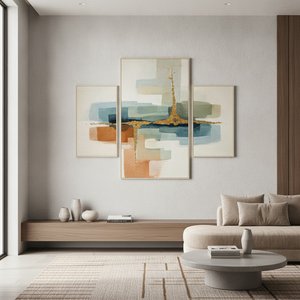
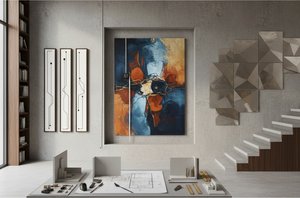
Applying this knowledge practically requires careful consideration of your space. A spacious living room with high ceilings can accommodate—and indeed, benefit from—a statement piece: a large abstract canvas or a meticulously reproduced landscape that anchors the design and draws the eye upward. However, in a smaller bedroom or study, such an artwork might feel overwhelming, disrupting the sense of calm and intimacy. Here, a series of smaller prints arranged in a curated gallery wall offers a more harmonious solution.
The key is proportionality. As a general guideline, aim for artwork that occupies approximately two-thirds of the width of the furniture below it. For example, above a 90-inch sofa, a piece around 60 inches wide will create visual balance. Consider also the room’s function: a dining area might benefit from symmetrical arrangements to reinforce its structured layout, while a more casual space can embrace asymmetry and eclecticism. Mus3ums's expert consultants are available to provide personalized guidance, taking into account your specific dimensions, lighting conditions, and aesthetic preferences.
IV. Custom Sizing and the Preservation of Artistic Integrity
While preset sizes offer convenience, custom sizing unlocks a realm of possibilities—and ensures that your artwork is perfectly tailored to your space. This isn’t simply about aesthetics; it's about preserving the artist’s original intent. Often, the dimensions chosen by the master were integral to their composition, reflecting specific ratios or perspectives. A reproduction scaled incorrectly can subtly alter these relationships, diminishing the artwork’s impact.
At Mus3ums, we meticulously analyze each piece before offering custom sizing options. Our artists are adept at maintaining proportions and ensuring that every detail—from brushstroke texture to color saturation—is faithfully reproduced regardless of scale. We provide digital mockups for approval, allowing you to visualize the artwork in your space before it’s created. This transparent process guarantees that your reproduction not only fits perfectly but also honors the spirit of the original masterpiece. Choosing custom sizing is an investment in authenticity and a testament to your discerning eye.
V. Beyond the Frame: Considering Proportions and Composition
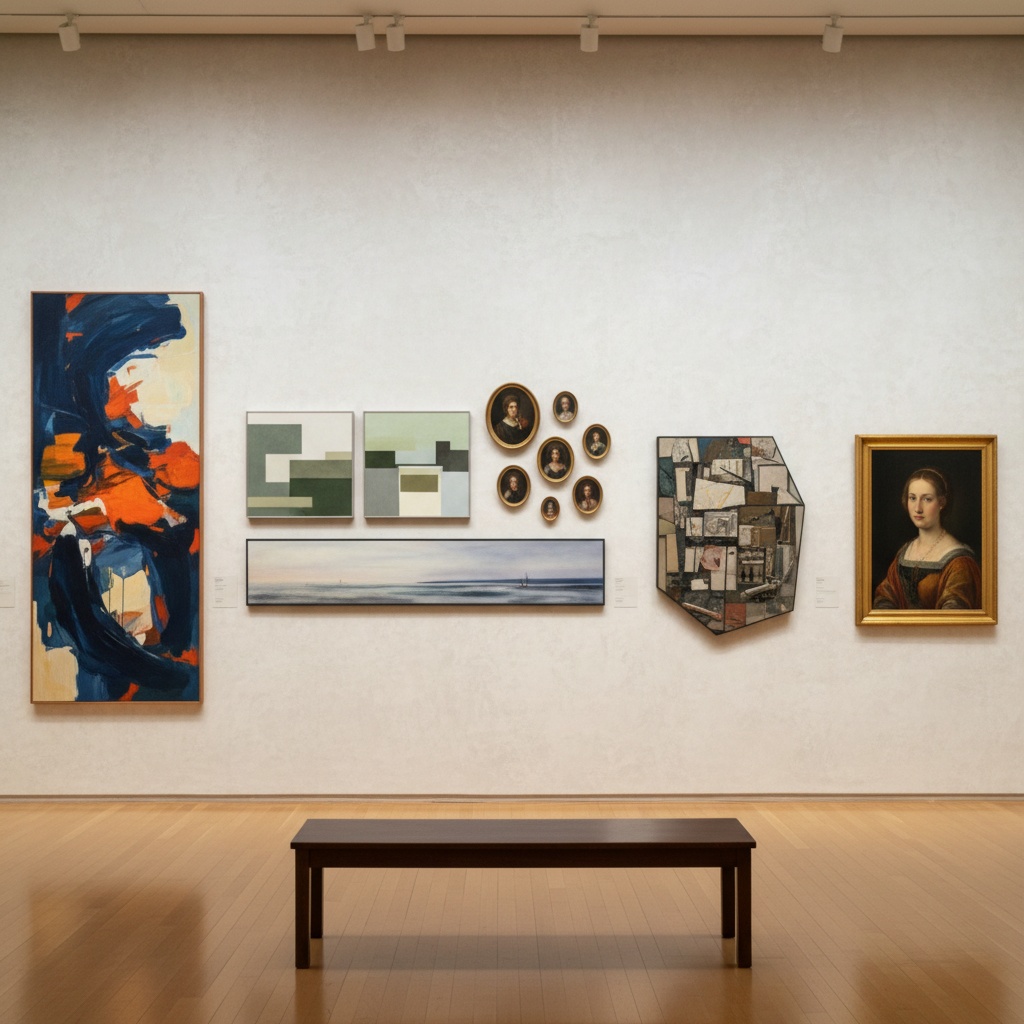
The dimensions of the canvas are just one piece of the puzzle. The surrounding frame, the arrangement of multiple pieces, and even the placement within the room all contribute to the overall perceptual experience. A carefully chosen frame can enhance the artwork’s colors, textures, and style—or detract from them if poorly selected. Similarly, a gallery wall requires thoughtful composition: varying sizes and orientations create visual interest, while consistent spacing maintains harmony.
It's also crucial to consider the “eye level” rule – generally around 57-60 inches from the floor to the center of the artwork. However, this can be adjusted based on furniture placement and room dynamics. Ultimately, the goal is to create a cohesive visual narrative that draws the viewer in and invites contemplation. Mus3ums offers expert advice on framing options, gallery wall layouts, and optimal placement strategies, ensuring that your artwork becomes a focal point of beauty and inspiration within your home. We believe that art should not merely decorate a space—it should transform it.