The Life of Edward Coley Burne-Jones
Edward Coley Burne-Jones entered the world on 28 August 1833 in Birmingham, United Kingdom. His arrival was marked by a quiet, heavy loss; his mother, Elizabeth Jones, passed away within six days of his birth. He grew up in a house shaped by the trade of his father, Edward Richard Jones, who worked as a frame-maker. This early environment was one of craftsmanship and wood, where the physical structures of art were built long before the paintings themselves were conceived.
The boy who would become Sir Edward Coley Burne-Jones, 1st Baronet, was raised by his father and a housekeeper named Ann Sampson. His childhood was not one of grand gestures, but of a steady, contemplative nature nurtured by those who cared for him. He moved from the industrial atmosphere of Birmingham toward the academic halls of Oxford, a path that would eventually lead him away from his original intentions for the church and toward the study of visual forms. His life was a slow accumulation of interests, from the theological to the decorative, all rooted in the quiet observations of his early years.
Early Life, Family and Training
The industrial pulse of Birmingham shaped his earliest years. Born in 1833, his childhood was marked by the loss of his mother, Elizabeth, who died only six days after his birth. He grew up in a house managed by his father, Edward Richard Jones, a frame-maker, and the family housekeeper, Ann Sampson. This quiet, domestic environment provided the foundation for a temperament that leaned toward contemplation. He spent his formative days in the shadow of the city's growing manufacturing, a setting far removed from the medieval worlds he would later inhabit on canvas.
His formal training began in the classrooms of King Edward VI Grammar School. From 1848 to 1852, he moved into more technical studies at the Birmingham School of Art. It was here that the precision of his hand began to take shape. His path, however, was not initially set on the easel. He moved toward the study of theology at Exeter College, Oxford. This academic pursuit of the divine and the sacred would later find its way into his imagery, though his focus shifted from the pulpit to the brush.
The Brotherhood and Artistic Circles
At Oxford, the quiet halls of Exeter College brought him into the orbit of William Morris. They found common ground in poetry and a shared pull toward the medieval, a connection that would define much of his later life. This friendship was not merely social; it was a shared pursuit of a specific kind of beauty that looked backward to find a way forward. They were part of a group known as the Birmingham Set, a circle of friends who shared these intellectual and aesthetic interests, creating a space where art and literature could lean into one another.
His path led him to an apprenticeship under Dante Gabriel Rossetti, a move that anchored him within the Pre-Raphaelite Brotherhood. This association meant more than just a shared style; it was an immersion into a way of seeing that rejected the polished, academic traditions of the time. His early work often carried the weight of Rossetti’s influence, particularly in the way he handled shadows and the heavy, soulful presence of his figures. He did not simply follow the movement; he moved through it, eventually finding a way to translate these shared ideals into his own distinct visual language.
Technique and Artistic Style
His hand moved with a specific, quiet precision. Much of his process relied on the Indian ink wash technique, a method he refined during his time at Exeter College. He did not simply apply color; he built it through layers. By meticulously layering washes of ink, he achieved a sense of tonal subtlety and created complex textures that gave his surfaces a certain depth. This approach allowed him to capture a light that felt soft and diffused, rather than harsh or direct.
The figures in his compositions often possess an attenuated quality. They are elongated and graceful, moving through spaces that feel carefully arranged. His work sits at a crossroads of different sensibilities, blending the detailed, sincere focus of the Pre-Raphaelites with the decorative leanings of Aestheticism and the layered meanings of Symbolism. He favored delicate compositions that drew heavily from medievalism, yet the results felt distinct from the era he looked toward. Instead of mere imitation, he sought to distill the essence of myth and legend into a visual language of quiet, melancholic grace.
- The Wheel of Fortune (1875)
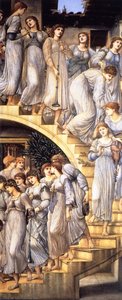
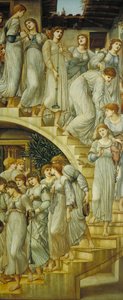
- The Golden Stairs (1876)
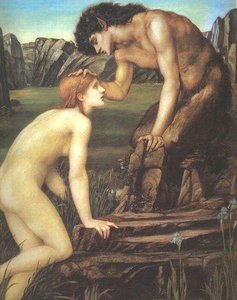
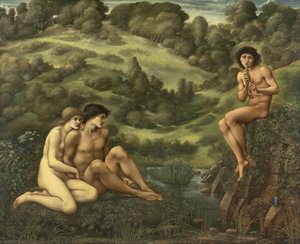
- The Garden of Pan (1887)
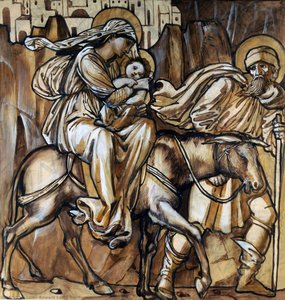
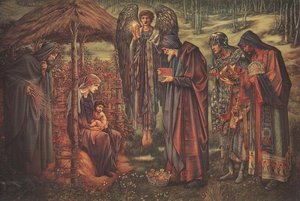
- The Star of Bethlehem (1888)
Patrons, Workshop and Commissions
The partnership with William Morris moved his work from the canvas into the very fabric of daily life. Together, they established the firm Morris & Co., a place where the boundaries between fine art and functional objects blurred. He spent much of his time designing patterns for textiles and wallpapers, as well as furniture that felt rooted in a different age. His hand appeared in many domestic spaces, shaping the objects people touched and lived among.
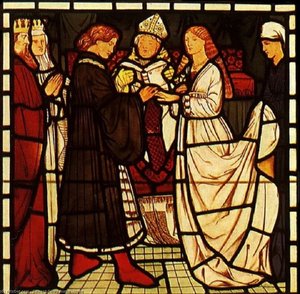
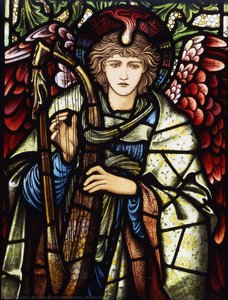
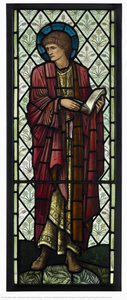
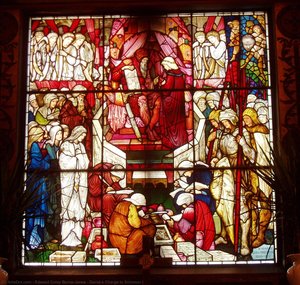
Light became a primary medium through his stained glass designs. These windows were placed in numerous churches and cathedrals, turning stone interiors into spaces of color and narrative. He approached glass with a specific understanding of how light passes through it, treating each pane as a piece of a larger story. In 1881, his reach extended to private estates, where he provided designs for the Vinland House and the Vinland Estate.
- Stained glass designs for the Vinland House and Vinland Estate, 1881
Key Works and Masterpieces
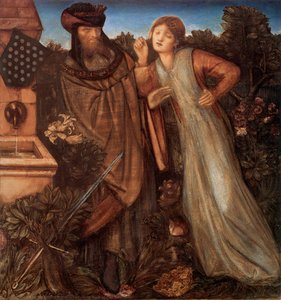
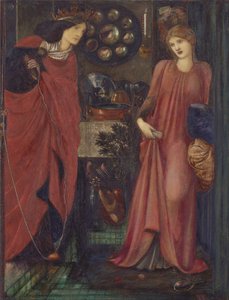
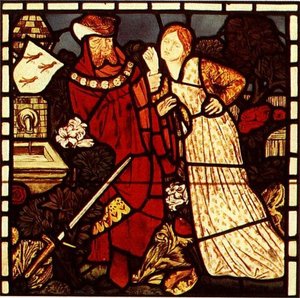
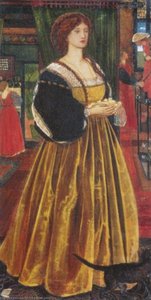
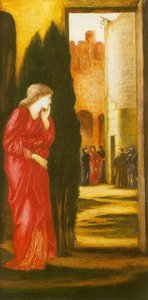
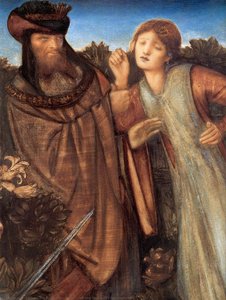
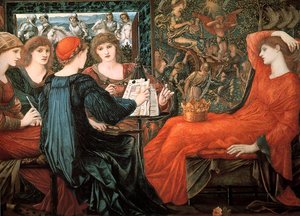
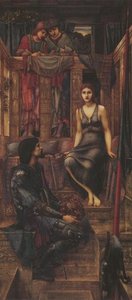
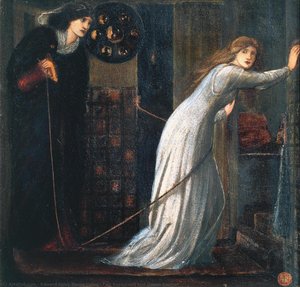
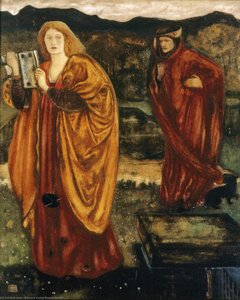
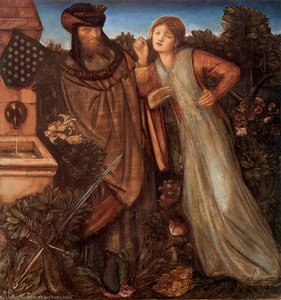
In 1861, he produced Fair Rosamond and Queen Eleonor, a work that captures a quiet tension between two women. The scene is set within an opulent chamber, where the crimson of a dress meets the somber presence of a queen. Scattered books and fine ceramics sit in the background, while a wall clock marks the passing time. The light is soft and diffused, settling on the figures as they navigate a moment of impending loss.
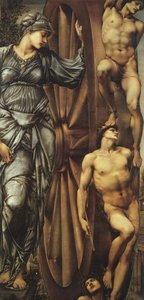
His 1875 painting, The Wheel of Fortune, moves away from quiet interiors into a more allegorical space. It depicts a mythological scene where fate is spun by a capricious wheel. The canvas uses a palette of rich reds, deep blues, and shimmering golds to build the atmosphere. There is a visual tension created by the contrast between the cool tones surrounding the central figure and the warmer hues of the wheel itself.
Other significant works include:
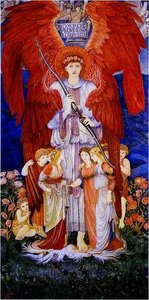
- The Golden Stairs, exhibited in 1876
- The garden of Pan, painted in 1887
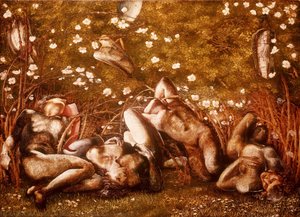
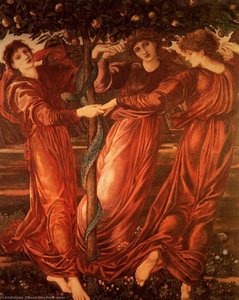
The 1887 work The garden of Pan shows a shift toward mythic leisure. His later paintings often became more introspective, moving toward a more abstract approach to form. He used an Indian ink wash technique to achieve tonal subtlety, layering washes to create texture and depth in his compositions.
Later Years and Death
The final decade of his life saw a steady accumulation of formal recognition. In 1894, he was created a baronet, a title that marked his standing within the British social and artistic hierarchy. His influence reached beyond the English Channel, and in 1897, he was elected to the Royal Academy of Science, Letters and Fine Arts of Belgium. These honors arrived even as his work became more introspective, moving toward a more abstract approach to form and a heightened sense of melancholy.
As a leading figure of the Aesthetic Movement, his focus remained on the pursuit of beauty. His later paintings often explored themes of loss and the search for spiritual meaning. He continued to produce work until his death on 17 June 1898. His passing marked the end of a career that had bridged the gap between the early Pre-Raphaelite ideals and the shifting sensibilities of the late Victorian era.
Legacy and Enduring Influence
The traces of his hand remain in the way detail and symbolism meet. His work carries the weight of Pre-Raphaelite ideals, focusing on a specific kind of beauty and a meticulous attention to the small things. Through his partnership with Morris & Co., he helped bring a renewed focus to traditional crafts, moving art away from the canvas and into the textures of daily life. This work helped change how people viewed the importance of design in textiles and furniture.
His presence is felt in the light passing through stained glass. These windows, found in many churches and cathedrals, remain significant examples of Victorian artistry. He used color and line to turn glass into a way of telling stories. The influence of his specific aesthetic can be seen in the work of many artists who came after him, following the paths he helped clear through his own experiments with form and myth.
- The Wheel of Fortune
- The Golden Stairs
- The Garden of Pan
- The Star of Bethlehem
Where to See the Works Today
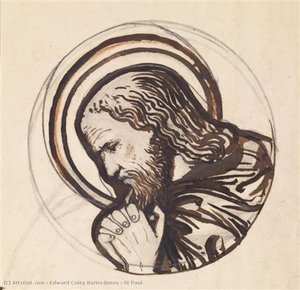
To see his hand in person, one might start in Walthamstow at the William Morris Gallery, which holds nine of his works. The space offers a quiet look at the pieces he created alongside Morris. In Birmingham, the Birmingham Museum and Art Gallery keeps six of his paintings, including St Paul from 1862. These works sit within a building that reflects the industrial history of the city where he was born.
London also holds a significant presence of his output. The Tate Gallery contains six of his paintings, allowing for a close look at his use of line and color. For those traveling further afield, the Musée d'Orsay in Paris houses The Wheel of Fortune, painted in 1875. This oil on canvas shows the way he handled light and the tension of the subject matter.
- The Golden Stairs, Tate Gallery, London
- The Wheel of Fortune, Musée d'Orsay, Paris
- Stella Vespertina, William Morris Gallery, Walthamstow
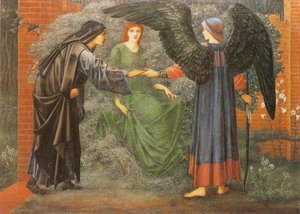
- The Heart of the Rose, William Morris Gallery, Walthamstow
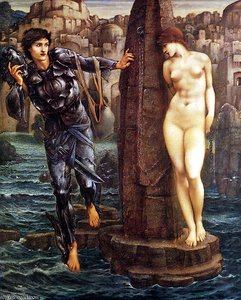
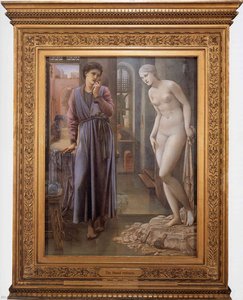
- Danae and the Brazen Tower, Ashmolean Museum, Oxford
Questions & Answers
What are the birthplace and birth year of Edward Coley Burne-Jones?
Edward Coley Burne-Jones was born in Birmingham in 1833.
Where is Edward Coley Burne-Jones from?
Edward Coley Burne-Jones was born in United Kingdom.
In which historical period did Edward Coley Burne-Jones work?
Edward Coley Burne-Jones worked in the 19th-Century period. The period situates the artist's activity in history.