Early Life, Family and Training
Grasse, France, 1732. Jean-Honoré Fragonard enters the world as the only child of François Fragonard, a glover, and Françoise Petit. The quiet life of a provincial town provides little hint of the painter's future. In 1738, the family moves to Paris, trading the atmosphere of Grasse for the bustling energy of the capital. The path toward art is not immediate. Before picking up a brush as a professional, Jean-Honoré Fragonard is apprenticed to a Paris notary, a practical detour into the world of legal documentation.
The shift toward fine art happens when his talent is recognized. He moves from the notary's office to the studio of Jean Siméon Chardin. For six months, he studies under the luminist, absorbing a focus on light and observation. This period of training provides a technical foundation before he returns to the atelier of François Boucher. The influence of Boucher is total. Fragonard acquires the master's style so completely that he eventually executes replicas of Boucher's own paintings.
Studies in Italy and Rome
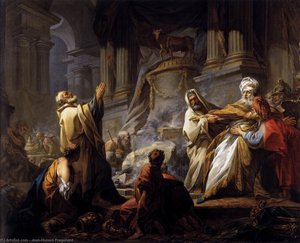
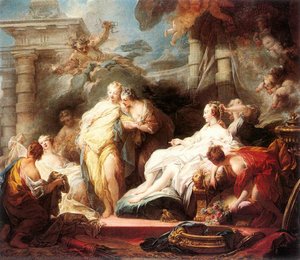
The year 1752 brings a sudden shift in momentum. Fragonard wins the prestigious Prix de Rome, securing his future through his depiction of Jeroboam Sacrificing to Idols. Before the Italian sun can reach him, however, he spends three years under the tutelage of Charles-André van Loo. This period of rigorous training bridges the gap between his early apprenticeship and the classical immersion that awaits him.
In December 1756, Fragonard enters the French Academy in Rome. The atmosphere is one of intense study and imitation. Under the guidance of Charles-Joseph Natoire, he does not merely observe the past; he dissects it. He spends his days meticulously copying the works of masters, absorbing the technical secrets of Raphael, Caravaggio, and Rembrandt. These are not mere exercises. They are the building blocks of his visual language, learned through the direct study of light and form in the shadow of the old masters.
Patrons, Workshop and Commissions
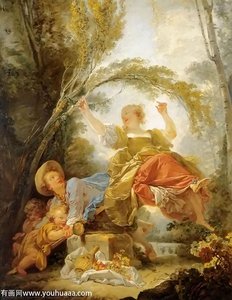
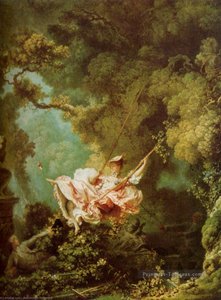
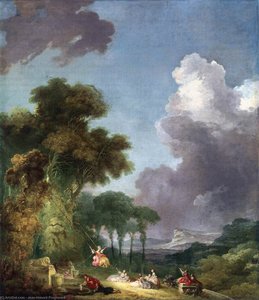
The shifting tides of French patronage define Fragonard's middle years. After 1761, the king’s mistress begins to commission his work, fueling a period of intense productivity. This era of high-society demand is epitomized by a specific, whispered request: a young nobleman seeks a portrait of his mistress seated on a swing. Fragonard transforms this commission into a scene of playful, clandestine energy. He moves through these aristocratic circles with ease, securing the attention of those who inhabit the private salons of the Ancien Régime.
His professional life also extends into the domestic and the instructional. He decorates the house of his cousin, Alexandre Maubert, with a series of decorative panels, bringing his fluid touch to a private residence. By 1778, his studio becomes a space for formal instruction as Marguerite Gérard joins him as a student and assistant. This workshop environment allows him to maintain a prolific output, even as the political landscape of France begins to fracture.
- The Swing (L'Escarpolette)
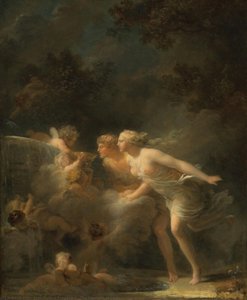
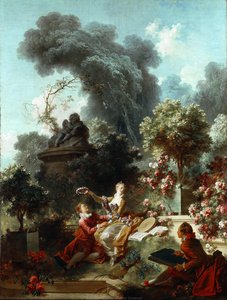
- Les progrès de l'amour dans le cœur d'une jeune fille
Technique and Signature Style
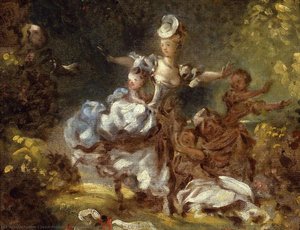
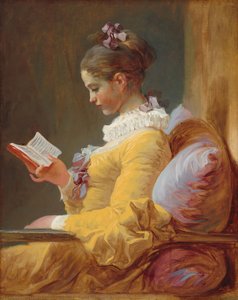
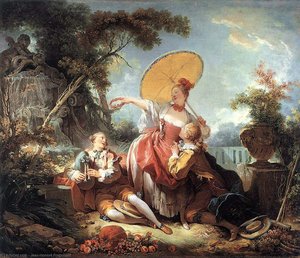
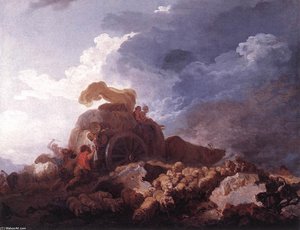
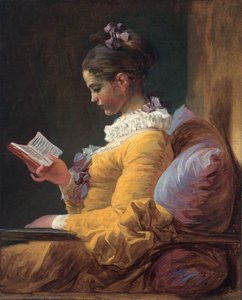
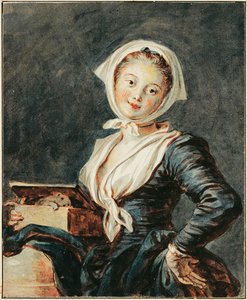
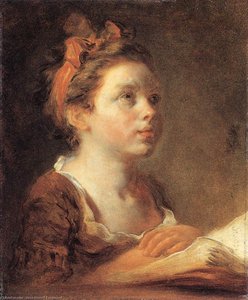
The brush moves with a speed that borders on the frantic. Fragonard does not labor over minute details; instead, he employs a loose, painterly technique that prioritizes atmosphere and emotion over rigid precision. This rapid execution allowed him to produce an immense body of work, exceeding 550 paintings throughout his career. His hand is characterized by a remarkable facility, a sense of exuberance that captures the fleeting nature of a moment before it vanishes. He works with a lightness of touch, often described as a sense of "fire," where the paint itself seems to dance across the canvas.
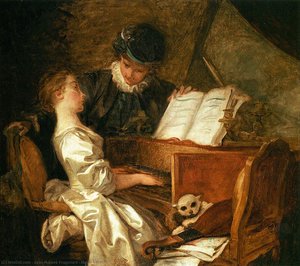
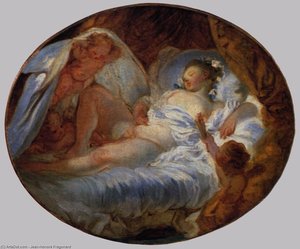
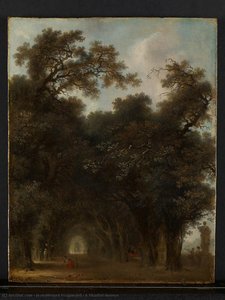
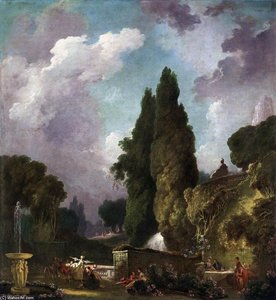
Light does not merely illuminate his subjects; it defines them. Through a mastery of pastel pigments and a fluid application of color, he achieves a luminous effect that mimics the shimmering quality of natural light. This technique creates a sense of spontaneity, as if the scene were caught in a sudden, joyful burst of movement. His late Rococo manner leans heavily into hedonism, using dappled light and soft, creamy tones to build worlds of intimacy and veiled desire. The result is a visual language of pleasure, where the texture of the paint is as vital as the subject it depicts.
- The Swing (L'Escarpolette)
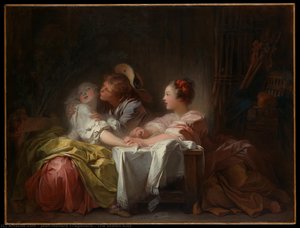
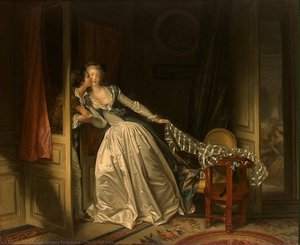
- The Stolen Kiss
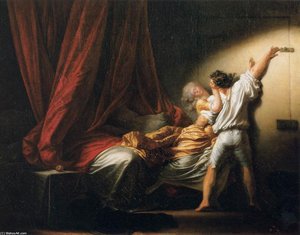
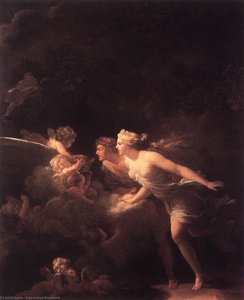
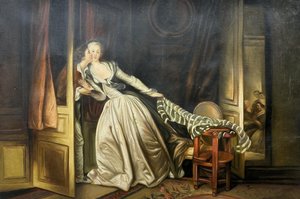
- The Bolt
Key Works and Masterpieces
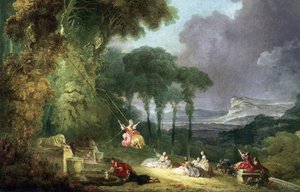
The scene unfolds in a lush, overgrown garden where a young woman kicks off her shoe while a bishop pushes her swing. This 1767 oil painting, The Swing, captures a moment of mischievous energy and veiled eroticism. It remains a defining image of the Rococo era. Nearby, in 1760, The Stolen Kiss presents a different kind of intimacy. Two young women engage in a clandestine embrace amidst a profusion of flowering plants and strategically placed foliage, their bodies subtly intertwined in the dappled sunlight.
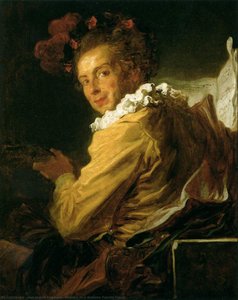
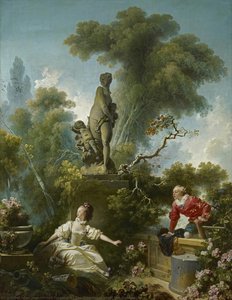
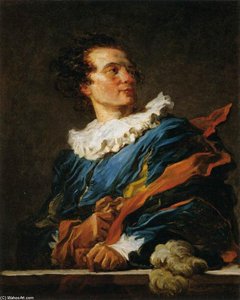
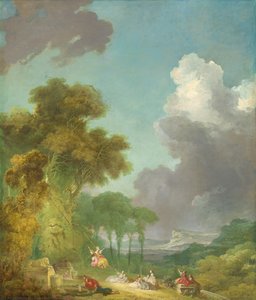
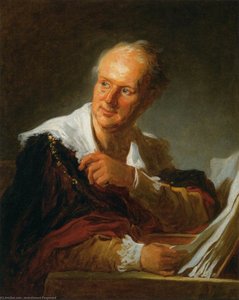
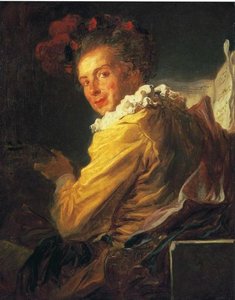
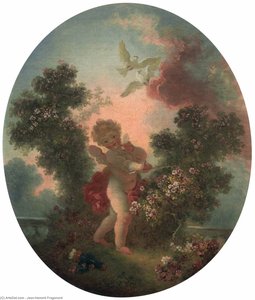
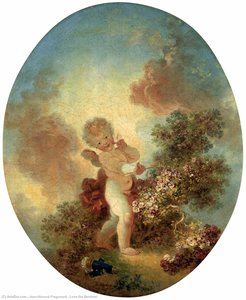
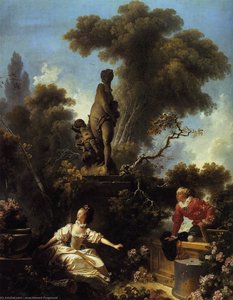
Fragonard’s ability to capture the atmosphere of the French court is evident in his later, more structured narratives. In 1769, Monsieur de la Bretèche (Fanciful Figure) portrays a gentleman seated at an easel, absorbed in his artistic pursuits. The work uses loose brushwork to create a luminous effect that mimics natural light. This focus on the private lives of the aristocracy continues through his series of romantic depictions. The Progress of Love: The Lover Crowned was painted in 1771, followed by The Progress of Love: The Meeting in 1773.
- The Swing (L'Escarpolette)
- The Stolen Kiss
- Monsieur de la Bretèche (Fanciful Figure)
- The Progress of Love: The Lover Crowned
- The Progress of Love: The Meeting
Later Years and Death
The political tremors of the French Revolution fundamentally alter the landscape of Fragonard's career. As the social order shifts, the private patrons who once fueled his prolific output are gone, many having been guillotined or exiled. The lighthearted, aristocratic world he once painted is replaced by a new, more somber era. In 1790, he leaves the turbulence of Paris behind, seeking shelter in his hometown of Grasse.
His later years are marked by a shift in focus. While his creative output diminishes, he remains connected to the institutional heart of French art, holding administrative positions at the Louvre. The man who once captured the fleeting pleasures of the Ancien Régime now navigates the structures of a changing nation. He remains in this period of transition until his death on 22 August 1806.
Where to See the Works Today
The physical traces of Fragonard’s brushwork remain scattered across major global institutions. In London, the Wallace Collection houses The Swing, a scene of playful energy and hidden glances. The Musée du Louvre in Paris maintains a significant presence of his output, preserving the atmosphere of the Ancien Régime within its galleries. These spaces allow for a direct encounter with the fluid, spontaneous movement that defined his later years.
Across the Atlantic, the collection of his works continues in the United States. The National Gallery of Art in Washington D.C. holds several of his paintings, offering a glimpse into his mastery of light and form. In New York, the Metropolitan Museum of Art features his paintings alongside other significant works of the era. The Frick Collection also displays his pieces, maintaining the connection to the private, intimate settings his art once inhabited.
- The Stolen Kiss, about 1760
- The Bolt, 1777
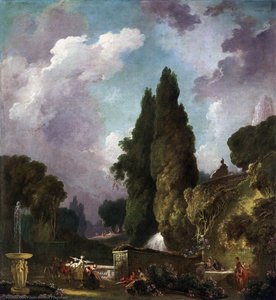
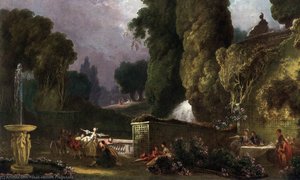
- The Progress of Love: The Meeting, 1773
- The Progress of Love: The Lover Crowned, 1771
Questions & Answers
Where is Jean-Honoré Fragonard from?
Jean-Honoré Fragonard was born in France.
What are the birthplace and birth year of Jean-Honoré Fragonard?
Jean-Honoré Fragonard was born in Grasse in 1732.
What aliases or alternate names does Jean-Honoré Fragonard have?
Jean-Honoré Fragonard is also known as Jean-Honore Fragonard.