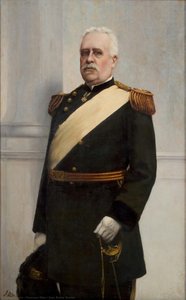
Early Life and Education
- Born: June 17, 1833, in Bayamón, Puerto Rico
- Parents: Cayetano Juan Oller y Fromesta and María del Carmen Cestero Dávila
- Began studying art at age eleven under Juan Cleto Noa.
- Demonstrated exceptional talent early on.
- In 1848, General Juan Prim offered him a scholarship to study in Rome, but his mother declined.
- At eighteen, moved to Madrid, Spain, to study at the Royal Academy of San Fernando under Don Federico de Madrazo y Kuntz.
- Studied in Paris, France, under Thomas Couture and Gustave Courbet.
Artistic Development and Influences
- Early training emphasized European techniques and academic painting.
- Exposure to Gustave Courbet's Realism significantly influenced his approach.
- Associated with avant-garde artists like Paul Cézanne, Camille Pissarro, and Claude Monet in Paris.
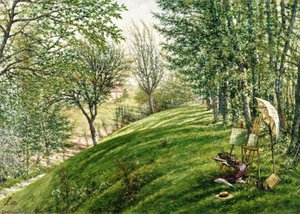
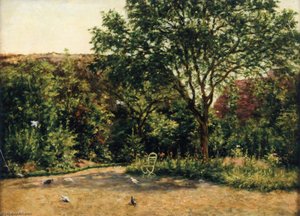
- Became known as the first Puerto Rican and Hispanic Impressionist artist by 1865.
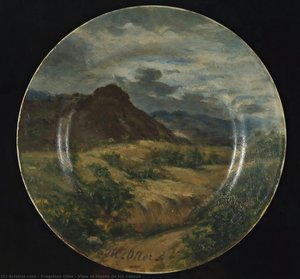
- Synthesized European Realism and Impressionism with Puerto Rican subject matter: landscapes, customs, social realities.
Major Works and Artistic Style
- Hacienda la Fortuna (1885): Demonstrates his skill in landscape painting.
- La Escuela del Maestro Rafael Cordero (1890–1892): Reflects Puerto Rican culture and society.
- El Velorio (1893): A significant masterpiece depicting a child's wake, critiquing social conditions.
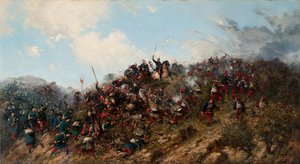
- His style combined elements of Realism and Impressionism.
- Frequently depicted scenes from Puerto Rican life, showcasing its landscapes and people.
Contributions and Legacy
- Founded the Free Academy of Art of Puerto Rico in 1868.
- Established an art school for young women later known as the Universidad Nacional.
- Honored by Spain with membership in the Caballeros de la Orden de Carlos III and served as official painter to the Royal Court of Amadeo I.
- Considered a pivotal figure in Caribbean and Latin American art, bridging European styles with Puerto Rican identity.
- His work is displayed in museums worldwide, including the Louvre.
- Died on May 17, 1917, in San Juan, Puerto Rico.
- Numerous institutions and places are named after him, recognizing his significant contributions to art and education.
Historical Significance
- Oller's work represents a unique fusion of European artistic movements with Caribbean cultural identity.
- He played a crucial role in the development of modern art in Puerto Rico.
- His paintings offer valuable insights into 19th-century Puerto Rican society, culture, and colonial experiences.
- As the only Hispanic Impressionist artist, he holds a distinctive place in art history.
- He revolutionized the school of painting in his native Puerto Rico.
Questions & Answers
What are the birthplace and birth year of Francisco Manuel Oller?
Francisco Manuel Oller was born in Bayamón in 1833.
What are the birth city and country of Francisco Manuel Oller?
Francisco Manuel Oller was born in Bayamón, in United States.
In which historical period did Francisco Manuel Oller work?
Francisco Manuel Oller worked in the 19th-Century period. The period situates the artist's activity in history.