The Venetian Master of Light and Drama
In the vibrant, water-bound splendor of eighteenth-century Venice, few artists captured the theatrical essence of the late Baroque and Rococo periods as fluently as Giambattista Pittoni. Born in Venice, his artistic soul was shaped by a profound connection to the masters who preceded him in this maritime republic. His early training was deeply personal, conducted under the guidance of his uncle, Francesco Pittoni, a painter of the Venetian Baroque. This lineage provided him with a foundation in the grand traditions of his native city, allowing him to weave together the dramatic intensity of the previous era with the emerging grace of the Rococo.
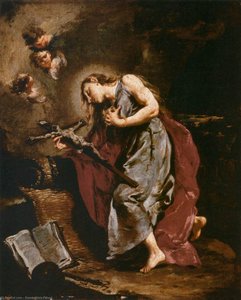
Pittoni’s work is characterized by an extraordinary command of movement and luminosity. He possessed a unique ability to bring a sense of breathing life to his canvases, utilizing a palette that celebrated the interplay of light and shadow. Whether depicting sacred figures or mythological legends, his brushwork often achieved a breathtaking realism, capturing opulent textures and profound human emotions. His mastery was not merely in the depiction of form, but in the creation of atmosphere—a skill that allowed him to navigate the transition from the heavy, emotive weight of the Baroque to the more effervescent and airy qualities of the Rococo style.
A Legacy of Devotion and Grandeur
The breadth of Pittoni’s oeuvre reflects both his technical versatility and his deep engagement with the spiritual and classical themes of his time. His compositions often utilized elegant, triangular structures to guide the viewer's eye through scenes of divine intervention or historical significance. Some of his most notable subjects include:
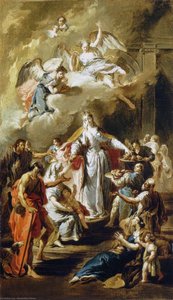
- Religious Iconography: Works such as Saint Roch and St Elizabeth Distributing Alms demonstrate his ability to portray Christian compassion and resilience through dramatic lighting and poignant human interaction.
- Biblical Narratives: In pieces like the Annunciation, he utilized golden clouds and celestial light to evoke the presence of the divine, showcasing his maturity as a painter of sacred mysteries.
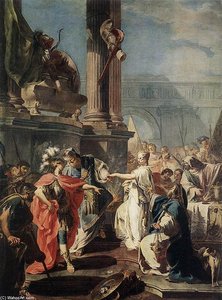
- Classical Mythology: His depictions of tales such as The Continence of Scipio and Bacchus and Ariadne highlight his skill in rendering the grandeur and drama of ancient legends with a distinctly Venetian flair.
Beyond his individual canvases, Pittoni held a position of significant prestige within the Venetian art community. He was among the founders of the Academy of Fine Arts of Venice, eventually serving as its second president, succeeding the legendary Tiepolo. This leadership role underscores his importance not just as a creator, but as a pillar of the artistic establishment in Venice.
Historical Significance and Enduring Influence
The historical footprint of Giambattista Pittoni is preserved in some of the world's most esteemed galleries. His ability to synthesize the dramatic tension of the Baroque with the light-filled elegance of the Rococo ensured that his work remained relevant during a period of profound stylistic evolution. From the Louvre Museum in Paris to the Pushkin Museum in Moscow and the National Gallery of Scotland, his paintings continue to serve as vital windows into the artistic spirit of eighteenth-century Italy.
Through his meticulous attention to detail and his ability to evoke deep emotional responses, Pittoni left behind a catalogue of works that celebrate the human condition, the divine, and the timeless beauty of classical myth. His legacy remains intertwined with the very identity of Venice, representing a pinnacle of Venetian painting where light, color, and drama converge in perfect harmony.
Questions & Answers
In which historical period did Giambattista Pittoni work?
Giambattista Pittoni worked in the Early-Modern period. The period situates the artist's activity in history.
What other names is Giambattista Pittoni known by?
Giambattista Pittoni is also known as Giovanni Battista Pittoni.
What are the birth city and country of Giambattista Pittoni?
Giambattista Pittoni was born in Venice, in Italy.