Early Life, Family and Training
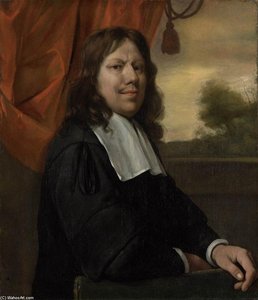
Jan Havickszoon Steen was born in Leiden around 1626 into a family that understood the mechanics of social gathering. As the eldest of at least eight children, his upbringing was shaped by the commercial realities of his father, Havick Steen. Havick was a grain merchant and a brewer who managed the Red Halbert tavern. This domestic environment, rooted in the Catholic community of Leiden, provided a direct view into the boisterous, often messy social interactions that would later define his professional output. He was not merely a spectator to this life; he was a product of it.
His formal education and professional registration reveal a man moving through the structured intellectual and guild systems of the Dutch Republic. Steen was registered at Leiden University in 1646. By 1648, he had achieved the status of a master painter through his registration in the Leiden Guild of Saint Luke. This transition from a student to a recognized professional marks the beginning of a career built on technical legitimacy rather than mere observation.
The specifics of his early training remain a matter of historical deduction rather than documented certainty. While no official apprenticeship records survive, the trajectory of his skill suggests he absorbed the methods of several significant figures. He likely drew technical knowledge from Jan van Goyen, Nicolaus Knüpfer, and Adriaen van Ostade. These influences provided the foundation for a style that would eventually prioritize the psychological nuances of human behavior over the grand allegories favored by his contemporaries.
Periods of Activity and Residence
Steen’s career was defined by a restless movement through the urban centers of the Dutch Republic. He did not remain anchored to a single location, instead shifting his residence as his professional life evolved. In 1649, he married Margaretha van Goyen in The Hague, a connection that linked him to the influential artistic circles of the time. This period of his life was marked by a nomadic professional existence, moving between various cities to establish his reputation and navigate the shifting demands of the art market.
His movements were documented with precision across several key regions. Between 1656 and 1660, he was active in Warmond. This was followed by a decade spent in Haarlem, where he resided from 1661 until 1670. This decade in Haarlem represents a significant portion of his productive years, during which he solidified his presence within the Dutch art scene. He eventually returned to his birthplace, living in Leiden from 1670 until his death.
This geographic mobility was not merely a matter of personal preference but reflected the practical realities of a working painter in the 17th century. His ability to adapt to different urban environments—from the specialized atmosphere of Haarlem to the established traditions of Leiden—allowed him to maintain a consistent output despite his frequent relocations. His life was a series of transitions between the brewing industry and the professional guild structures of the cities he inhabited.
Technique and Artistic Style
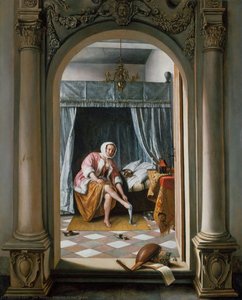
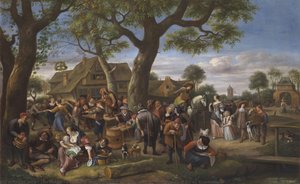
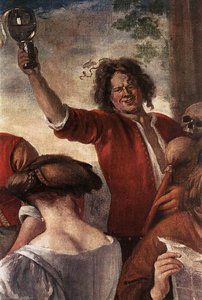
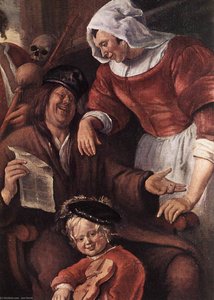
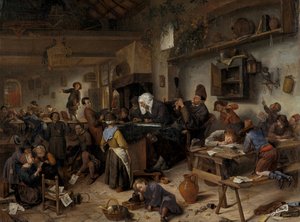
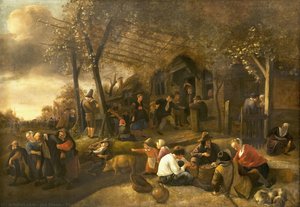
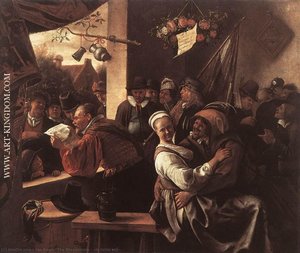
Steen’s visual language relies on a sharp sense of humor and a profound psychological insight that pierces through the surface of his scenes. He does not merely depict people; he captures the specific, often messy, human impulses that drive them. His early compositions from the 1640s leaned into the grotesque, utilizing exaggerated and distorted figures to drive his narratives. This raw, almost jarring approach to characterization provided a foundation for the more nuanced social observations that would define his later output.
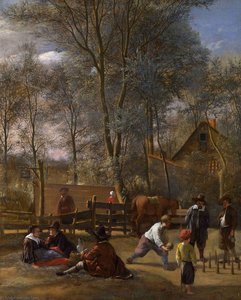
The artist’s use of color is assertive and abundant. He employs a wide palette to distinguish the textures of domestic life and the chaotic energy of a crowded room. As his career progressed, his technical execution underwent a clear shift. The heavy, sometimes coarse characterizations of his youth gave way to a more refined aesthetic. His later works feature fewer, more individualized figures, moving away from the crowded, grotesque compositions of his early years toward a style defined by greater poise and subtle color palettes.
This evolution reflects a transition from the blunt satire of his youth to a more sophisticated method of social commentary. By refining his brushwork and focusing on the specificities of individual expression, he moved from depicting types to depicting people. The result is a body of work that balances the absurdity of human behavior with a controlled, deliberate technical precision.
Key Works and Notable Paintings
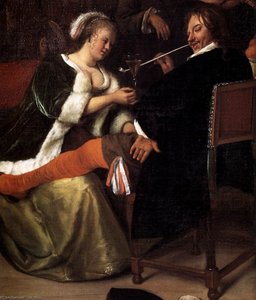
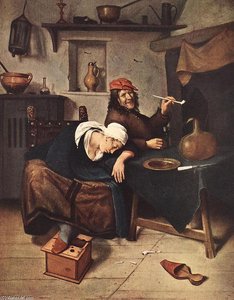
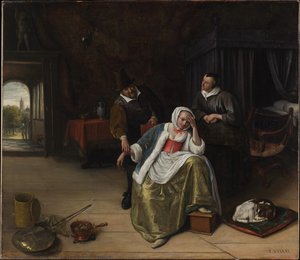
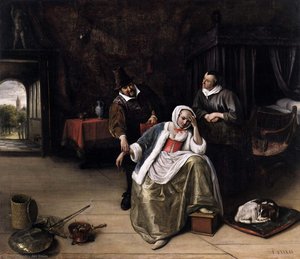
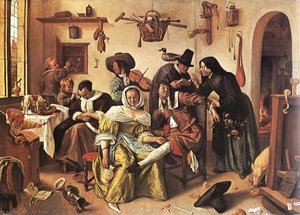
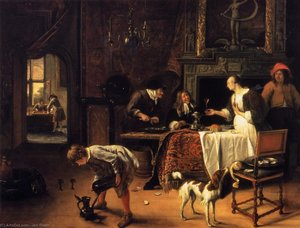
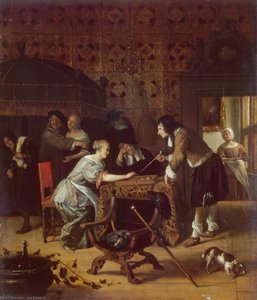
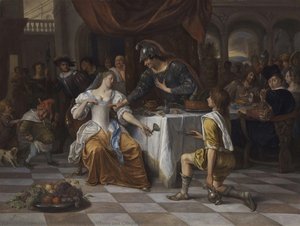
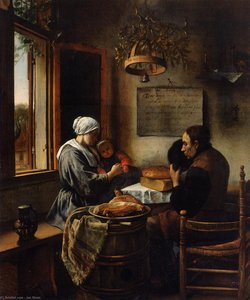
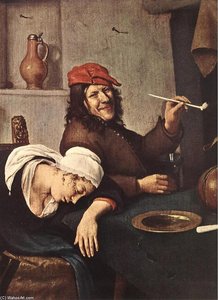
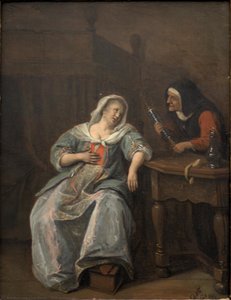
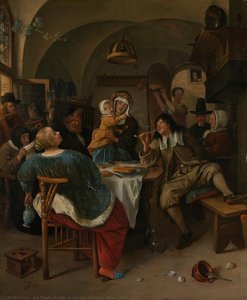
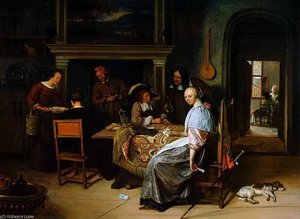
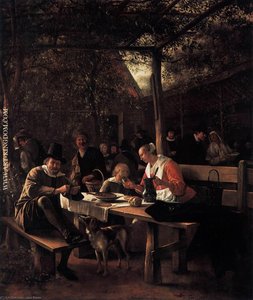
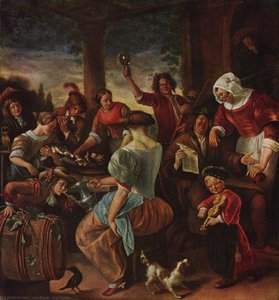
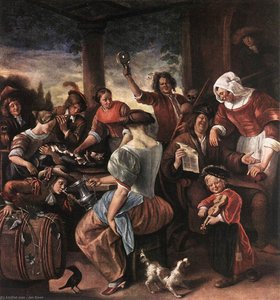
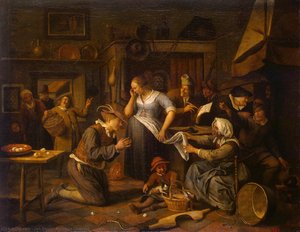
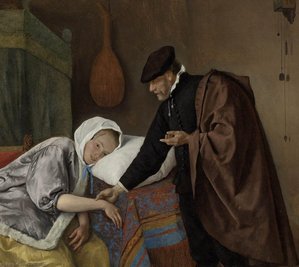
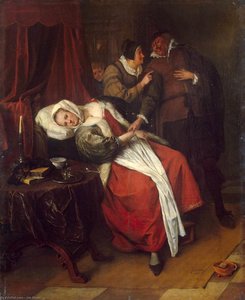
Steen’s output remains significant because he anchored his narratives in the messy, unvarnished reality of 17th-century life. In The Doctor's Visit, he moves beyond simple portraiture to create a scene with psychological depth and moral undertones. This ability to find weight in the domestic is evident in The Oyster-eater, dated about 1658, which captures a specific, lively moment of Dutch social interaction. These works do not rely on grand allegories; they rely on the tension between the characters and their immediate surroundings.
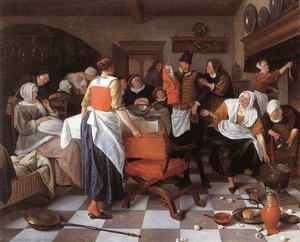
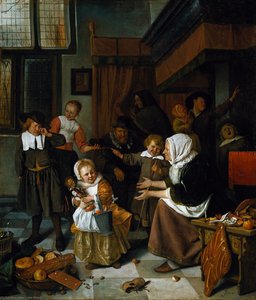
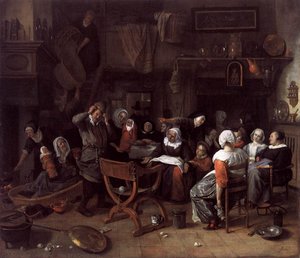
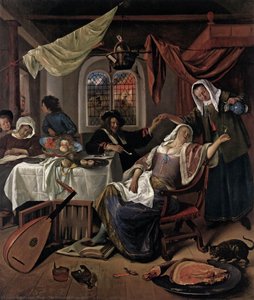
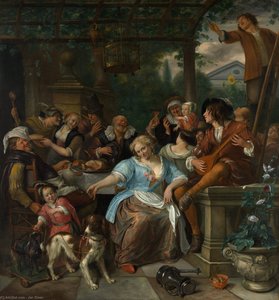
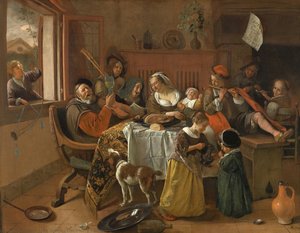
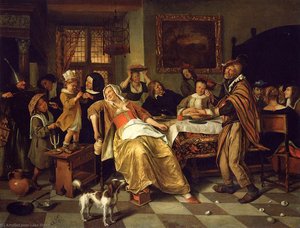
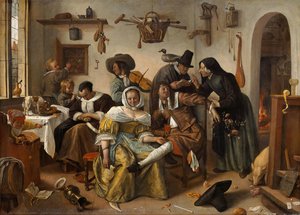
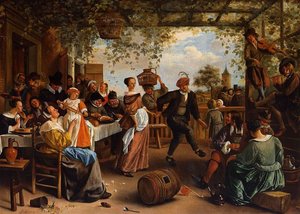
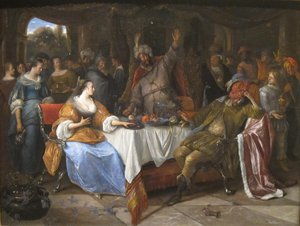
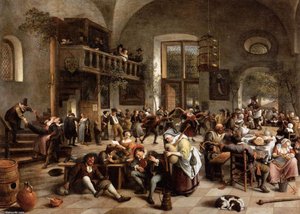
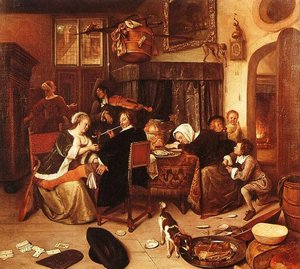
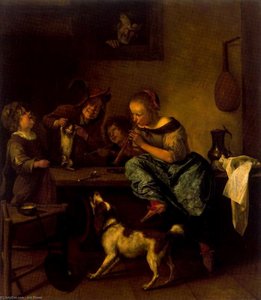
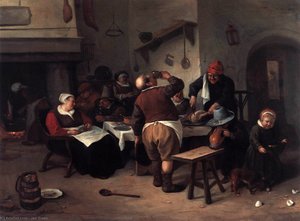
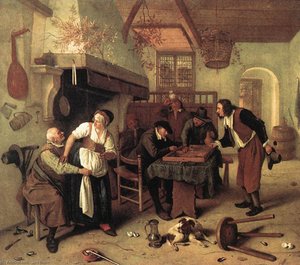
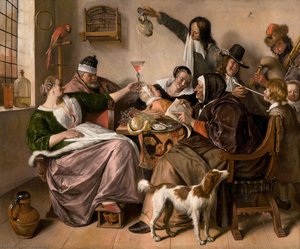
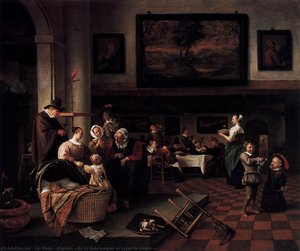
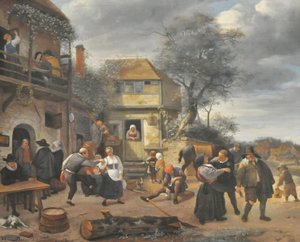
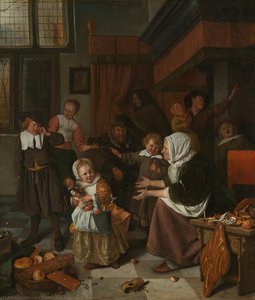
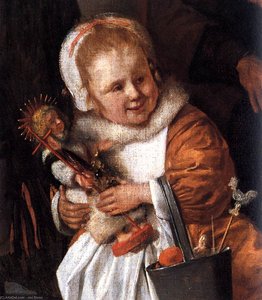
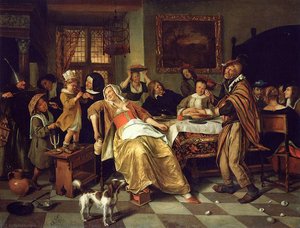
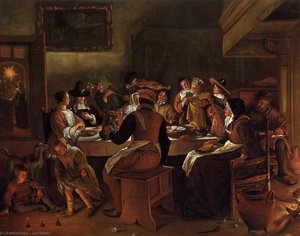
The artist frequently used chaos to highlight human error. The Dissolute Household (1663) and The Merry Family (1668) function as visual studies of disorder, using boisterous settings to prompt reflection on the consequences of excess. Even in more structured compositions, such as The Dancing Couple from 1663, the focus remains on the specific, fleeting gestures of the subjects. His work from the mid-1660s, including The Feast of St. Nicholas (about 1665), demonstrates a command over color and light that makes these social observations endure.
- The Oyster-eater (about 1658)
- The Dancing Couple (1663)
- The Dissolute Household (1663)
- The Feast of St. Nicholas (about 1665)
- The Merry Family (1668)
Questions & Answers
Where is Jan Steen from?
Jan Steen was born in Netherlands.
What are the birth city and country of Jan Steen?
Jan Steen was born in Leiden, in Netherlands.
What other names is Jan Steen known by?
Jan Steen is also known as Jan Havickszoon Steen, Jan Havicksz Steen, Jean Steen, Jean Stein, Jan Stien.