Rise to Prominence and Early Success
The precocity of Jan Lievens was evident almost from the start. By the age of twelve, he had already established himself as an independent artist in Leiden, a remarkable feat for a child of such years. This early independence was not merely a matter of technical skill, but a sign of a talent that demanded immediate recognition. His ability to navigate the competitive art scene of the Netherlands was cemented when his work began to catch the eyes of the highest levels of Dutch nobility.
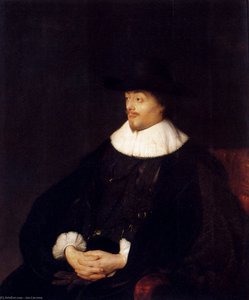
A copy of Democriet & Herakliet by Cornelis van Haarlem drew the attention of Maurice of Nassau, Prince of Orange. This royal interest was furthered by a portrait of his mother, Machtelt Jans van Noortzant, which also reached the Prince's notice. Such early patronage provided a foundation of prestige that would follow him throughout his career. His reputation grew steadily, moving beyond the local circles of Leiden to reach international heights. By the age of thirty-one, his standing was such that he received an invitation to the British court, marking his transition from a local talent to a figure of European significance.
Collaborations and Workshop in Amsterdam
The early years of Lievens's career were defined by a profound creative proximity to Rembrandt van Rijn. After their training in Amsterdam, the two artists shared a studio for about five years, a period of intense mutual influence that lasted until 1631. This was a time of shared ambition and technical experimentation. Their partnership was not merely a matter of proximity; it was a functional collaboration that saw them producing over two dozen paintings, drawings, and etchings together. The sheer volume of their joint output created a complex history for many works from this era, as the boundaries between their individual hands often blurred.
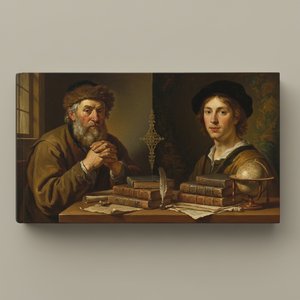
Lievens frequently turned to his friend and colleague to serve as a model, using the familiar features of his peer to explore character and expression. This intimacy in the studio allowed for a rapid exchange of ideas regarding composition and light. While their collaboration was productive, it was also a period of intense competition. The two men worked side by side, each striving to refine a style that would eventually carry them toward different paths in London, Antwerp, and beyond. Their time in Amsterdam remains a significant chapter of shared development, marked by the high energy of two young talents finding their footing in the Dutch Golden Age.
Patrons, Commissions and International Career
Lievens’s talent attracted a level of attention that necessitated a life of movement. His early success in Leiden, marked by the admiration of Maurice of Nassau, Prince of Orange, set a precedent for a career defined by high-level patronage. This early recognition opened doors to the upper echelons of European society, leading him away from the familiar circles of Amsterdam toward a more cosmopolitan existence. He was a sought-after figure for those who required both formal portraiture and grand historical narratives.
His professional trajectory was marked by significant shifts across major European centers. He traveled to London and Antwerp, eventually finding himself serving as a court painter in both The Hague and Berlin. These appointments brought him into the service of royalty, mayors, and various city halls, securing his position within the political and social fabric of the era. His ability to adapt to the demands of these diverse patrons allowed him to maintain a steady stream of commissions throughout his travels.
The breadth of his work reflected the varied tastes of his clientele. Whether working for the nobility in Berlin or fulfilling civic duties in the Netherlands, Lievens navigated the complexities of international demand. His presence in these different courts ensured that his style was not confined to a single regional tradition, but rather shaped by the shifting cultural currents of the cities in which he resided.
Technique and Artistic Style
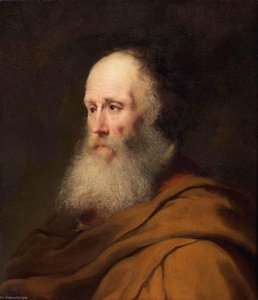
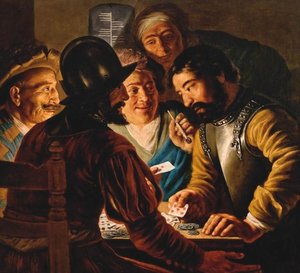
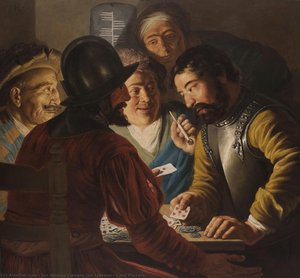
Lievens possessed a technical facility that allowed him to navigate the shifting aesthetics of the seventeenth century. His work frequently merged the grounded details of realism with the dramatic flourishes of the Baroque. He was particularly adept at utilizing chiaroscuro, a method that employed sharp contrasts between light and shadow to create a sense of volume and psychological presence. This approach, heavily influenced by the Caravaggisti, allowed him to sculpt faces and textures out of deep, atmospheric darkness. His ability to handle light was not merely for dramatic effect; it was a tool used to define the very essence of his subjects.
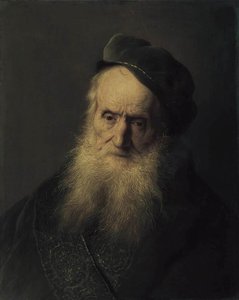
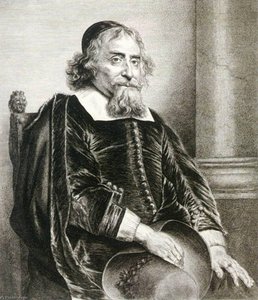
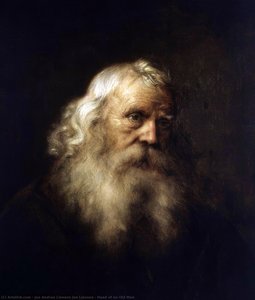
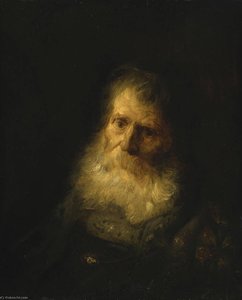
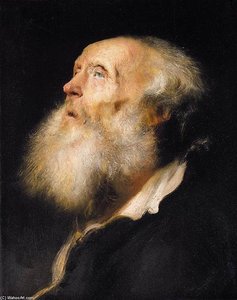
In his execution, Lievens was a master of the oil medium. He utilized sophisticated glazing techniques to build up layers of color, achieving a luminous quality and subtle gradations of tone that gave his surfaces a sense of depth. This meticulousness extended to his ability to work on a grand scale, demonstrating a talent for painting in life-size dimensions. Whether rendering the soft sheen of a fabric or the weathered skin of an elderly man, his hand remained precise and controlled. His compositions often sought a sense of harmony and balance, even when dealing with the intense lighting characteristic of his era.
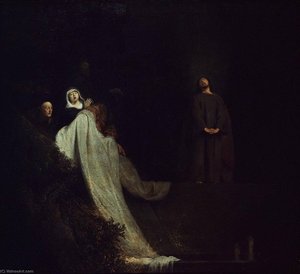
- The Raising of Lazarus (1631)
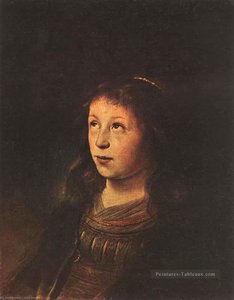
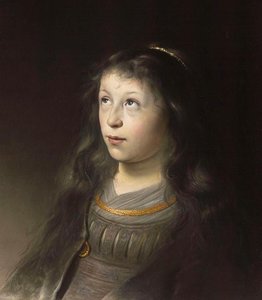
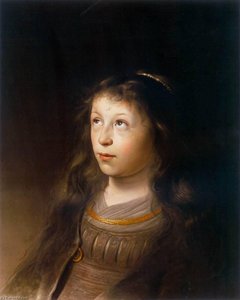
- Portrait of a Girl (1630)
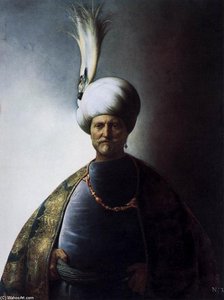
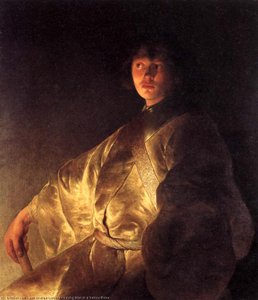
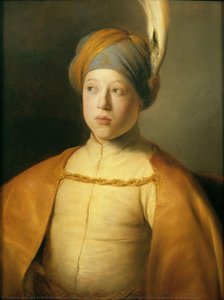
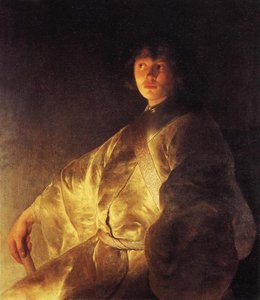
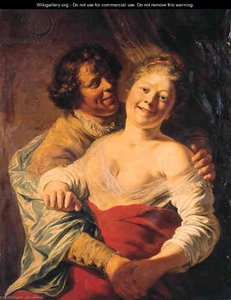
- Young Man in a Yellow Robe (1630)
Notable Works and Masterpieces
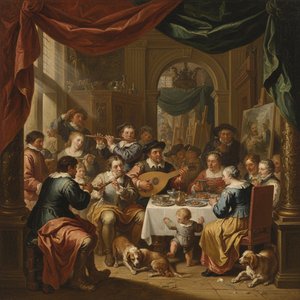
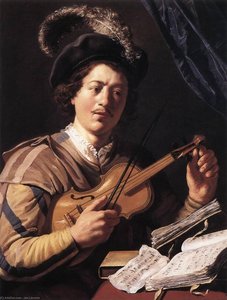
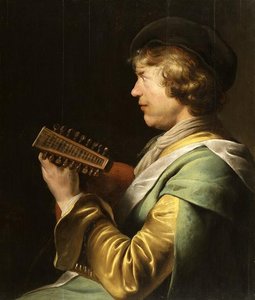
Lievens’s early output reveals a musician’s grace, captured through the quietude of his subjects. In 1625, he produced The Violin Player, a work that reflects the technical precision of his formative years. By 1629, his interest in such themes continued with The Lute Player. These compositions demonstrate an ability to handle light and form long before his name became widely recognized across Europe.
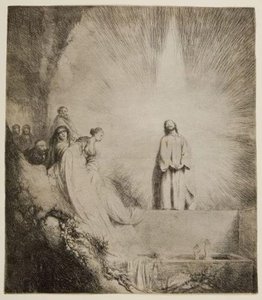
The year 1631 marked a period of intense creative competition and stylistic experimentation. His oil-on-canvas depiction of The Raising of Lazarus remains a significant achievement from this era. The painting is characterized by a somber palette and a sense of mystery, utilizing pale light to pierce through deep darkness. It is a work of restraint, focusing on the spiritual tension of the scene rather than grand, sweeping gestures.
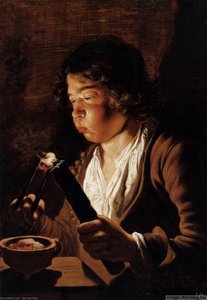
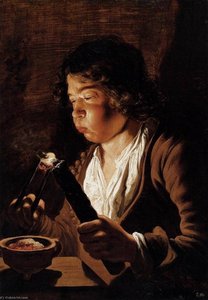
In his later years, Lievens turned toward more complex allegorical themes. The series The Four Elements and Ages of Man includes Fire and Childhood, dated 1668, which shows a continued command of texture and atmosphere. His ability to adapt his style to meet the demands of various patrons allowed him to maintain a presence in the art world from the streets of Leiden to the courts of Berlin.
- The Raising of Lazarus (1631)
- The Violin Player (1625)
- The Lute Player (1629)
- The Four Elements and Ages of Man: Fire and Childhood (1668)
Legacy and Historical Influence
Jan Lievens occupied a singular position within the Dutch Golden Age, a period defined by intense artistic competition and rapid stylistic evolution. His career was inextricably linked to the shadow of Rembrandt van Rijn, a relationship that proved both professionally fruitful and historically complicated. While their early collaboration in Leiden and Amsterdam helped shape the visual language of the era, the proximity of their talents created a lasting ambiguity in the art historical record. For centuries, the distinction between their hands was often blurred, leading to a significant decline in his individual recognition after his death.
This loss of identity was largely due to the misattribution of his canvases. Many of his works were claimed by other masters, most notably Rembrandt, as collectors and heirs sought to maximize the value of their holdings. Such confusion meant that Lievens’s specific contributions were frequently subsumed into the broader narrative of his contemporaries. It was not until the middle of the nineteenth century that his distinct hand was rediscovered by those seeking to untangle the complex web of seventeenth-century Dutch painting. This re-evaluation allowed for a clearer understanding of his ability to navigate between the realism of the Netherlands and the sensuous influences of the Flemish and Venetian traditions.
- The Raising of Lazarus (1631)
- Self-Portrait (c. 1629–1630)
- Young Man in a Yellow Robe (1630)
Where to See His Works Today
The physical presence of Lievens's art remains scattered across several international institutions, reflecting a career that once moved between the major centers of the Dutch Golden Age. In the Netherlands, his hand is visible in the Mauritshuis, where his contributions to the era's visual language are preserved. His presence in the country is further felt through various museum collections that hold his paintings and drawings, maintaining a connection to his Leiden roots.
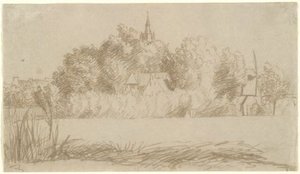
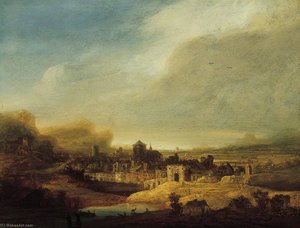
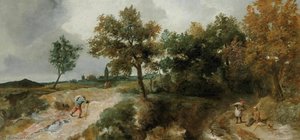
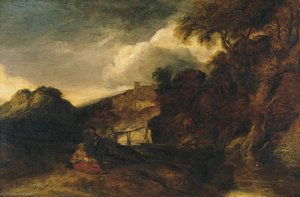
In the United States, his work is held in several prominent collections. The Leiden Collection in New York City maintains a significant number of his pieces, offering a concentrated look at his output. Elsewhere, the Norton Simon Museum in Pasadena houses his landscape work, specifically a view of a town. These holdings allow for a study of his ability to handle both intimate portraiture and expansive scenery.
Other significant works have found permanent homes in specialized galleries. The Brighton Museum & Art Gallery is the keeper of his 1631 depiction of the Raising of Lazarus, a work that once shared a studio space with his most famous contemporary. To see his range, one might look to these specific locations:
- The Raising of Lazarus, Brighton Museum & Art Gallery
- Landscape with View of a Town, Norton Simon Museum
- Various works, The Leiden Collection, New York City
Questions & Answers
What other names is Jan Andrea Lievens Jan Lievens known by?
Jan Andrea Lievens Jan Lievens appears under the alternate names Jan Lievens.
Where is Jan Andrea Lievens Jan Lievens from?
Jan Andrea Lievens Jan Lievens was born in Netherlands.
What are the birthplace and birth year of Jan Andrea Lievens Jan Lievens?
Jan Andrea Lievens Jan Lievens was born in Leiden in 1607.