The Early Life of Johannes Vermeer
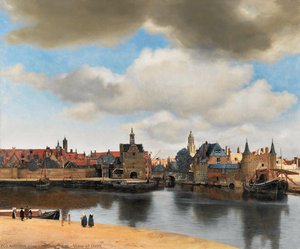
In October 1632, a child was born in Delft, Netherlands. Johannes Vermeer entered a household where the textures of fine materials and the commerce of art were part of the daily rhythm. His father, Reijnier Janszoon, worked as a weaver of fine fabrics and also operated as an art dealer. This dual life meant that the young boy grew up surrounded by both the tactile reality of textiles and the business of acquiring paintings. His mother, Digna Baltens, helped maintain this household as the family navigated the social and economic life of the city.
The family's religious and social ties were marked by a baptism in the Nieuwe Kerk in Delft on 31 October 1632. Growing up in this environment, Johannes Vermeer was exposed to the mechanics of trade and the physical properties of pigments long before he established his own reputation. The stability of his early years shifted when his father died in October 1652. This loss brought a sudden weight of responsibility to the young man, as he inherited the family's art-dealing business. He had to step into his father's shoes, managing the trade of paintings while finding his own way as a painter in the busy streets of Delft.
Marriage and Religious Conversion
In April 1653, the trajectory of Johannes Vermeer’s life shifted through his marriage to Catharina Bolnes. She was a Catholic woman, and her background brought a new layer of complexity to his existence in Delft. To honor this union and the family he was building, Vermeer converted from the Protestant faith of his upbringing to Catholicism. This was a significant personal change, one that required navigating the religious landscape of a largely Protestant city.
The union was not merely a private matter between two people; it was influenced by the presence of Catharina’s mother, Maria Thins. Following their marriage, Vermeer moved into the house belonging to his mother-in-law. This change in residence placed him at the heart of a different domestic sphere, one shaped by the influence and stability provided by Maria Thins. Living within her household provided a sense of place as he continued to develop his craft and manage the family's interests.
Artistic Style and Technical Mastery
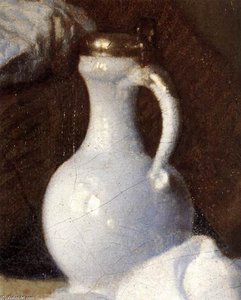
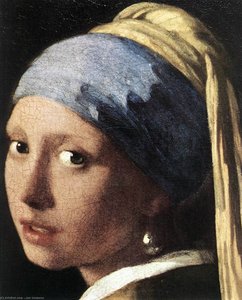
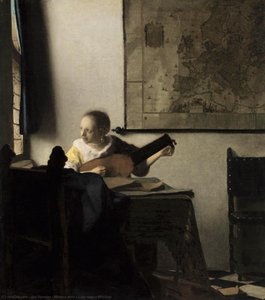
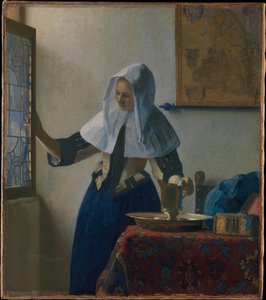
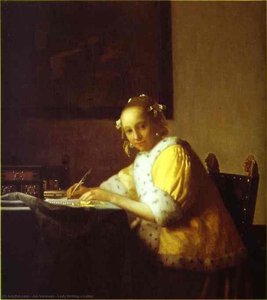
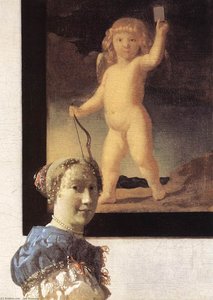
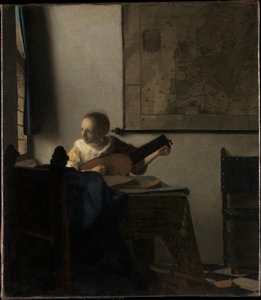
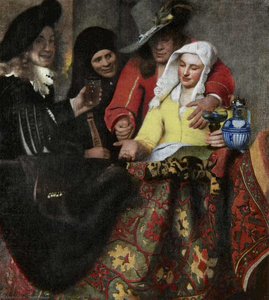
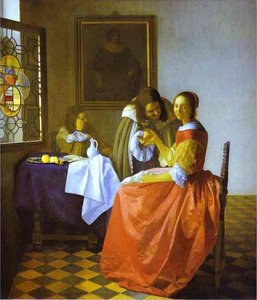
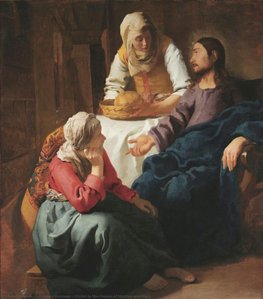
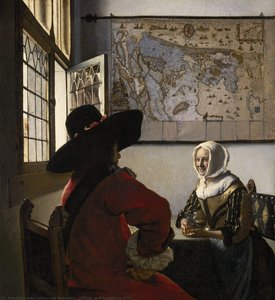
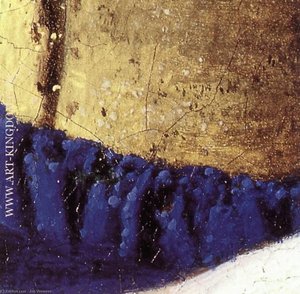
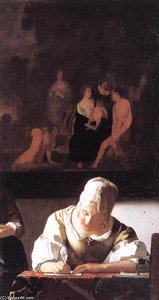
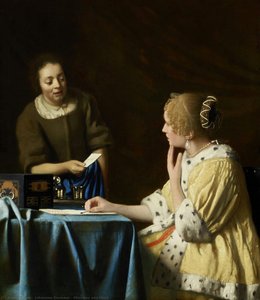
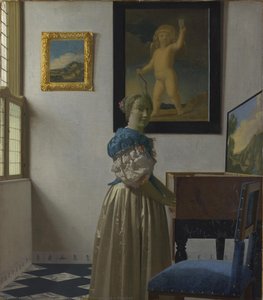
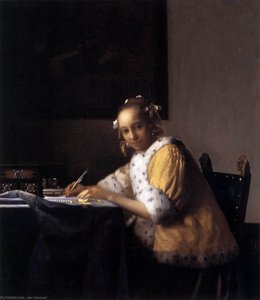
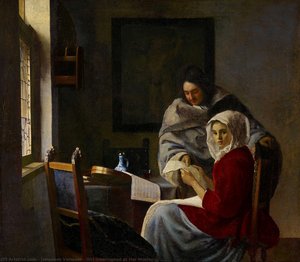
Vermeer found his purpose in the quietude of domestic life. He focused his attention on interior scenes, often depicting a single figure engaged in a private moment. His work is defined by a specific, careful way of handling light. He did not simply paint a room; he captured how light moves through it, hitting a ceramic jug or a piece of bread with a clarity that feels almost scientific. To achieve this, he applied paint in thin glazes, building up layers that allowed light to penetrate the surface and reflect from within the canvas. He even used tiny dots of paint to suggest the way light glints off a surface.
His precision suggests a deep familiarity with optical tools. The use of a camera obscura likely helped him map out the complex geometry of a room and the way light falls across different textures. He understood how the eye perceives space, often rendering certain areas out-of-focus to create a sense of depth. This technique pulls the viewer into the room, making the space feel tangible. He was not a man of hurried strokes; his process was slow and deliberate. He relied on expensive materials to achieve his specific colors, most notably the deep blue of ultramarine, which he derived from the precious stone lapis lazuli.
Key Masterpieces and Famous Works
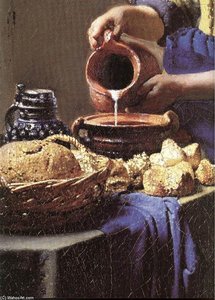
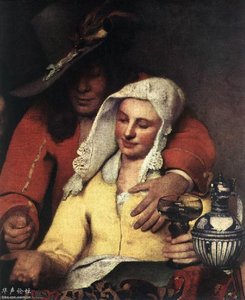
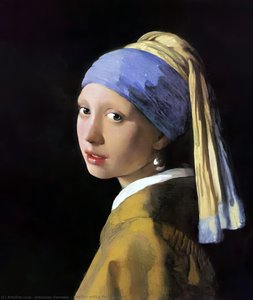
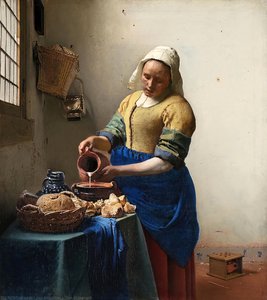
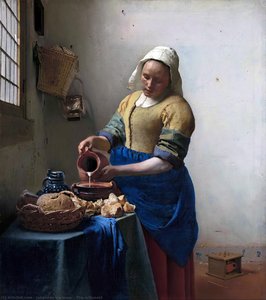
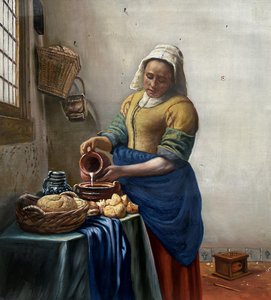
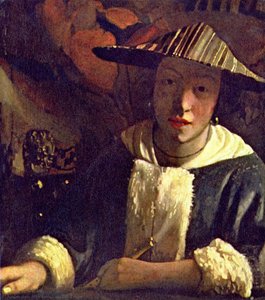
Vermeer’s output was small, yet each piece carries a quiet weight. Around 1665, he painted The Girl with a Pearl Earring, a work that focuses on the way light catches a single, luminous point. In another scene from circa 1658, The Milkmaid shows a woman pouring milk into an earthenware container, her presence filling the room with a sense of steady, daily purpose. These works show his ability to find depth in the most ordinary tasks.
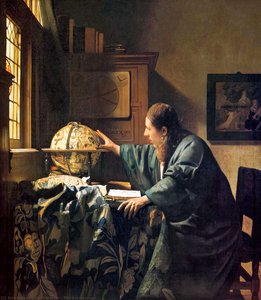
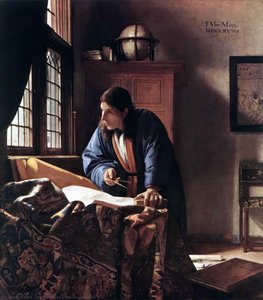
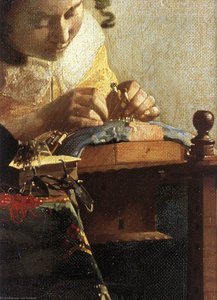
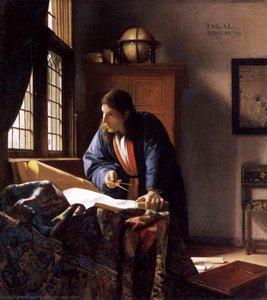
Some of his paintings were marked with his own hand, providing a rare certainty in his catalog. The Astronomer and The Geographer are two such works that he signed and dated. These pieces often suggest a man interested in the mechanics of the world, whether through the study of maps or the movement of the stars. Even in his smallest work, The Lacemaker, which measures only 24.5 cm by 21 cm, he managed to capture a sense of intense, concentrated focus.
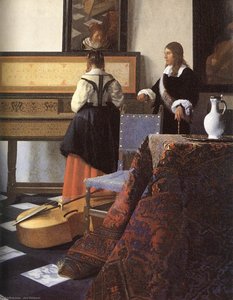
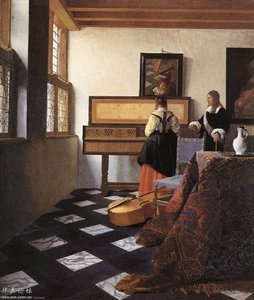
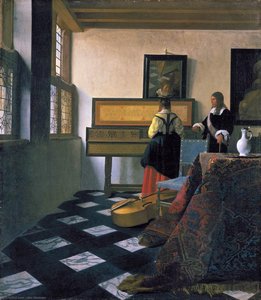
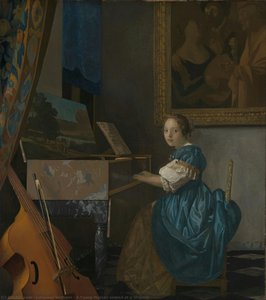
Music also found its way into his compositions. The Concert depicts a man and two women performing together, a scene that captures a fleeting moment of sound and stillness. His paintings often feel like a pause in time, where the light settles on a surface and stays there, inviting a slow, careful look at the details of a life lived in the quiet corners of Delft.
The Legacy and Rediscovery of Vermeer
When the light finally faded for Vermeer in Delft in December 1675, he was only forty-three. He left behind a family and a small collection of paintings, but his name did not stay in the public memory. For nearly two centuries, his work receded from the forefront of art history. He became a quiet figure, largely forgotten by the generations that followed his death.
The nineteenth century brought a change. Historians began to look closer at his quiet, domestic scenes and brought his name back to the public eye. This rediscovery changed how the world viewed his small output. As scholars worked to separate his true hand from forgeries, the number of paintings attributed to him changed significantly. In 1866, the count of his works stood at 74, but today, that number has shrunk to 34.
This process of identification has been slow and careful. It required a careful eye to distinguish his specific use of light and color from the many works that were wrongly credited to him. Today, his reputation is firmly established, built on the strength of those few dozen canvases that survived the long silence of his obscurity.
Where to See His Works Today
To find the quiet moments Vermeer captured, one must travel across several cities. In Amsterdam, the Rijksmuseum holds The Milkmaid, where the light settles on the earthenware and the bread. If you find yourself in The Hague, the Mauritshuis houses Girl with a Pearl Earring. These works remain in the places that have long cared for his small, deliberate output.
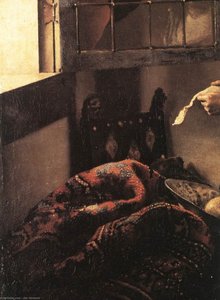
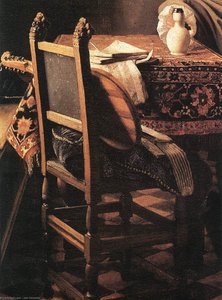
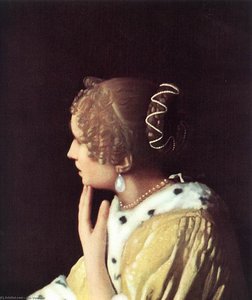
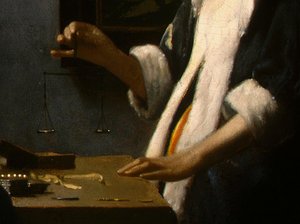
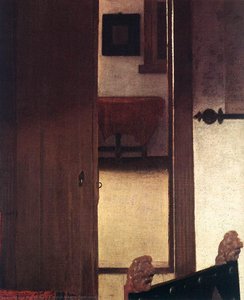
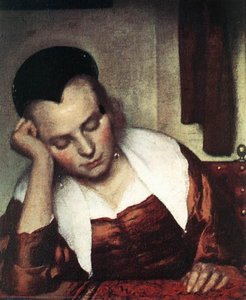
The reach of his paintings extends far beyond the Netherlands. In Paris, the Louvre contains The Lacemaker, a small work that shows his focus on the fine details of daily labor. Across the Atlantic, the Metropolitan Museum of Art in New York City holds A Woman Asleep at Table (detail). In Berlin, the Staatliche Museen holds Woman with a Pearl Necklace (detail). Even in Boston, the Isabella Stewart Gardner Museum holds The Concert, a painting that remains missing to this day.
- The Astronomer
- The Geographer
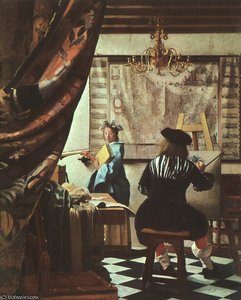
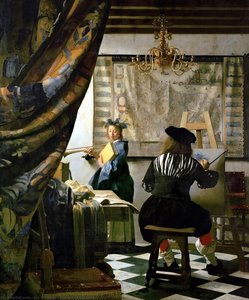
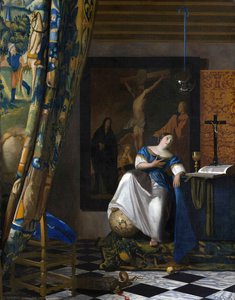
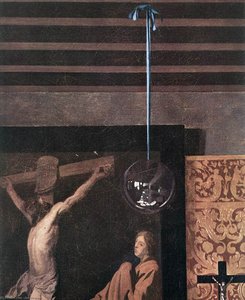
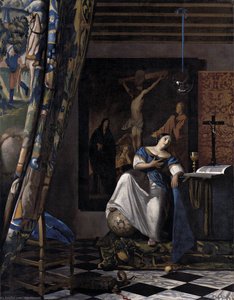
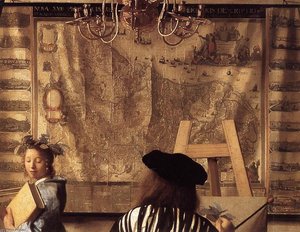
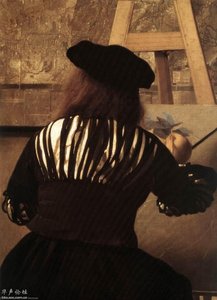
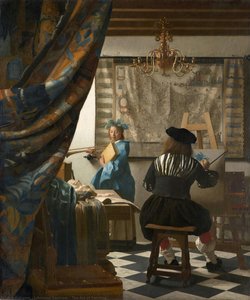
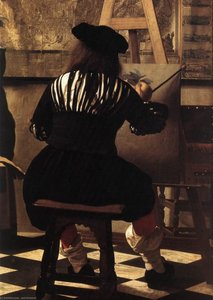
- The Art of Painting
Questions & Answers
What aliases or alternate names does Johannes Vermeer have?
Johannes Vermeer is also known as Jan Vermeer.
What are the birthplace and birth year of Johannes Vermeer?
Johannes Vermeer was born in Delft in 1632.
What are the birth city and country of Johannes Vermeer?
Johannes Vermeer was born in Delft, in Netherlands.