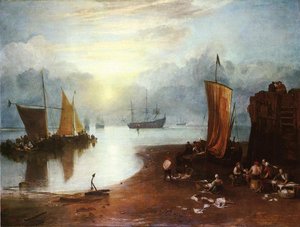
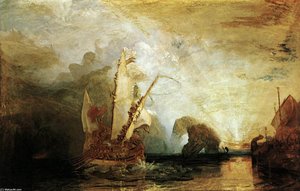
Early Life, Family and Training
In a house on Maiden Lane, within the busy Covent Garden district of London, Joseph Mallord William Turner entered the world. His beginnings were rooted in the practical trades of the city; his father, William Turner, worked as a barber and wigmaker. This domestic setting was also a place of commerce, as William served as an art dealer, providing a young boy with an early, unforced proximity to the world of visual works. The boy’s talent was evident early on, and his father even displayed the child's drawings in the shop window to catch the eyes of passing customers.
By the age of fourteen, the boy's ambition led him to the Royal Academy Schools in 1789. This formal entry into the academic world provided the technical discipline required to transform raw talent into professional skill. Before and during these formative years, he sought practical experience by working for various architects, including Thomas Hardwick, James Wyatt, and Joseph Bonomi the Elder. These roles required a keen eye for structure and perspective, grounding his developing vision in the physical realities of the built environment.
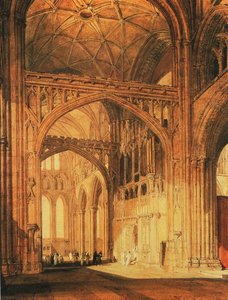
His education was further shaped by the guidance of the topographical draughtsman Thomas Malton. Through this study, he learned to render the specific details of landscapes and architecture with precision. This period of his life was a careful balance of formal instruction and the necessity of working for hire, as he moved from the meticulous demands of architectural drawing toward the more expressive possibilities of the natural world.
Technique and Artistic Style
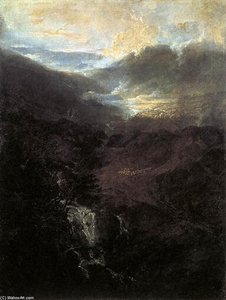
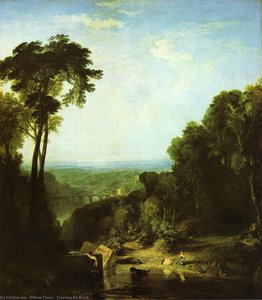
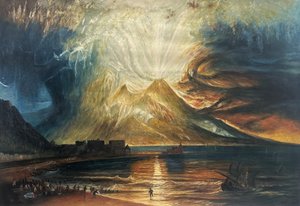
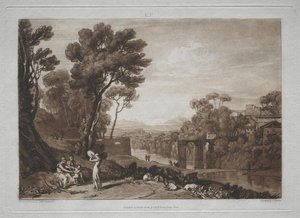
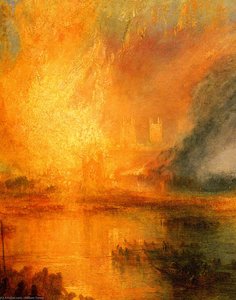
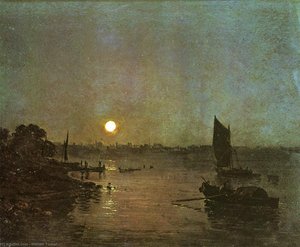
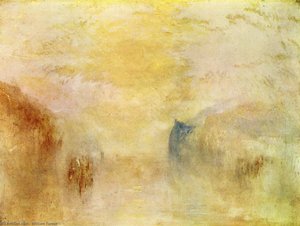
In his early years, he followed the path of the eighteenth-century topographical tradition, producing precise renderings of architecture and landscapes. These early efforts showed a disciplined hand, yet a restless spirit was already beginning to stir beneath the surface of his technical proficiency. As he matured, his focus shifted from the mere documentation of places to a profound fascination with the raw power of the natural world. He sought to capture the very essence of storms, the sudden fury of seascapes, the massive presence of mountains, and the fleeting brilliance of a sunset. This pursuit led him to become a painter of light, a man who used color as his primary language to describe the atmosphere.
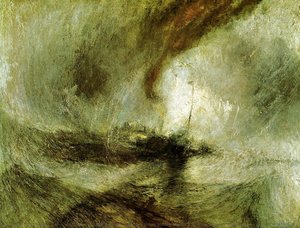
His method was one of constant experimentation across various media, including oils, watercolours, and engravings. He moved away from rigid forms, preferring instead to use bold color and expressive renditions of light to convey the feeling of a moment. He did not merely paint a scene; he painted the air between the eye and the object. This approach allowed him to translate the turbulence of the elements into something deeply felt. His brushwork became a tool for capturing movement, dissolving the boundaries between the sea and the sky through a masterful command of light and shadow.
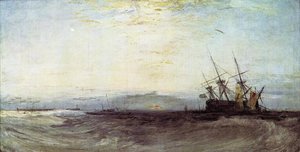
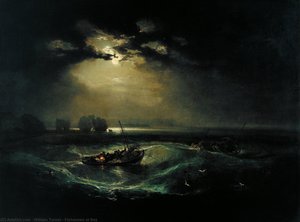
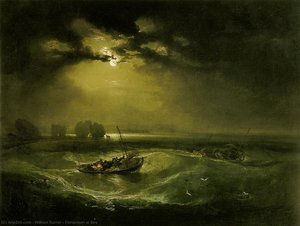
- Fishermen at Sea (1796)
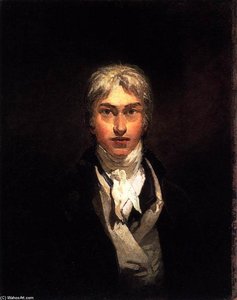
- Self-Portrait (1799)
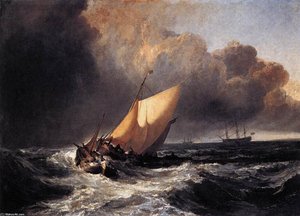
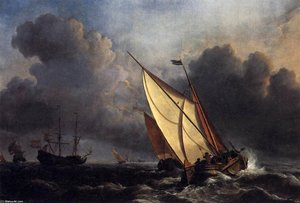
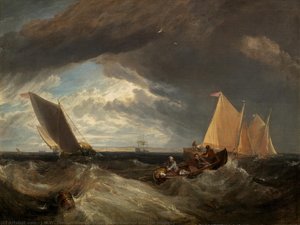
- Dutch Boats in a Gale (1801)
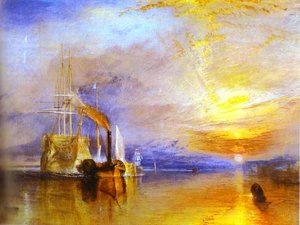
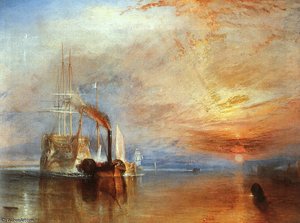
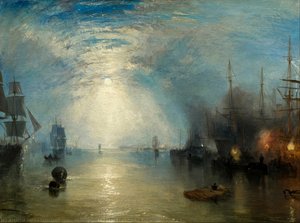
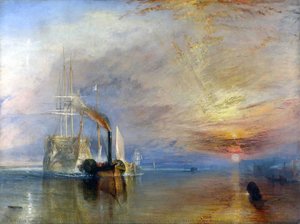
- The Fighting Temeraire (undated)
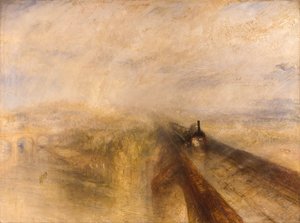
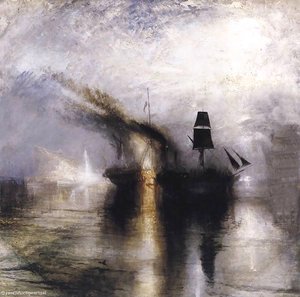
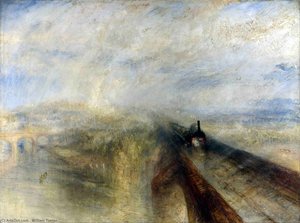
- Rain Steam and Speed, The Great Western Railway (undated)
Key Works and Subjects
His early years saw him mastering the elements of the sea and the self. In 1796, he produced Fishermen at Sea, an oil work that demonstrated his early command over the interplay of light and shadow. By 1799, he turned his gaze inward with a Self-Portrait, rendered in oil on canvas. These early endeavors were but a fraction of a staggering output that eventually included over 550 oil paintings and nearly 20,000 drawings and sketches.
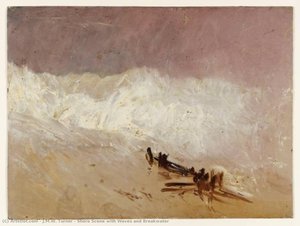
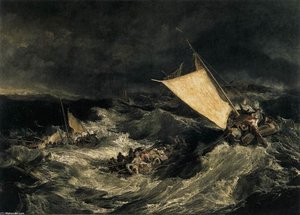
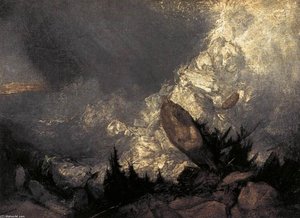
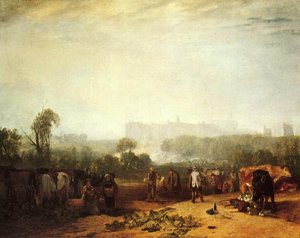
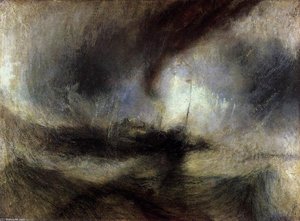
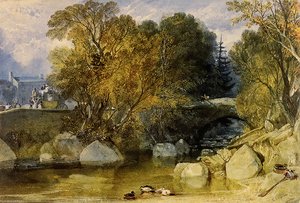
As his vision expanded, he moved from the meticulous details of topography toward the vastness of the natural world. He found profound inspiration in the changing light of the English landscape, such as the watercolor of Louth, Lincolnshire from 1827. His brushwork grew more expressive, often capturing the turbulent energy of storms and the shifting moods of the sky. He was drawn to the drama of the ocean, often depicting the raw power of waves and the vulnerability of those caught within them.
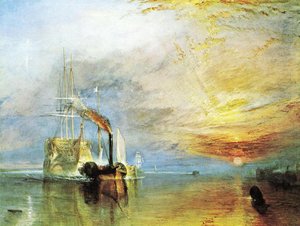
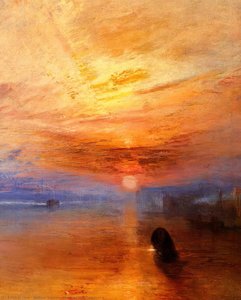
In his later years, the artist found himself fascinated by the rapid changes of the industrial age. He turned his attention to the machines of progress, capturing the movement and steam of a new era. This interest in contemporary technology is evident in works such as The Fighting Temeraire and Rain, Steam and Speed, where the force of human invention meets the vastness of the atmosphere.
- Fishermen at Sea (1796)
- Self-Portrait (1799)
- Louth, Lincolnshire (1827)
- The Fighting Temeraire
- Rain Steam and Speed
Patrons and Commercial Success
The seeds of his professional life were sown in the modest setting of his father's shop. There, the young artist's sketches were displayed in the window, inviting passersby to purchase his early efforts for a single shilling. This early exposure to the marketplace provided a practical understanding of art as a trade. As he matured, he secured a steady and reliable income by meeting the high demand for topographical and architectural watercolours, a pursuit that allowed him to establish himself firmly within the London art world.
His growing reputation eventually drew the attention of men of significant means and influence. He found patronage among figures such as William Beckford, Francis Egerton, the 3rd Duke of Bridgewater, and George Wyndham, the 3rd Earl of Egremont. These connections were marked by substantial transactions that reflected the rising value of his vision. In 1799, he sold The Fifth Plague of Egypt to William Beckford for 150 guineas. A few years later, in 1801, Dutch Boats in a Gale was acquired by Francis Egerton for 250 guineas.
Legacy and Influence
The ripples of his vision reached far beyond the shores of Britain, touching the very foundations of how painters perceived the world. His restless pursuit of light and his expressive use of color acted as a precursor to the Impressionist movement, leaving a profound mark on artists like Monet and Pissarro. He did not merely paint the landscape; he sought to dissolve the boundaries of form, a pursuit that helped pave the way for modern abstraction. This willingness to prioritize atmosphere over rigid detail allowed his influence to travel through the centuries, eventually reaching the abstract expressionists like Mark Rothko.
His ascent to widespread acclaim was aided by a significant turning point in 1840, when a prominent critic became his great champion. This support helped the public grasp the depth of his experimentation at a time when his free treatment of subjects was often met with confusion or criticism. While many found his swirling compositions difficult to interpret, his ability to capture the feeling of a place ensured his place in the history of art. He transformed the landscape from a static subject into a medium for profound emotional expression.
Where to See the Works Today
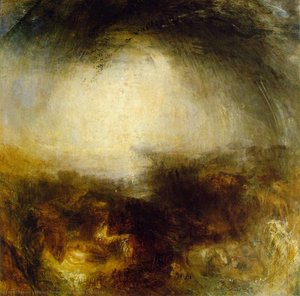
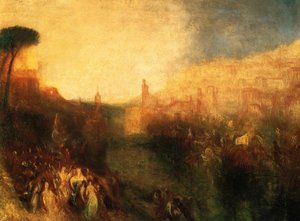
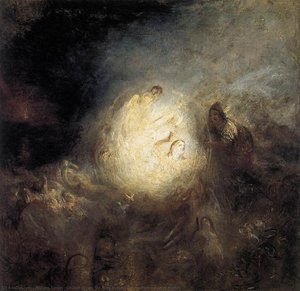
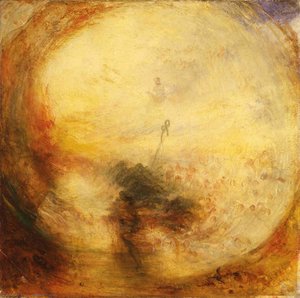
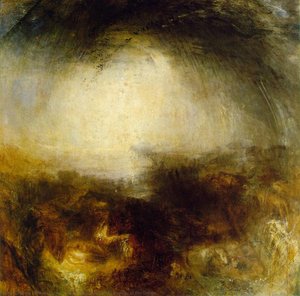
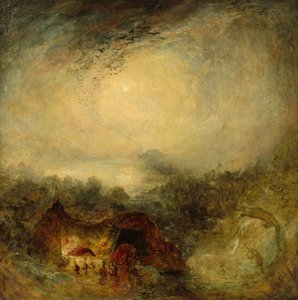
To witness the legacy of this painter, one must travel to London, where the great majority of his paintings are held. The Tate Britain houses much of his life's work, allowing a viewer to trace his development through the decades. Within these halls, one can find The Fighting Temeraire Tugged to Her Last Berth to Be Broken Up, a work that captures a sense of profound transition. Nearby, the Tate Collection also preserves The Evening of the Deluge, a piece that reflects his preoccupation with the overwhelming forces of nature.
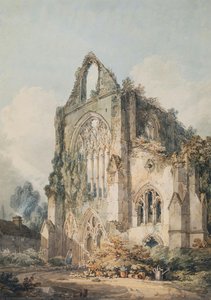
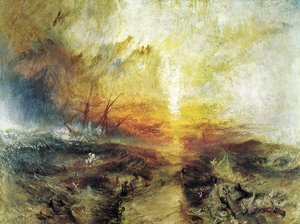
His reach extends far beyond the shores of England, finding homes in various corners of the globe. In Lisboa, Portugal, the Calouste Gulbenkian Museum holds Ruins of Tintern Abbey, a watercolor that demonstrates his command over light and atmosphere. Across the Atlantic, the Museum of Fine Arts in Boston, Massachusetts, preserves Slavers Throwing Overboard the Dead and Dying—Typhon Coming on, a painting that speaks to the darker, more turbulent aspects of his vision.
- The Fighting Temeraire Tugged to Her Last Berth to Be Broken Up (Tate Gallery, London)
- The Evening of the Deluge (Tate Collection, London)
- Ruins of Tintern Abbey (Calouste Gulbenkian Museum, Lisboa, Portugal)
- Slavers Throwing Overboard the Dead and Dying—Typhon Coming on (Museum of Fine Arts, Boston, Massachusetts)
Questions & Answers
In which historical period did Joseph Mallord William Turner work?
Joseph Mallord William Turner worked in the 19th-Century period. The period situates the artist's activity in history.
Where is Joseph Mallord William Turner from?
Joseph Mallord William Turner was born in United Kingdom.
What other names is Joseph Mallord William Turner known by?
Joseph Mallord William Turner appears under the alternate names William Turner, J.M.W. Turner.