Early Life, Family and Training
Maurice Brazil Prendergast was born on October 10, 1858, in St. John's, Newfoundland. He arrived into a subarctic environment, born alongside his twin sister, Lucy, at their family's trading post. This specific upbringing provided a stark, elemental backdrop that would eventually inform his visual language. When the family's trading post business failed, the move to Boston shifted his trajectory from the rugged coastlines of Newfoundland to the urban landscape of the American East Coast.
His early professional life was defined by practical labor and commercial instruction rather than academic prestige. At age 14, he worked in a dry goods store as a package wrapper. This period of manual work was followed by an apprenticeship with a commercial artist. This training was crucial. It provided him with a foundational understanding of color theory and pattern design, skills that would later define his mature aesthetic. He did not follow the traditional academic path of his contemporaries; instead, he built his technique through the pragmatic lens of commercial visual communication.
Artistic Training in Paris
Prendergast’s time in Paris between 1891 and 1895 was the period where his technical foundation met the radical shifts of the late nineteenth century. He did not rely on a single institution, instead splitting his focus between the Académie Colarossi and the Académie Julian. At Colarossi, he studied under Gustave Courtois and Jean-Joseph Benjamin-Constant. This dual education provided the structural discipline necessary to move beyond his commercial background and toward a more sophisticated, expressive approach to form.
The real weight of his Parisian years came from the social and intellectual connections made outside the classroom. Through the Canadian painter James Morrice, Prendergast was introduced to the English avant-garde, specifically the work and influence of Walter Sickert and Aubrey Beardsley. These encounters moved him away from academic tradition and toward the burgeoning modernism that was redefining European art. He was not merely a student of technique; he was an observer of a revolution in visual language.
Technique and Signature Style
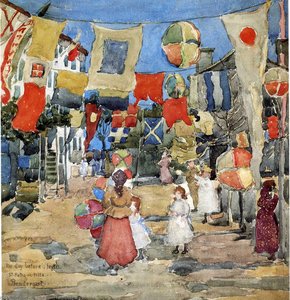
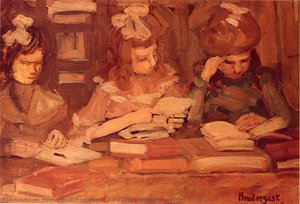
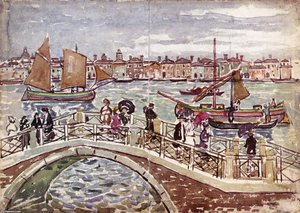
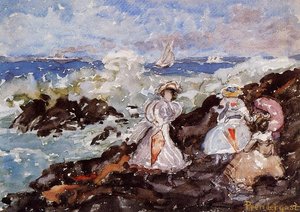
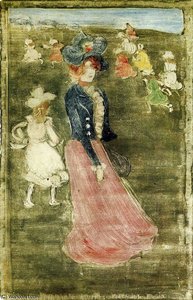
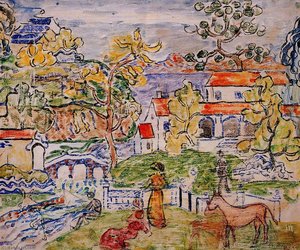
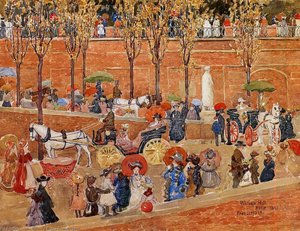
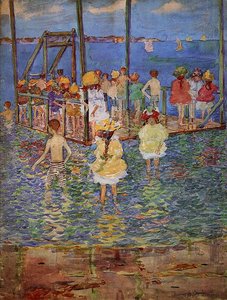
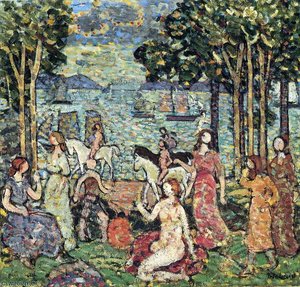
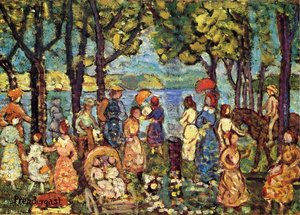
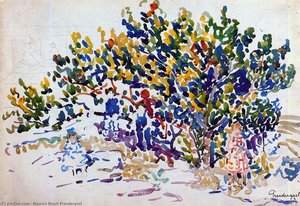
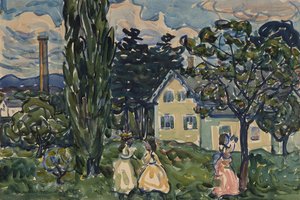
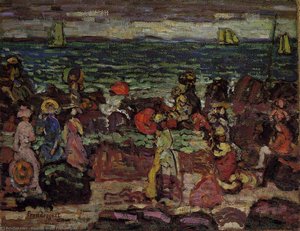
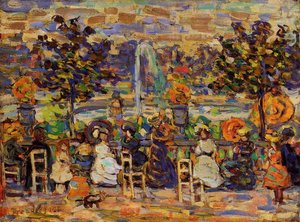
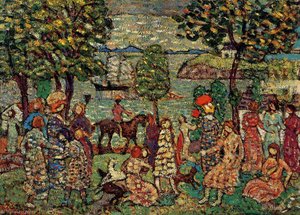
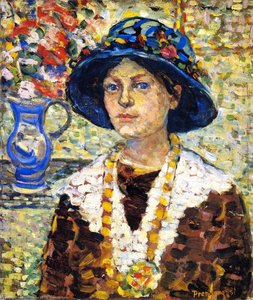
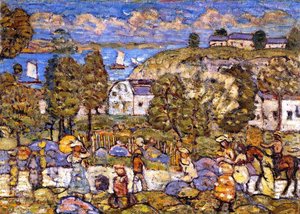
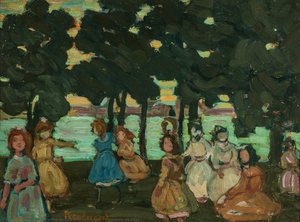
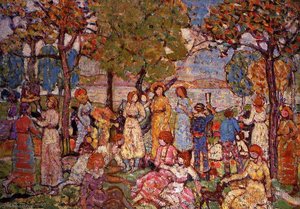
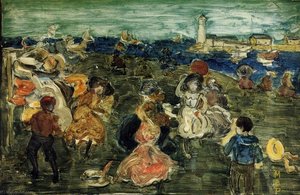
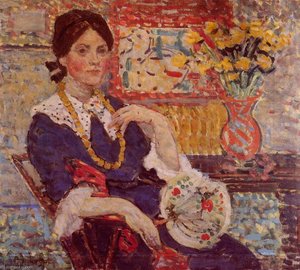
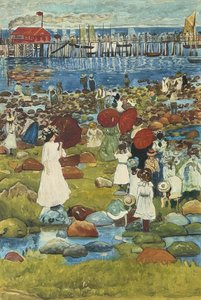
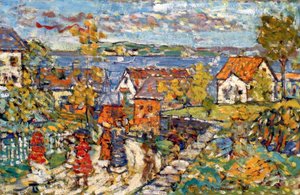
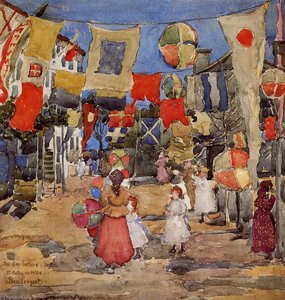
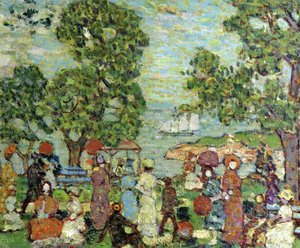
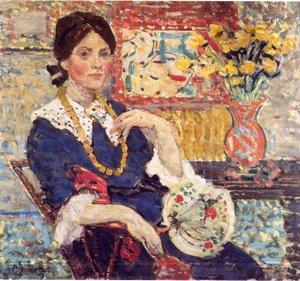
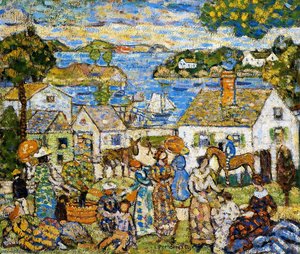
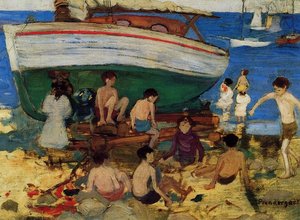
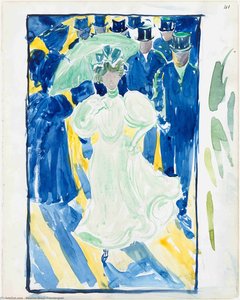
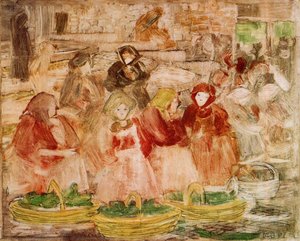
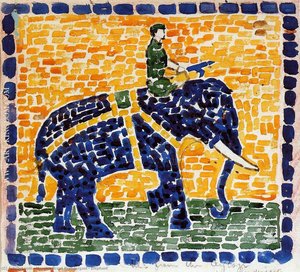
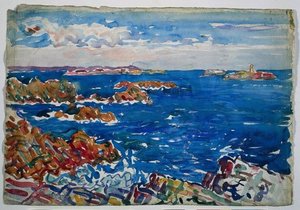
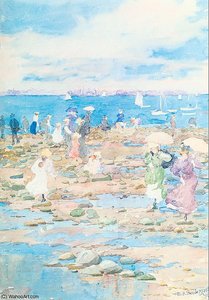
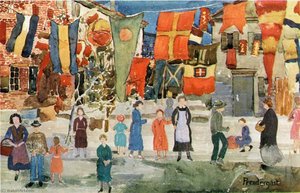
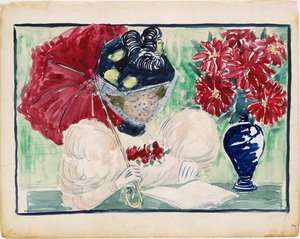
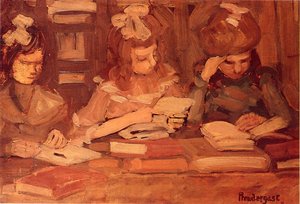
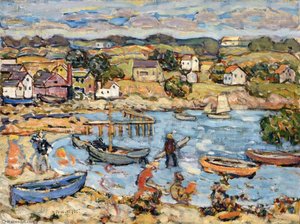
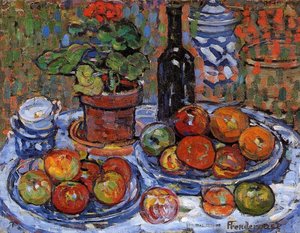
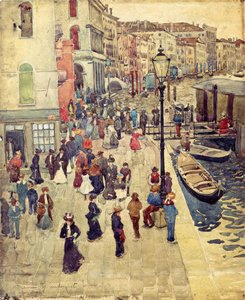
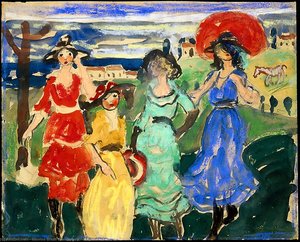
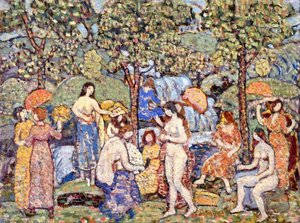
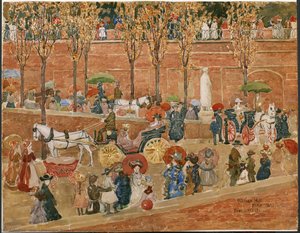
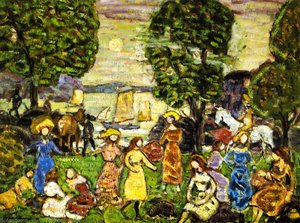
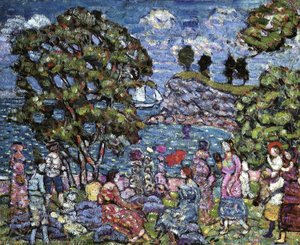
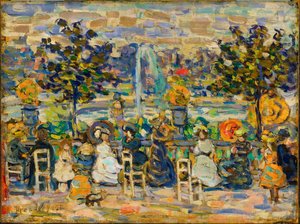
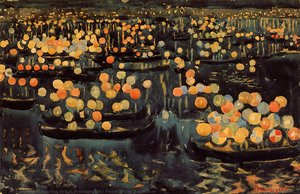
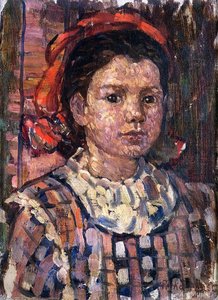
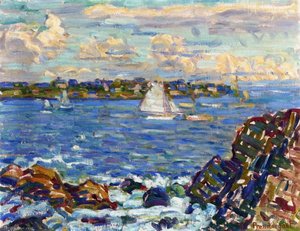
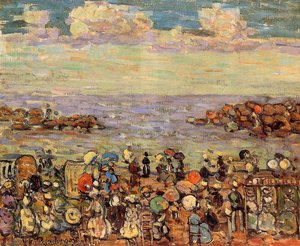
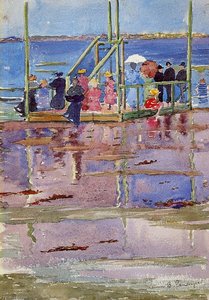
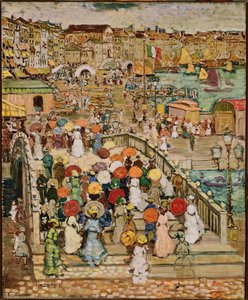
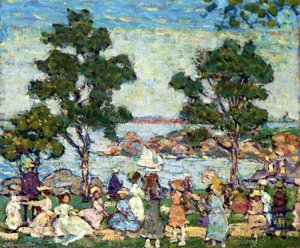
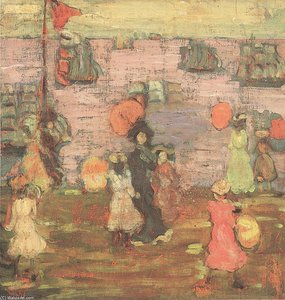
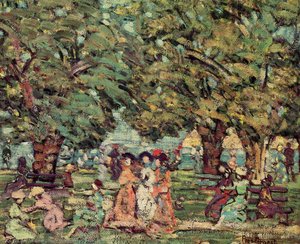
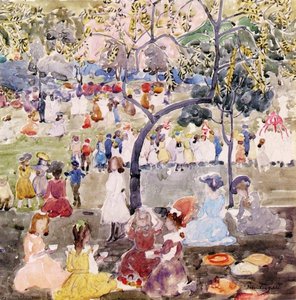
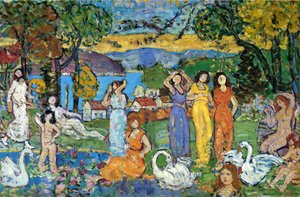
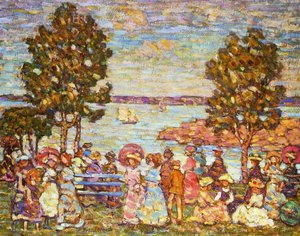
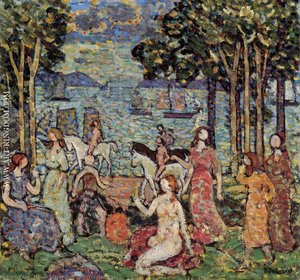
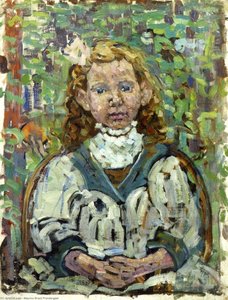
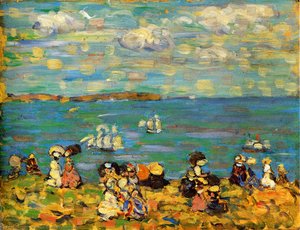
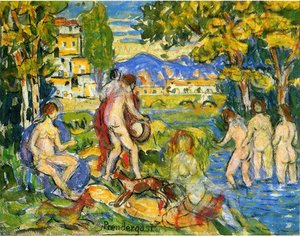
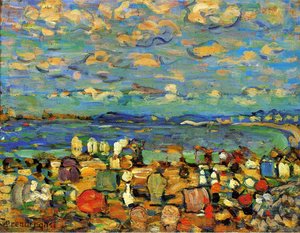
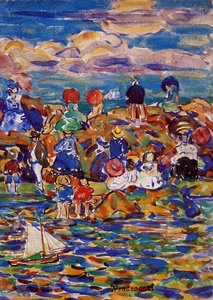
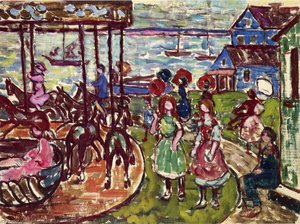
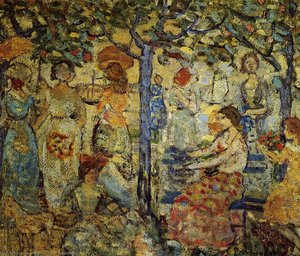
Prendergast’s visual language relies on a rejection of traditional modeling. He abandoned blended brushwork in favor of small, distinct strokes of pure color. These applications create shimmering surfaces that vibrate with light and energy. This method results in a mosaic-like effect, where flattened, pattern-like forms are rhythmically arranged across the canvas. His palette is defined by boldly contrasting, jewel-like colors that prioritize surface pattern over three-dimensional depth.
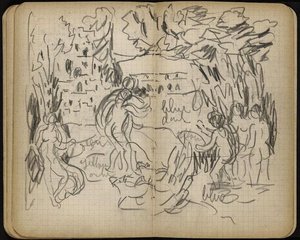
While he worked in oil and watercolor, his experimentation with monotypes remains a significant part of his technical output. He produced over two hundred monotypes between 1895 and 1902. This period of intense production highlights a commitment to exploring how light and color interact on a surface without the constraints of traditional academic layering. His approach was less about precise representation and more about the rhythmic arrangement of color to capture a specific atmosphere.
The Eight and American Modernism
Prendergast occupied a singular position within the American modernist movement. While he was a member of The Eight—a group of early twentieth-century artists who challenged academic tradition—his aesthetic did not align with the social realism of his peers. He avoided the gritty, urban realism favored by many in that circle, opting instead for a highly personal, decorative approach. His presence in the group highlights the diversity of the modernist push, proving that abstraction and pattern were as central to the era as social commentary.
His professional standing was cemented through extensive involvement in the institutional structures of the time. He was a member of the New York Water Color Club and the Boston Water Color Club, reflecting his mastery of the medium. His affiliations extended to the Copley Society in 1898, the Guild of Boston Artists, the American Painters and Sculptors, the Society of Independent Artists, and the New Society of Artists. These memberships were not merely social; they placed him at the center of a shifting artistic landscape that was moving away from rigid academicism toward more expressive, fragmented forms.
Key Works and Subjects
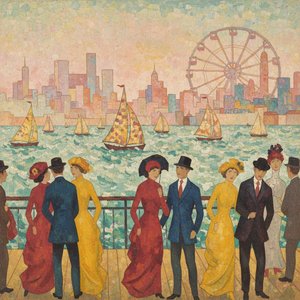
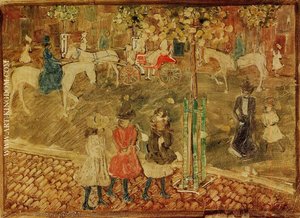
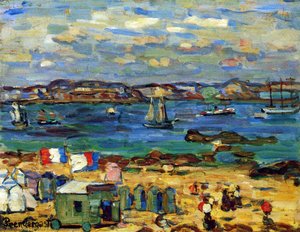
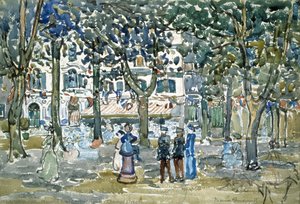
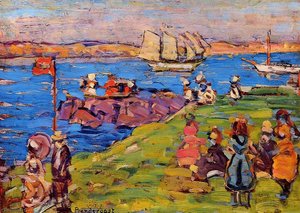
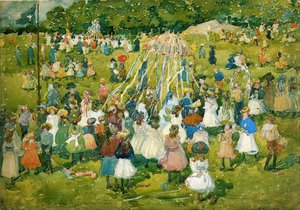
Prendergast’s subject matter focused on the rhythms of modern leisure. He avoided heavy drama, opting instead for lively, playful scenes of parks and beaches. These compositions often captured people engaged in social interaction or quiet contemplation within public spaces. His ability to translate these everyday moments into structured, rhythmic arrangements allowed him to move beyond simple representation. He found particular success in depicting the atmosphere of coastal life and urban greenery.
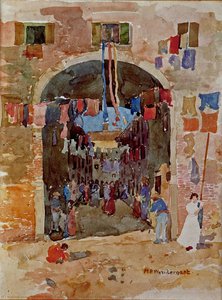
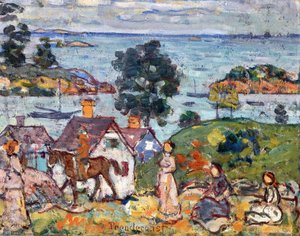
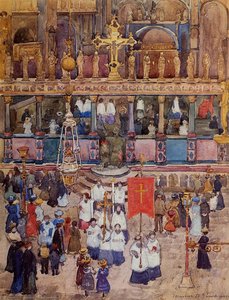
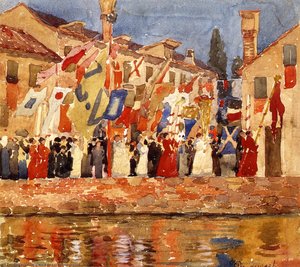
His technical range allowed him to tackle diverse environments with similar intensity. He produced inventive watercolors of Venice, using the medium to explore complex, rhythmic arrangements of color. His later work continued this focus on light and social activity, seen in his 1923 oil painting Cove with Figures. Whether documenting the bustle of a city park or the stillness of a harbor, his work remained anchored in the observation of contemporary life.
- Lady with a Red Sash, about 1897
- May Day, Central Park, about 1903
- Gloucester Harbor, about 1912
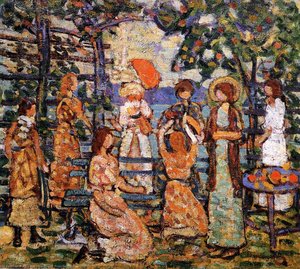
- The Picnic, 1914
Later Years and Death
The final chapter of Prendergast’s life was marked by a narrowing of sensory experience. As he aged, he experienced increasing deafness, a physical shift that coincided with his continued refinement of a highly personal, rhythmic visual language. He remained a bachelor throughout his life, finding his primary social and emotional anchor in his younger brother, Charles. The two brothers shared a deep bond, and Charles’s own work as a post-impressionist painter and designer reflected the close intimacy of their shared artistic ideas.
Prendergast’s output remained steady even as his physical world quieted. He continued to produce works that distilled the energy of modern life into flattened, patterned compositions. His focus on the decorative and the structural of color persisted until his death in New York City on February 1, 1924. He left behind a body of work that prioritized the immediate sensation of light and form over the heavy academic traditions of the previous century.
Legacy and Influence
Prendergast’s impact on the American art landscape was established long before his death in 1924, when he had already become one of the most famous American painters. He was a central figure in defining the distinctive aesthetic of American modernism. Rather than following the social realism of his contemporaries in The Eight, he pushed the movement toward a more decorative and rhythmic sensibility. His ability to synthesize Post-Impressionist color theory with a uniquely American subject matter helped shift the direction of domestic modern art.
His influence persists in the work of later American artists who moved toward abstraction. By prioritizing flattened forms and the expressive potential of pattern over traditional modeling, he provided a blueprint for non-representational exploration. His departure from academic tradition was not a mere stylistic choice but a fundamental shift in how light and space could be organized on a canvas. This focus on the surface as a site for rhythmic, jewel-toned arrangement remains a key point of study for those tracing the roots of American abstraction.
- Cove with Figures
- Landscape near Hahant
- Lady with a Red Sash
Where to See the Works Today
Prendergast’s presence in major American collections confirms his lasting impact on the development of modernism. To see his specific approach to color and form, one must look to the Smithsonian American Art Museum and the National Gallery of Art. These institutions hold significant examples of his ability to translate urban and natural scenes into rhythmic, mosaic-like compositions. His work is not a relic of a bygone era but a functional part of the American modernist canon held in these central repositories.
The geographic spread of his work allows for a broad understanding of his evolution. The Metropolitan Museum of Art in New York and the Museum of Fine Arts, Boston, provide essential access to his various mediums, including his experiments with oil and watercolor. In Philadelphia, the Barnes Foundation maintains a substantial collection that highlights his unique aesthetic. For those interested in his more atmospheric and structural works, the Hirshhorn Museum and Sculpture Garden offers further insight into his visual language.
- Lady with a Red Sash (1897)
- Gloucester Harbor (1912)
- Cove with Figures (1923)
Questions & Answers
What are the birth city and country of Maurice Brazil Prendergast?
Maurice Brazil Prendergast was born in St John's, in Canada.
What aliases or alternate names does Maurice Brazil Prendergast have?
Maurice Brazil Prendergast is also known as Maurice B Prendergast, Maurice Prendergast.
In which historical period did Maurice Brazil Prendergast work?
Maurice Brazil Prendergast worked in the 19th-Century period. The period situates the artist's activity in history.