The Mariner's Painter: The Life and Legacy of Reuben Chappell
Born on July 21st, 1870, in the industrious Doyle Street of Goole, Yorkshire, Reuben Chappell was a man whose very soul was anchored to the maritime rhythms of the Humber docks. Growing up amidst the towering silhouettes of sailing vessels and the salt-sprayed atmosphere of a bustling port town, Chappell did not merely observe the sea; he absorbed it. His early years were shaped by the sights and sounds of sailors preparing for arduous voyages, an environment that would later become the primary protagonist in his evocative canvases. This deep-seated connection to the maritime heritage of Goole provided him with an inexhaustible well of inspiration, allowing him to translate the raw energy of the North Sea into enduring works of art.
The foundation of Chappell’s technical prowess was laid by a unique blend of familial craftsmanship and formal observation. His father, a skilled joiner who ascended to the rank of master cabinetmaker, instilled in Reuben a meticulous attention to detail and a reverence for structural precision. This disciplined eye for form would become a hallmark of his marine paintings, where the rigging, hulls, and textures of vessels were rendered with unparalleled accuracy. While his early education at Goole Grammar School offered him a rare glimpse into art history, it was an apprenticeship under Harrison, a local photographer, that sharpened his ability to capture light and movement. This dual exposure to the precision of photography and the tactile nature of fine art allowed Chappells to develop a style that balanced documentary realism with expressive, painterly power.
Mastery of the Waves: Technique and Artistic Vision
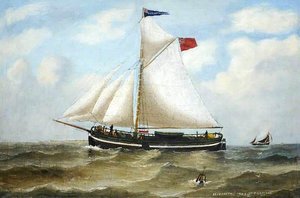
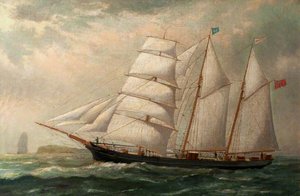
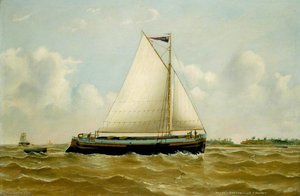
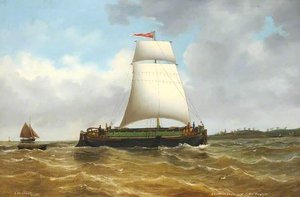
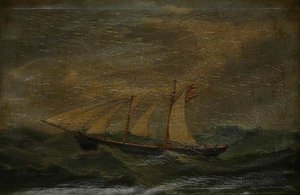
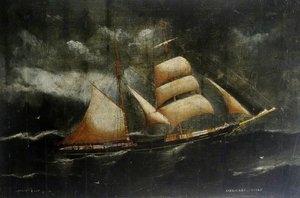
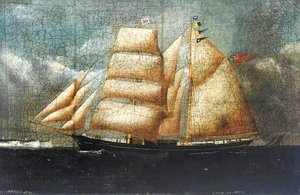
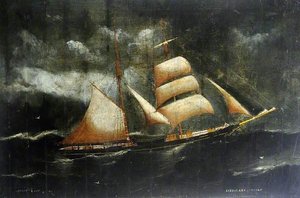
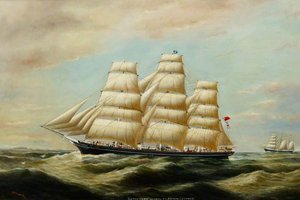
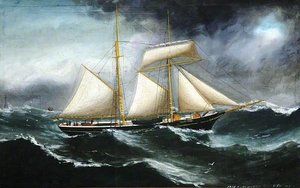
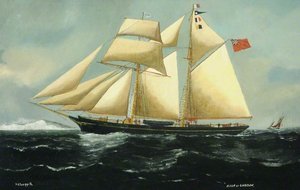
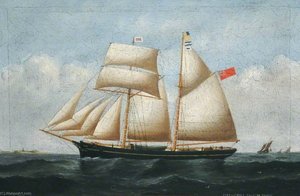
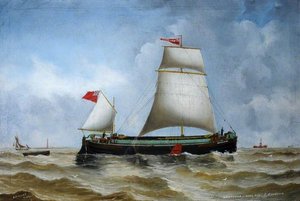
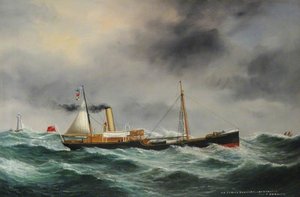
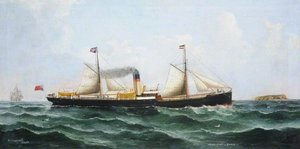
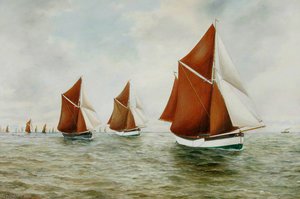
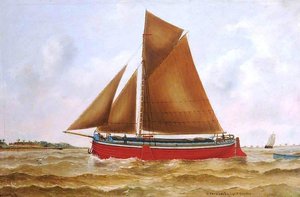
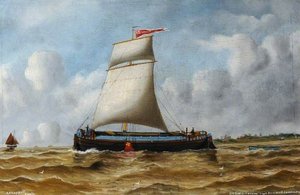
Chappell’s artistic journey was one of self-taught mastery, driven by an unwavering passion for portraying the sea and its vessels. Though he operated a dual vocation—offering portrait photography alongside his marine paintings to sustain himself in the pragmatic economy of a port town—his heart remained tethered to the canvas. His works, ranging from delicate watercolors to robust oil paintings, demonstrate a profound understanding of the maritime atmosphere. In pieces such as 'Lizzie Lee' of Goole (Fair Weather) and 'Golden Wedding' of Goole, one can observe his signature ability to manipulate texture and light to evoke the turbulent or tranquil states of the ocean.
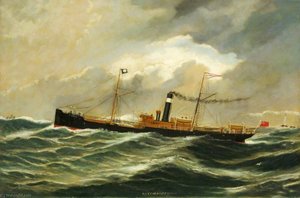
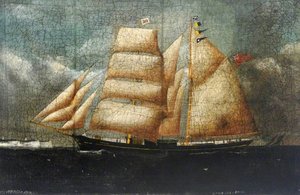
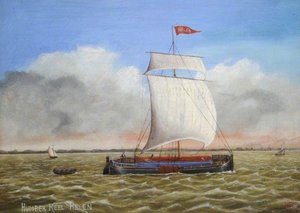
His technique often utilized a muted, evocative palette that mirrored the weathered reality of life at sea. Whether depicting the sturdy presence of a keel like 'The Keel Lizzie' of Thorne or the majestic sails of 'Elizabeth Ann', Chappell focused on the interplay between the elements and the man-made structures navigating them. His brushwork was capable of conveying both the heavy, churning weight of a storm-tossed sea and the subtle, shimmering reflections of a calm morning. This mastery of marine realism ensured that his paintings served not only as art but as historical documents of a vanishing era of sailing.
A Lasting Maritime Heritage
Beyond the technical brilliance of his work, Reuben Chappell’s significance lies in his role as a chronicler of Goole's maritime identity. His studio at 7 Jackson Street served as a creative hub where the life of the town was captured and preserved. Supported by the companionship of his wife, Caroline Bayford, Chappell built a legacy that extended through his family; his son, Cecil, played a vital role in ensuring his father's work reached the public through dedicated exhibitions. The following elements define the enduring impact of his career:
- Documentary Realism: His ability to capture the specific anatomy of Goole fishing boats and coastal vessels with historical accuracy.
- Atmospheric Depth: A unique talent for translating the sensory experience of the Humber docks—the mist, the salt, and the movement—into visual form.
- Cultural Preservation: The preservation of 19th and early 20th-century maritime life through a lens of both affection and precision.
Though Chappell passed away in 1940, his work remains a vital window into the maritime soul of Yorkshire. He remains celebrated by collectors and historians alike as an artist who did not just paint ships, but captured the very breath of the sea.
Questions & Answers
In which historical period did Reuben Chappell work?
Reuben Chappell worked in the Modern period. The period situates the artist's activity in history.