Early Life, Family and Training
Leiden, Netherlands, 1633. Willem van de Velde the Younger enters a world defined by the sea. He is born into a family of artists, the son of the painter Willem van de Velde the Elder. While his father focuses on the precise, monochrome documentation of ships, the younger Willem begins his own path. His brother, Adriaen van de Velde, pursues a different direction, focusing on landscapes and figure painting rather than the maritime scenes that define the family name.
Training begins at home. The elder Van de Velde provides the initial instruction, instilling a deep understanding of nautical structure. This foundation is later expanded through an apprenticeship with Simon de Vlieger, a marine painter of repute. Under de Vlieger, the technical precision of his father meets a broader understanding of composition. The influence of Jan van de Cappelle also leaves a mark, particularly in the way light interacts with cloudy skies and the calm waters below.
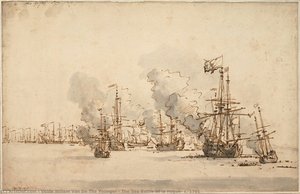
The workshop environment is one of collaboration and specialized roles. While the father often produces detailed ink studies and pen drawings of naval events, Willem van de Velde the Younger moves toward the medium of oil. This distinction allows the family to document the maritime world through both rigorous draughtsmanship and atmospheric painting.
Artistic Style and Technique
The studio functioned through a precise division of labor. While his father, Willem van de Velde the Elder, produced highly detailed black and white ink studies, the younger Van de Velde translated these sketches into oil paintings. He brought a spirited and finished handling to the canvas, moving beyond the monochrome precision of the initial draughtsmanship. His brushwork focused on the technical reality of maritime life, specifically the correct drawing of vessels and the intricate complexity of their rigging.
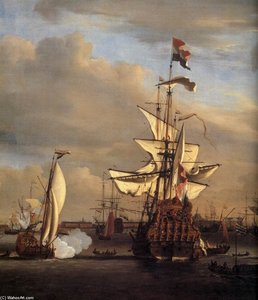
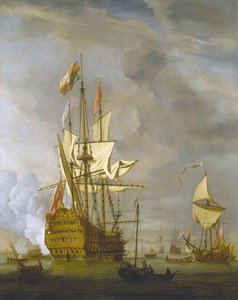
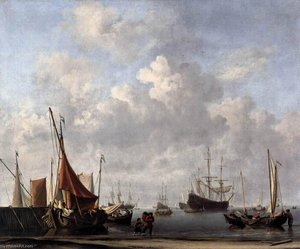
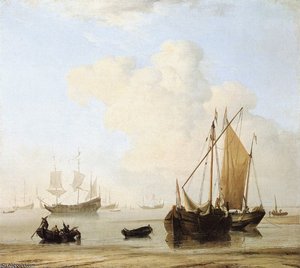
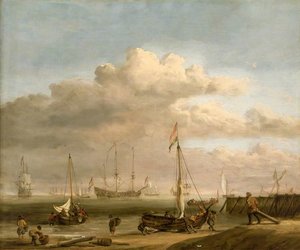
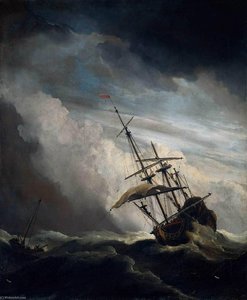
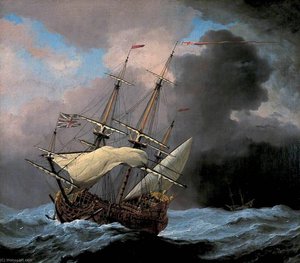
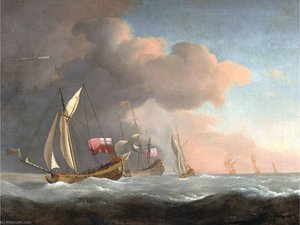
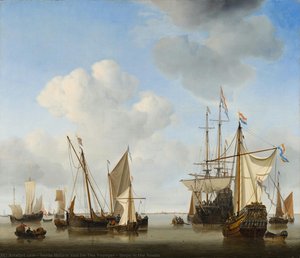
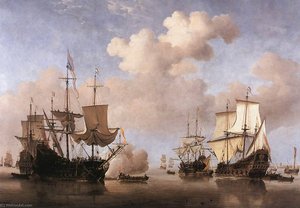
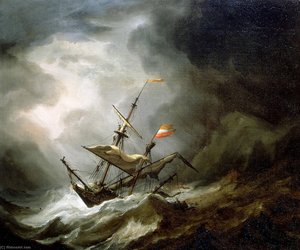
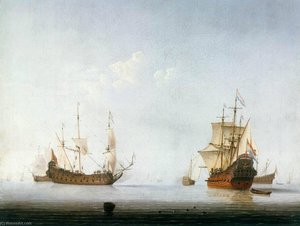
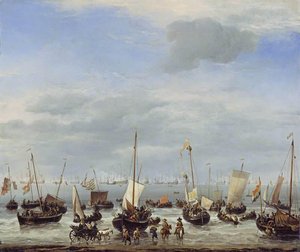
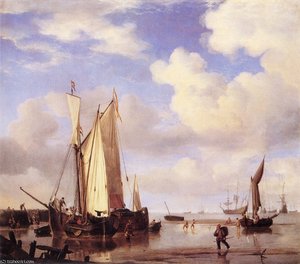
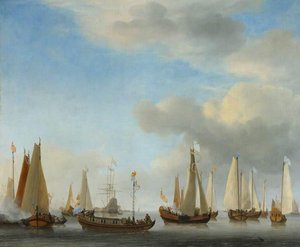
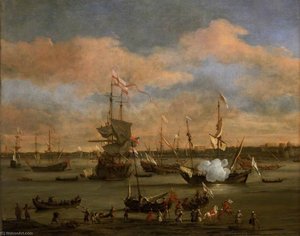
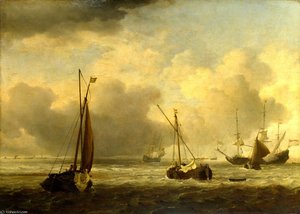
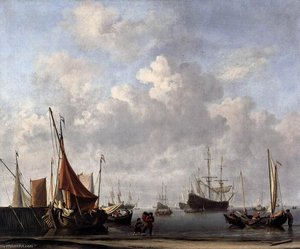
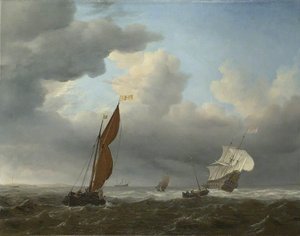
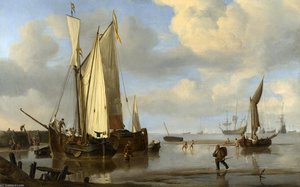
He possessed a virtuoso command over the elements of sea and sky. His compositions rely on a realistic rendering of perspective to create depth within the vast maritime expanses. He captures the nuances of light reflecting on water and the specific texture of sails as they respond to the wind. Whether depicting the heavy atmosphere of a storm or the stillness of a calm, his work emphasizes the physical presence of the ships within their environment. This technical accuracy allowed him to transform a simple nautical scene into an exciting composition of movement and light.
Patrons, Workshop and Commissions
The family workshop in Amsterdam serves as the foundation. Here, the division of labor is precise. The elder Van de Velde produces detailed monochrome pen studies, while the younger translates these sketches into oil paintings. This collaborative system turns raw observations of naval life into finished works. The partnership is a business as much as an artistic endeavor, operating as a thriving international studio.
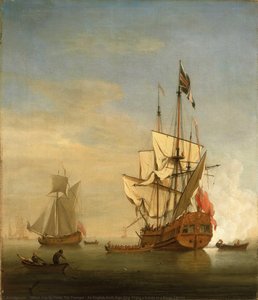
War shifts the center of gravity. Political and economic instability, driven by conflict with the French, forces the family to leave the Netherlands. They move to England, seeking new stability. The transition is swift. By 1674, the artist enters the service of Charles II. The King provides an annual salary of £100 and a studio space at the royal palace in Greenwich. This royal connection secures a steady stream of high-level patronage. The Duke of York and various members of the nobility follow, commissioning works that reflect the maritime power of the era.
The work often involves documenting specific naval events and vessels. The artist's position at Greenwich places him at the heart of English maritime interests. He does not merely paint scenes; he records the presence of the fleet. His commissions reflect the shifting tides of naval warfare and the growing importance of the English navy during the late 17th century.
Key Works and Notable Paintings
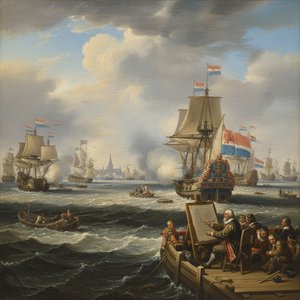
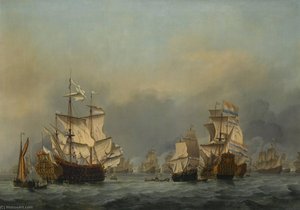
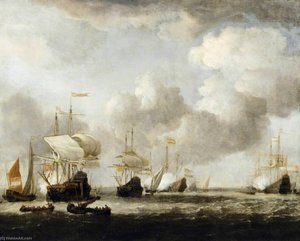
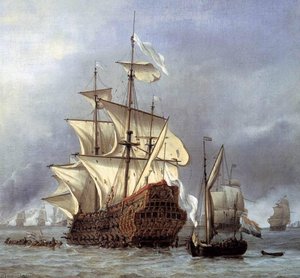
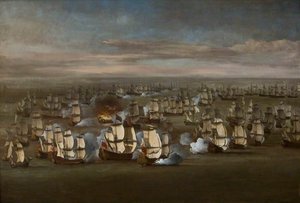
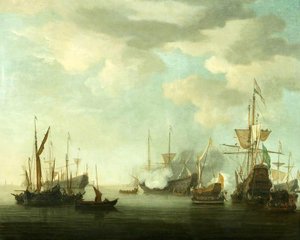
The canvas captures the tension of naval conflict and the heavy atmosphere of the sea. In The Sea Battle at la Hogue, c. 1701, the chaos of combat meets the precision of maritime documentation. This work reflects a career spent translating the movement of fleets into structured oil compositions. Similarly, The Embarkation of King Charles II at Scheveningen, 1660 freezes a specific historical moment, documenting the royal presence amidst the maritime landscape.
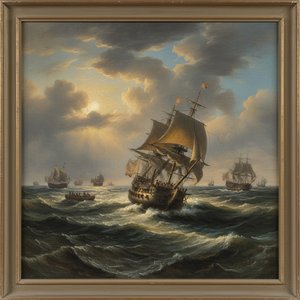
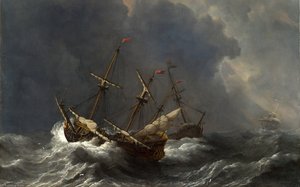
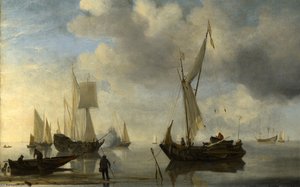
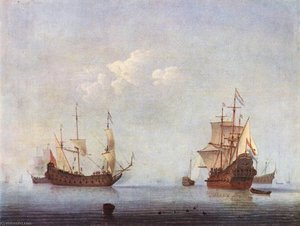
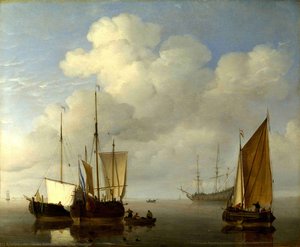
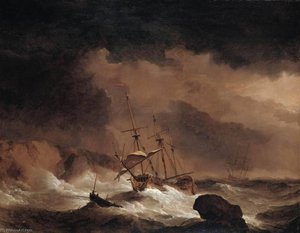
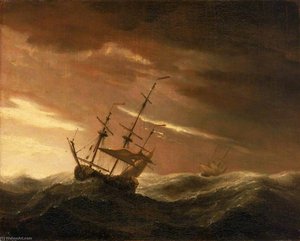
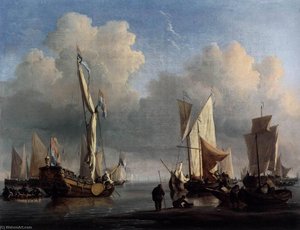
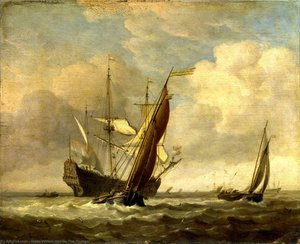
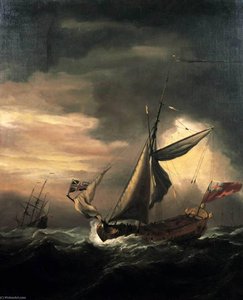
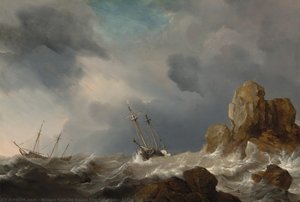
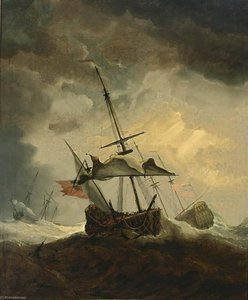
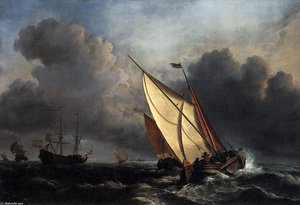
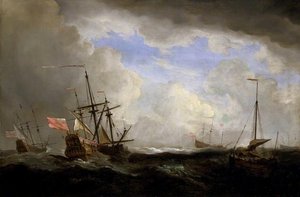
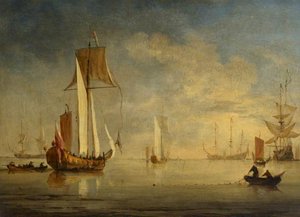
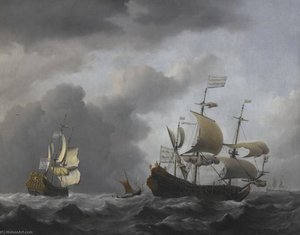
The weather dictates the mood of his most dramatic scenes. In Three Ships in a Gale, the wind exerts its force upon the rigging and sails, while The Gust, painted in 1680, captures the sudden, violent shift of a squall. These works demonstrate a technical mastery over the unpredictable elements of the ocean. Even in moments of stillness, such as Dutch Men o' War and Other Shipping in a Calm, the focus remains on the correct drawing of vessels and the subtle play of light on the water.
Legacy and Influence
The shift from the Dutch Golden Age to the English maritime tradition finds its hinge in his brushwork. As a prominent figure of the Dutch Golden Age, his presence in the English court changed the trajectory of seascape art. His later paintings shaped the development of seascape painting in England during the 18th century, providing a technical blueprint for those who followed. He is regarded by many as the most influential marine painter of the late 17th century.
His impact reaches beyond the immediate era. His legacy as a master of Dutch marine painting continues to inspire artists and art enthusiasts alike. He moved the genre away from mere documentation toward a sophisticated study of light and atmosphere. This transition ensured his work remains an integral part of art history.
Where to See the Works Today
The physical presence of his maritime scenes spans from the Netherlands to England. In The Hague, the Mauritshuis holds his paintings, preserving the precision of his naval depictions. The Rijksmuseum in Amsterdam also maintains his works within its collections, ensuring his technical skill remains accessible to those studying the Dutch Golden Age.
In London, his influence is visible through several major institutions. The National Gallery houses his paintings, where the scale of his compositions can be observed firsthand. The Wallace Collection also features his work, providing a different perspective on his ability to render the movement of the sea and the complexity of ship rigging.
- The Sea Battle at la Hogue, c. 1701
- The Embarkation of King Charles II at Scheveningen, 1660
- Ships in a Gale, 1660
Questions & Answers
What are the birthplace and birth year of Willem van de Velde the Younger?
Willem van de Velde the Younger was born in Leiden in 1633.
In which historical period did Willem van de Velde the Younger work?
Willem van de Velde the Younger worked in the Early-Modern period. The period situates the artist's activity in history.
What are the birth city and country of Willem van de Velde the Younger?
Willem van de Velde the Younger was born in Leiden, in Netherlands.