
The MonumentJames Ferrier Pryde · 1917
 Oil On Canvas
- WallArt
- Glasgow School
 1917
1917 152.0 x 139.0 cm
 Government Art Collection
James Ferrier Pryde (1866 – 1941)
James Ferrier Pryde (1866-1941): British painter & Beggarstaffs partner. Pioneering poster art, atmospheric architectural scenes, and theatrical designs shaped early 20thC aesthetics.
Government Art Collection (London, United Kingdom)
Delve into British art history through the Government Art Collection’s global exhibitions. Admire masterpieces by Freud, Hockney & more - explore high-quality reproductions & personalized artwork commissions.
A Monument to Resilience: James Ferrier Pryde’s Dramatic Vision
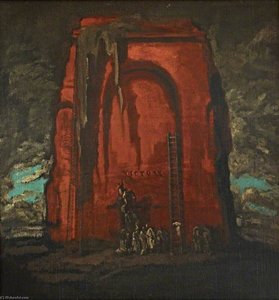
James Ferrier Pryde's "The Monument," completed in 1916–17, stands as a testament to both artistic ambition and the spirit of its time—a poignant reflection on Britain’s wartime effort amidst an atmosphere thick with symbolism and masterful execution. This monumental oil painting captures a scene of profound significance: figures ascending a ladder towards a colossal stone monolith bearing a carved victory emblem. The artwork hails from the Government Art Collection, offering a glimpse into the artistic endeavors undertaken during World War I to bolster morale and celebrate national triumph.- Subject Matter & Composition: Pryde’s central focus is undeniably symbolic—a towering edifice representing unwavering determination and aspiration. Surrounding figures climb upwards, mirroring humanity's struggle for progress against formidable obstacles. The deliberate positioning of individuals emphasizes the collective pursuit of victory, creating a dynamic visual narrative that transcends mere representation.
- Style & Technique: Pryde’s style aligns closely with the Glasgow School’s aesthetic principles—characterized by atmospheric perspective and an emphasis on capturing mood and emotion. He employs meticulous brushwork to render textures convincingly, particularly in the stone structure itself, conveying a palpable sense of solidity and grandeur. The artist skillfully utilizes chiaroscuro – dramatic contrasts between light and dark – to heighten the emotional impact of the scene.
- Historical Context: Painted during the height of World War I, “The Monument” embodies Britain’s determination to persevere despite immense hardship. It reflects a broader cultural preoccupation with ideals of heroism and resilience—themes prevalent in art and literature of the era. The artwork served as part of a government initiative aimed at bolstering public morale and commemorating wartime achievements.
- Symbolism: The stone monolith itself is laden with symbolic weight, representing permanence, strength, and divine authority – ideals crucial to maintaining faith during times of crisis. The ladder symbolizes the arduous journey towards success, highlighting the effort required to overcome adversity. Furthermore, the victory emblem signifies triumph over darkness and oppression.
- Emotional Impact: Pryde’s masterful portrayal evokes feelings of hope, aspiration, and unwavering resolve. The painting's luminous palette contributes to its emotive power, conveying a sense of grandeur and solemn contemplation. It invites viewers to contemplate the significance of perseverance in confronting challenges—a timeless message resonating powerfully even today.
About this artwork
- Title: The Monument
- Artist: James Ferrier Pryde
- Year: 1917
- Original dimensions: 152.0 x 139.0 cm
- Format: Square
- Copyright status: Public domain
- Where to see it: Government Art Collection
- Movement: Glasgow School
- Purpose: Accent
- Keywords: monument sculpture, james ferrier pryde, classical composition
Quick Facts
- Influences: Glasgow School
- Dimensions: 152 x 139 cm
- Medium: Oil on Canvas
- Location: Government Art Collection
- Year: 1917
- Artistic style: Symbolic Representation
Questions & Answers
Who is the artist behind "The Monument"?
"The Monument" was created by James Ferrier Pryde. The information on this page describes James Ferrier Pryde's original work.
Does "The Monument" show strong light-dark contrasts?
"The Monument" by James Ferrier Pryde shows a balanced contrast between its light and dark areas.
How light is "The Monument" overall?
In terms of perceived brightness, "The Monument" by James Ferrier Pryde is shadow.