Origins and History of the Estate
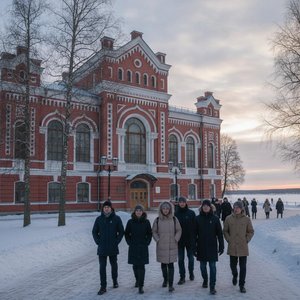
The presence of the Arkhangelskoye Estate Museum on this land reaches back to the reign of Ivan the Terrible. Written records first mention the estate in the 16th century, marking the beginning of a long lineage of ownership. For over a century, from 1703 to 1810, the property belonged to the Golitsyns. This period saw the development of the grounds and the establishment of the estate as a significant seat of nobility in the Krasnogorsky District of the Moscow Oblast, Russia.
In 1810, Prince Nikolai Yusupov acquired the estate. His ownership marked a period of significant accumulation, as the property became a repository for his extensive private collection. The era of private aristocratic ownership concluded in 1917 when the property was nationalized by the Bolsheviks. Following this transition, the site was granted museum status in 1919, ensuring its preservation for public viewing.
Architecture and Estate Structures
The architectural character of the estate is defined by the neoclassical style, shaped largely by the hand of Jacques Jacob Guerne. In the 18th century, Nikolai Golitsyn commissioned French architects to design both the palace and the surrounding grounds, establishing a sense of order across the landscape. Among these structures, the Caprice Palace remains a significant presence, designed by Guerne to complement the estate's formal elegance. The layout follows a regular, terraced park design that integrates the buildings with the natural topography of the site.
The history of the site reaches back much further than the neoclassical era. The Church of Archangel Michael, dating to 1646, remains the oldest surviving building on the grounds. This structure provides a historical anchor to the earlier layers of the estate. Other architectural elements contribute to the complex's layered history, including the Saint Gates, constructed between 1825 and 1826, and the uncompleted Colonnade. Even the unfinished projects hold a certain weight, such as the Yusupov family mausoleum designed by Roman Klein.
The estate also contains specialized structures intended for performance and social gathering. An 18th-century theatre, designed by Pietro Gonzaga, features four sets and curtains that reflect the theatrical traditions of the period. These buildings exist within a landscape of antique statues and formal gardens, where the architecture and the greenery are intended to exist in a deliberate, quiet balance.
The Art and Decorative Collections
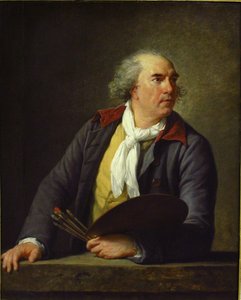
The interior spaces hold a collection of paintings, sculptures, furniture, ceramics, and varied decorative objects. In several rooms, the walls are adorned with monumental painted landscapes by Hubert Robert. These works provide a sense of scale to the architecture. The presence of these large-scale compositions changes the perception of the room's boundaries. Nearby, a replica of Antonio Canova's "The Kiss" occupies a place within the collection, offering a study in classical form.
Beyond the walls of the palace, a French sculpture garden contains pieces dating from the 18th to the 20th centuries. These figures are positioned throughout the landscape, integrated into the greenery and the formal layout of the grounds. The arrangement of these sculptures creates a dialogue between the stone and the surrounding nature.
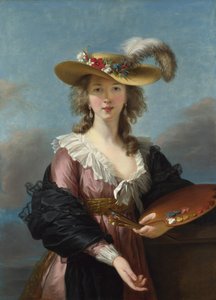
- Elizaveta Alexeevna in red dress - Élisabeth Louise Vigée Le Brun
- Un enfant dans son berceau, entraîné par les eaux de l'inondation du mois de nivôse an X, 1810 - Marie Denise Villers
- Ancient fountain and a pyramid, 1779 - Hubert Robert
Recent Preservation and Development
The preservation of the estate has faced significant challenges in recent decades. Following the nationalization of the property in 1917, the site eventually transitioned to the care of the Russian Ministry of Culture in 1996. During this period, the physical condition of the buildings required urgent attention. The World Monuments Fund recognized these needs by listing the site on the World Monuments Watch in 1996, and subsequently in 2000 and 2002.
Efforts to stabilize the estate have focused on specific architectural elements and interior spaces. Through the support of the World Monuments Fund, grants were secured to facilitate the refurbishment of the private theater and the rooms containing works by Hubert Robert. These interventions aim to address the decay that affected the interiors due to unheated conditions and the passage of time. The focus remains on the careful restoration of these specific environments to ensure the survival of the estate's structural and decorative integrity.