

The History of the Barnes Foundation
The origins of the Barnes Foundation trace back to the early interests of Albert C. Barnes. He began collecting art as early as 1902, driven by a personal passion that eventually led to the establishment of the institution in 1922. A chemist by profession, Barnes built his fortune through the co-development of Argyrol, an anti-blindness drug. Alongside Laura Barnes, he founded the institution to promote the appreciation of art and horticulture through a specific educational vision.
For much of its history, the collection was housed in Merion. This original setting allowed for the development of the unique ensembles that define the collection's character. In 2012, the institution moved to a new building on Benjamin Franklin Parkway in Philadelphia, Pennsylvania. This relocation brought the collection to the heart of the city while maintaining the specific arrangement of objects intended by its founders.
The Architecture and Atmosphere of the Galleries
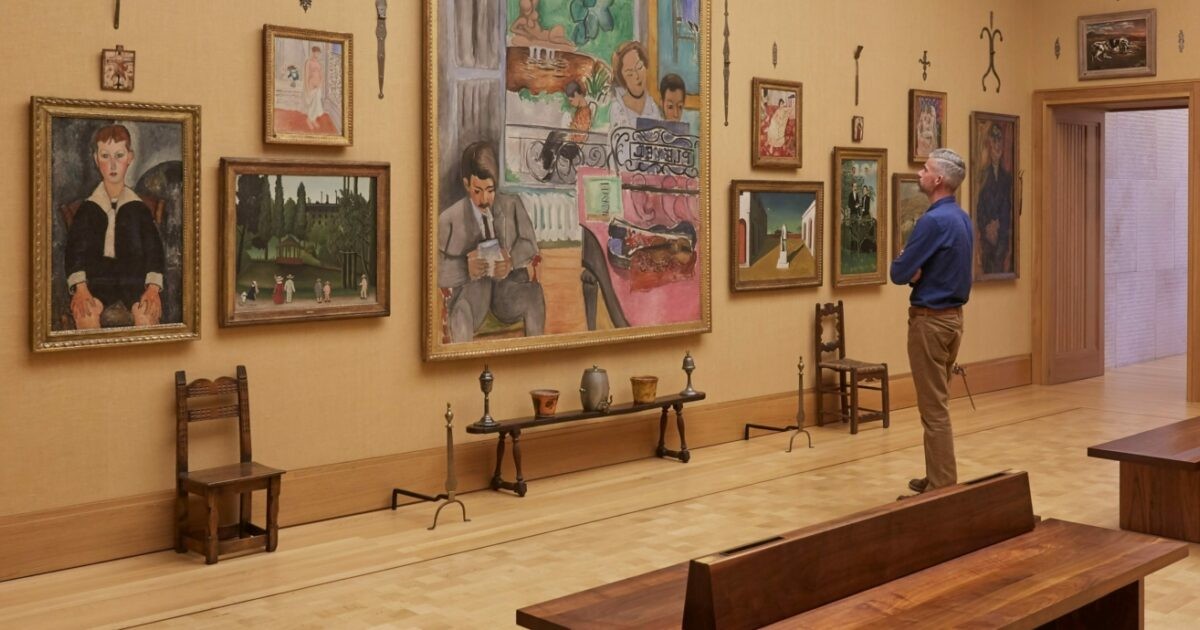
The current building on Benjamin Franklin Parkway in Philadelphia was designed by Tod Williams Billie Tsien Architects | Partners. The architecture functions as a deliberate echo of the past, resonating within a contemporary space. It was meticulously designed to recapture the intimate scale and atmosphere of the original gallery in Merion. This spatial arrangement ensures the building's design remains an integral part of the art experience, shaping how visitors perceive and interact with the collection.
Inside, the galleries feature carefully controlled lighting and thoughtfully arranged spaces. These elements encourage close observation of the works. The design avoids the grand, imposing architecture often associated with such institutions, opting instead for a sense of intimacy. This environment facilitates a direct, personal engagement with the objects on display.
The Impressionist and Post-Impressionist Collections
The foundation holds one of the most significant collections of Impressionist, Post-Impressionist, and early modern paintings. The holdings include 181 pieces by Renoir and 69 works by Cézanne. These paintings are arranged in ensembles designed to highlight the relationships between color, line, and form. Visitors encounter the rhythmic compositions of Matisse, with 59 pieces in the collection, alongside 46 works by Picasso.
The collection features the works of Vincent van Gogh, including his Wheatfield with Crows. These paintings are positioned to encourage a direct engagement with the canvas. By grouping these works with other objects, the collection emphasizes the visual connections between different eras and styles. The selection focuses on the evolution of modern vision through the specific application of light and texture.
- Wheatfield with Crows, 1890 - Vincent van Gogh
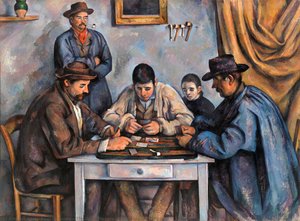
- The Card Players (Barnes), about 1892 - Paul Cézanne
Masterpieces of the Barnes Collection
The collection contains significant works from the Impressionist and Post-Impressionist movements. Claude Monet’s Bathers at La Grenouillère is held here, alongside Renoir’s Bal du moulin de la Galette. These works are positioned to allow for the study of light and color. Degas is represented through his depictions of dancers, which contribute to the visual dialogue within the galleries.
The holdings include several essential works by Paul Cézanne, such as The Card Players (Barnes), which dates to about 1892. Henri Matisse is represented by Woman with Fan. The collection also features Vincent van Gogh’s The Postman (Joseph-Étienne Roulin), painted in 1889.
Diverse Art and Decorative Objects
The collection comprises over 4,000 objects arranged to highlight visual relationships across different media and eras. This assembly includes a significant collection of African art, which was integrated into the foundation's visual logic to provide context for modern European developments. Alongside these sculptures, the galleries contain Native American pottery and jewelry, as well as Asian antiquities. These items are positioned to encourage a direct comparison of form and line.
The foundation also preserves regional and functional crafts. Pennsylvania German furniture is placed in dialogue with other decorative arts, such as wrought-iron metalwork. These objects are not isolated; they are part of the specific ensembles designed to reveal the interconnectedness of art across various cultures and time periods. The presence of these items alongside fine art is central to the institution's approach to aesthetic understanding.
The Educational Philosophy and Method
The Barnes Foundation operates as both an art collection and an educational institution. At its core is the Barnes Method, a specific pedagogical approach designed to foster independent thought and critical thinking. Rather than relying on pre-packaged narratives or scholarly lectures, the method emphasizes the direct experience of original works. Students engage with the art through close observation and participation in class discussions, focusing on the formal qualities of the objects before them.
This approach seeks to develop more than just aesthetic appreciation. The goal is to improve a student's general ability to learn and succeed by training the eye to look objectively at color, line, light, and space. By analyzing these elements, learners develop the capacity for disciplined, analytical thought. The foundation provides these programs for students of all ages and backgrounds, maintaining a commitment to accessibility in its educational mission.