

The History and Origins of St. Peter's Basilica
The origins of St. Peter's Basilica are rooted in the historical site of the Circus of Nero. Construction of the initial structure began during the reign of Roman Emperor Constantine I. This early church was established in 326 AD. For centuries, the site functioned as a center for pilgrimage, built over the area where tradition places the burial of Saint Peter.
The present basilica is a much later development, replacing the older structure. Construction of this current edifice began on 18 April 1506. The project spanned over a century, reaching completion on 18 November 1626. On that same day, Pope Urban VIII solemnly dedicated the building.
The site remains a religious church in Rome, Italy. It occupies a central position in the history of the Papacy, having evolved from a modest chapel into the monumental structure seen today. The transition from the early Christian foundations to the Renaissance and Baroque layers reflects the changing architectural requirements of the Vatican over many centuries.
Architectural Evolution and Grandeur
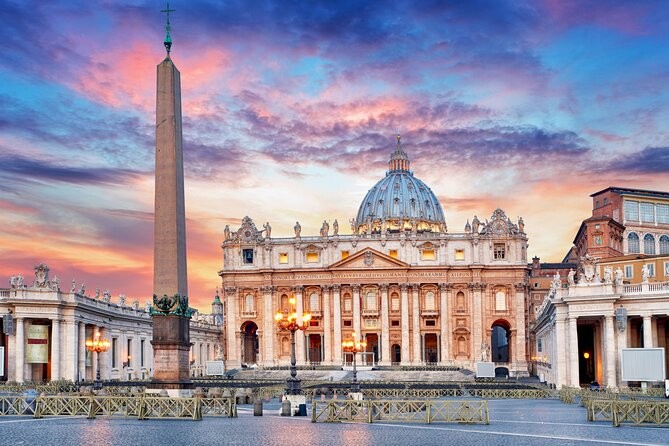
The basilica is a church of the Italian Renaissance style, situated in Vatican City. Its physical presence is defined by a massive scale, with an exterior area of 21,095 square metres and an interior area of 15,160 square metres. The façade is marked by two 5.55-metre statues of Saints Peter and Paul. As one of the four major papal basilicas in Rome, it holds the second rank among them.
The central dome, designed by Michelangelo, remains the tallest dome in the world. This structure dominates the skyline of Rome and defines the architectural silhouette of the site. The building's proportions reflect the transition from earlier foundations to the high Renaissance ideals that shaped its current form.
Masterpieces of the Basilica Collection
The interior of the basilica houses significant works from the High Renaissance and the Baroque period. Among these is Michelangelo's Pietà, a sculpture created about 1499. The work depicts Mary cradling the lifeless body of Christ. The physical tension in the figures and the treatment of the drapery define this specific moment of grief.
Other significant works include Bernini's statue, which contributes to the religious and artistic character of the space. These objects are integrated into the liturgical life of the church, existing within a setting defined by centuries of papal patronage and architectural development.