


The History of Bayerische Staatsgemaldesammlungen
The origins of the Bayerische Staatsgemaldesammlungen are rooted in the year 1799 with the establishment of the Centralgemäldegaleriedirektion. Located in Munich, Germany, the institution began as a curated space intended for royal collections. This early purpose reflects a period when art was held within the private spheres of nobility, before transitioning into the public resource that exists today. The history of the collection is interwoven with the broader narrative of Bavaria itself.
The institution has evolved into a multifaceted entity encompassing four distinct galleries. Each space reflects a different era and architectural philosophy, moving from the stately reverence of the Old Masters to the avant-garde spirit of modern movements. This expansion mirrors the changing role of art in society, shifting from the private enjoyment of rulers to a shared cultural responsibility. The collection remains a living chronicle of European art, spanning seven centuries of visual development.
Architectural Styles of the Galleries
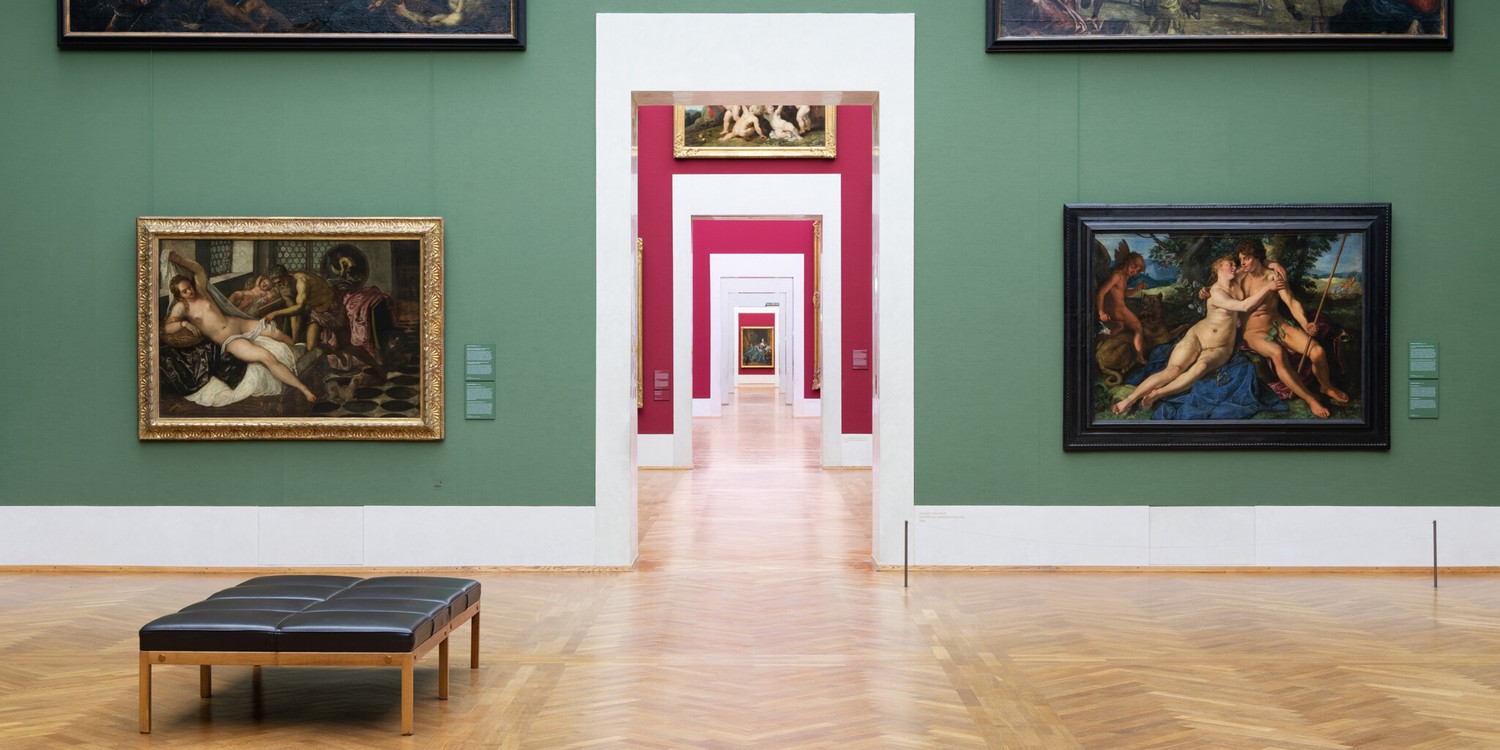
The architectural identity of the Bayerische Staatsgemäldesammlungen is defined by a dialogue between distinct eras and philosophies. The Alte Pinakothek, designed by Leo von Klenze, follows a grand neoclassical style. Its interior is characterized by soaring ceilings and classical proportions that create a sense of stately reverence. The light within these halls is filtered through a design that emphasizes clarity and dignity, providing a structured environment for the Old Master paintings housed within.
A shift in sensibility is evident in the Neue Pinakothek, which was built in 1857. This structure presents a synthesis of classical elements and emerging modern influences, reflecting the intellectual shifts of the 19th century. In contrast, the Pinakothek der Moderne adopts a postmodern approach. This edifice is defined by its cubic forms and an expansive glass facade, a design that mirrors the avant-garde spirit of the contemporary works it contains.
The Museum Brandhorst offers a different visual energy through its facade of ceramic tiles. This exterior provides a striking contrast to the more traditional stone and glass structures of the other galleries. Each building functions as an integral part of the experience, contributing a unique atmosphere to the collection.
The Alte Pinakothek Collection
Established by King Ludwig I in 1836, this Neoclassical powerhouse in Munich's Kunstareal holds a profound weight of history. The space functions as a sanctuary for the Renaissance and Baroque masters, where the light filters through high, skylit halls to meet the canvas. It is a place where the heavy presence of the past remains palpable, offering a quiet encounter with the evolution of European visual language.
The collection spans the 14th through 18th centuries, bringing together diverse eras of creation. One finds the meticulous, hyper-real textures of Northern European masters held in direct conversation with the dramatic tension of the Baroque. These works are not mere images; they are physical presences that demand a slow, steady gaze to truly register the depth of their detail and the precision of their execution.
- Spring, Giuseppe Arcimboldo
- Winter, Giuseppe Arcimboldo
- Summer, Giuseppe Arcimboldo
- The Turnip Peeler, 1738 - Jean-Baptiste-Siméon Chardin
Museum Brandhorst and Pop Art
The Museum Brandhorst functions as one of the four distinct galleries within the Bayerische Staatsgemaldesammlungen. Its presence is defined by a façade of ceramic tiles, an energetic expression that mirrors the specific nature of the art held within. This architectural choice creates a direct connection to the movements housed inside, moving away from the classical weight of the older institutions in Munich.
The collection focuses on the shifts of the twentieth century, specifically Pop Art, Minimalism, and Conceptual Art. These movements demand a different kind of attention, one centered on the presence of the object and the ideas it carries. The space allows for an encounter with the radical shifts in visual language that occurred as art moved toward the contemporary era.
Masterpieces of the Collection
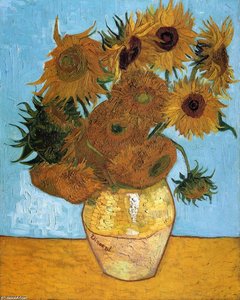
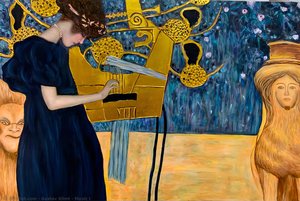
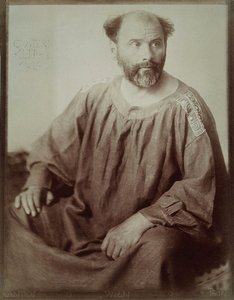
To stand before the works in these galleries is to encounter the physical presence of history. Vincent Willem Van Gogh’s Sunflowers (1888) exists as a concentrated study of color and form. Nearby, Gustav Klimt’s Music I (1895) offers a different kind of intensity, drawing the eye into its specific decorative language. These are not merely objects of study; they are presences that command the space around them.
The collection holds significant shifts in how we perceive the human figure and the natural world. Paul Cézanne’s Self Portrait in a White Cap (1882) captures a decisive movement toward structural clarity, moving away from the shimmering surfaces of earlier styles. In a different realm of expression, Franz Marc’s Shepherds (1912) presents a vision of the animal and the landscape that feels both grounded and deeply personal. Even the quietest moments are preserved, such as Jean-Baptiste-Siméon Chardin’s The Turnip Peeler (1738), which finds weight and dignity in a simple, domestic task.
- Sunflowers, 1888
- Music I, 1895
- Self Portrait in a White Cap, 1882
- Shepherds, 1912
- The Turnip Peeler, 1738
Provenance Research and Restitution
The Bayerische Staatsgemäldesammlungen maintains a profound commitment to historical accountability through active engagement in provenance research. Since 1999, the Referat Provenienzforschung has been systematically investigating the origins of artworks to address the complexities of the past. This work focuses on approximately 6,000 pieces that were acquired or inventoried during the period between 1933 and 1945. Such scrutiny is essential to ensure that the history of these objects is understood in its full, often difficult, context.
A central objective of this ongoing effort is the identification and return of artworks that were unjustly acquired during the Nazi era. By examining the chains of ownership, the institution works toward transparency and the restitution of property to rightful heirs. This process requires meticulous attention to archival records and the tracing of movements through decades of upheaval. It is a quiet, necessary labor of stewardship that seeks to rectify historical injustices through precise documentation and ethical responsibility.
Digital Access and Online Collections
The digital presence of the Bayerische Staatsgemäldesammlungen provides a vast window into its holdings, offering a resource that encompasses over 25,000 works of art. This online collection extends far beyond the physical walls of the Munich galleries, incorporating 17,000 deposited works. It also provides access to more than 4,000 permanent loans originating from Munich holdings. Such breadth allows for a study of the collection that is not limited by the physical constraints of the museum buildings.
High-resolution images allow for a close examination of brushwork and texture, bringing the presence of the originals into a digital space. These images are accompanied by historical context, providing the necessary framework to understand the provenance and circumstances of each piece. The availability of these details facilitates a deeper engagement with the art, allowing for a meticulous study of the objects from any location.