

Origins and History of the Institution
The Royal Museums of Fine Arts of Belgium, located in Brussels, Belgium, possesses a history tied to the shifting political landscape of Europe. The institution's foundations trace back to 1801, though it was formally established under Napoleon’s decree in 1803. This period of formation preceded the official establishment of the museum in 1831. As the nation evolved, the collection underwent significant transitions, including the moment it was ceded to the Belgian state in 1841.
The collection has grown steadily through centuries of acquisitions and donations. Today, the museum holds over 20,000 works. These pieces represent a vast timeline of artistic production, from the early Flemish traditions to the surrealist movements of the modern era. The presence of these works within the Brussels complex provides a continuous record of the creative output of the Low Countries.
The Architecture of the Museum Complex
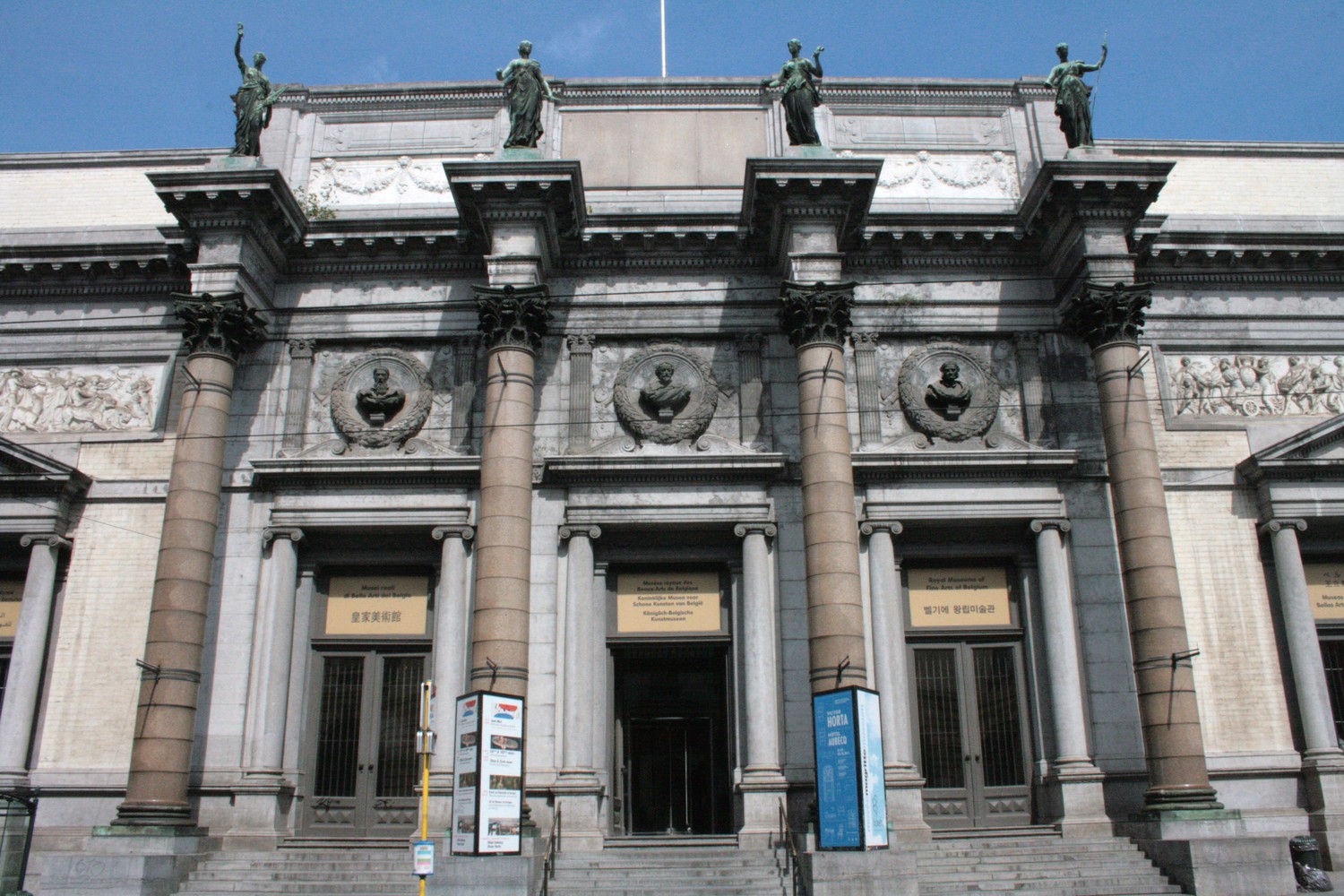
Located in the heart of Europe within the cityscape of Brussels, the museum complex has evolved organically, mirroring Belgium's own journey through history. The foundations lie within the elegant Palace of Charles of Lorraine, a structure that provides a historic core for the institution. This regal residence has been seamlessly integrated into the museum’s fabric, allowing the layers of the past to remain present within the current layout.
The neoclassical grandeur of the Palace of Fine Arts complements these older foundations. Designed by Alphonse Balat and inaugurated in 1880, this structure became an immediate landmark. The architecture reflects the ambitions of a burgeoning nation, creating a space where the physical environment is as much a part of the experience as the objects held within its walls. Walking through these halls allows for a sense of traversing time, moving between the echoes of royal courts and the fervor of artistic revolutions.
The Old Masters Museum Collection
The Oldmasters Museum forms one of the six distinct museums within the complex. It acts as a pilgrimage for those drawn to meticulous detail and spiritual depth. The presence of Rogier van der Weyden offers a profound realism, where every expression carries a weight of sorrow. Nearby, the earthy narratives of Robert Campin ground the sacred within the textures of everyday existence. These works do not merely represent scenes; they occupy the space with a quiet, heavy permanence.
The collection extends into the dynamic compositions of Jacob Jordaens, whose energy fills the room. The lineage of Flemish tradition is further solidified by the works of Rubens and Jan van Eyck. To stand before these canvases is to encounter the technical precision of the Low Countries. The paintings demand a slow, steady gaze to fully register the layers of oil and the intention behind every brushstroke.
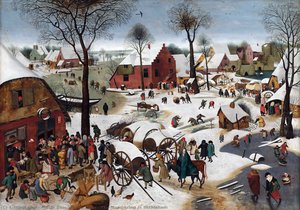
- The Census at Bethlehem, 1566 - Pieter Bruegel the Elder
- Pietà, 1441 - Rogier van der Weyden
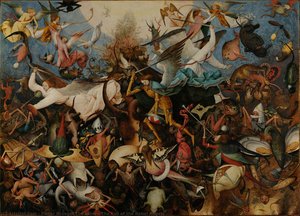
- The Fall of the Rebel Angels, 1562 - Pieter Bruegel the Elder
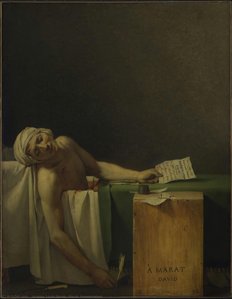
- Marat Assassinated, 1793 - Jacques-Louis David
- Autumn Flowers, 1867 - Alfred Stevens
The Magritte Museum and Surrealism
The Magritte Museum houses the largest collection of works by René Magritte globally. Within these walls, the unsettling dreamscapes conjured by the artist invite a quiet scrutiny of the familiar. There is a specific gravity to the way his imagery challenges the perception of reality, forcing a confrontation with the logic of the subconscious. The collection offers an opportunity to decipher enigmatic symbols that linger in the mind long after leaving the room.
To stand before these canvases is to encounter a visual language that operates outside the boundaries of conventional reason. The works do not merely represent objects; they reconfigure them into something strange and unexpected. One might find themselves contemplating the weight and texture of objects that defy their natural properties, such as the presence of Copper handcuffs, dated about 1931.
- Copper handcuffs, about 1931
Fin-de-Siècle and Modern Art Collections
The Fin-de-Siècle Museum offers a window into the Symbolist movement, where the focus shifts toward the psychological and the mysterious. The works of James Ensor and Fernand Khnopff reside here, presenting a departure from the naturalism of previous eras. These paintings often reflect the anxieties and aesthetic shifts that defined the turn of the century, capturing a sense of unease through their specific, often unsettling, imagery.
Connected to the broader complex, the Modern Museum charts the evolution of art from the 20th century onwards. This collection follows the trajectory of creative expression through the decades, moving from the early modern period into the contemporary era. It includes the works of Panamarenko, whose presence marks a specific point in the development of Belgian modernism.
- Iliad, The End, 1975 - Jan Cox
Masterpieces of the Royal Museums
The presence of the Old Masters provides a profound sense of weight within the galleries. Rogier van der Weyden’s Pietà, dating from about 1441, carries a heavy, spiritual gravity through its depiction of sorrow. Nearby, the works of Pieter Bruegel the Elder offer a different kind of intensity. His 1562 painting, The Fall of the Rebel Angels, presents a chaotic, energetic composition, while The Census at Bethlehem (1566) captures a specific, grounded moment of human activity. The Adoration of the Magi further illustrates the capacity of his brush to render complex narratives.
The collection also holds works that confront the viewer with sudden, sharp realities. Jacques-Louis David’s Marat Assassinated, painted in 1793, maintains a stark, dramatic stillness. In a different vein, the museum houses Landscape with the Fall of Icarus, a work that invites a quiet contemplation of myth and nature. These paintings exist as physical witnesses to the shifts in European artistic thought, from the meticulous devotion of the 15th century to the political tensions of the late 18th century.
- The Census at Bethlehem (detail), 1566 - Pieter Bruegel the Elder
- The Fall of the Rebel Angels, 1562 - Pieter Bruegel the Elder
- Pietà, about 1441 - Rogier van der Weyden
- Marat Assassinated, 1793 - Jacques-Louis David
- The Adoration of the Magi - Pieter Bruegel the Elder
- Landscape with the Fall of Icarus - Pieter Bruegel the Elder
Exhibitions and Cultural Engagement
The institution maintains a dynamic program of temporary exhibitions, lectures, and workshops designed to foster critical engagement. These presentations often challenge perspectives through thought-provoking themes. Current programming includes the IMAGINE! 100 Years of International Surrealism exhibition, which invites a closer examination of the movement's impact. Such events ensure the museum remains a vital participant in contemporary artistic dialogues.
Engagement extends beyond the viewing of permanent collections through structured educational offerings. The museum provides guided tours and workshops tailored for visitors of all ages. For those seeking a specific perspective, guided tours are available in English. These programs aim to bridge the gap between the observer and the art, offering a space for both quiet contemplation and active learning.