
Origins and History of the Museum
The Virginia Museum of Fine Arts was established in 1936. Its founding occurred during the challenging years of the Great Depression, a period when the institution was conceived to enrich the cultural landscape of Virginia. The museum was created through a confluence of private generosity and state vision, aiming to provide lasting access to art for the people of the Commonwealth.
The institution is owned and operated by the Commonwealth of Virginia. It holds the distinction of being one of the first museums in the American South to be operated by state funds. This structural foundation allowed the museum to develop its collections through both public support and significant private donations. The museum's early history is defined by this commitment to accessibility, ensuring that art remains a permanent fixture in the Richmond community.
The Building and its Architectural Evolution
The architectural history of the Virginia Museum of Fine Arts reflects a steady expansion of its physical footprint. The original structure, designed by Peebles and Ferguson Architects, was built to evoke the grandeur of the English Renaissance. This foundational design established a formal presence within Richmond, characterized by symmetrical lines and imposing columns. As the institution grew, its footprint expanded through several distinct phases. The South Wing was added in 1970, followed by the North Wing in 1976. The West Wing was later integrated into the campus in 1985.
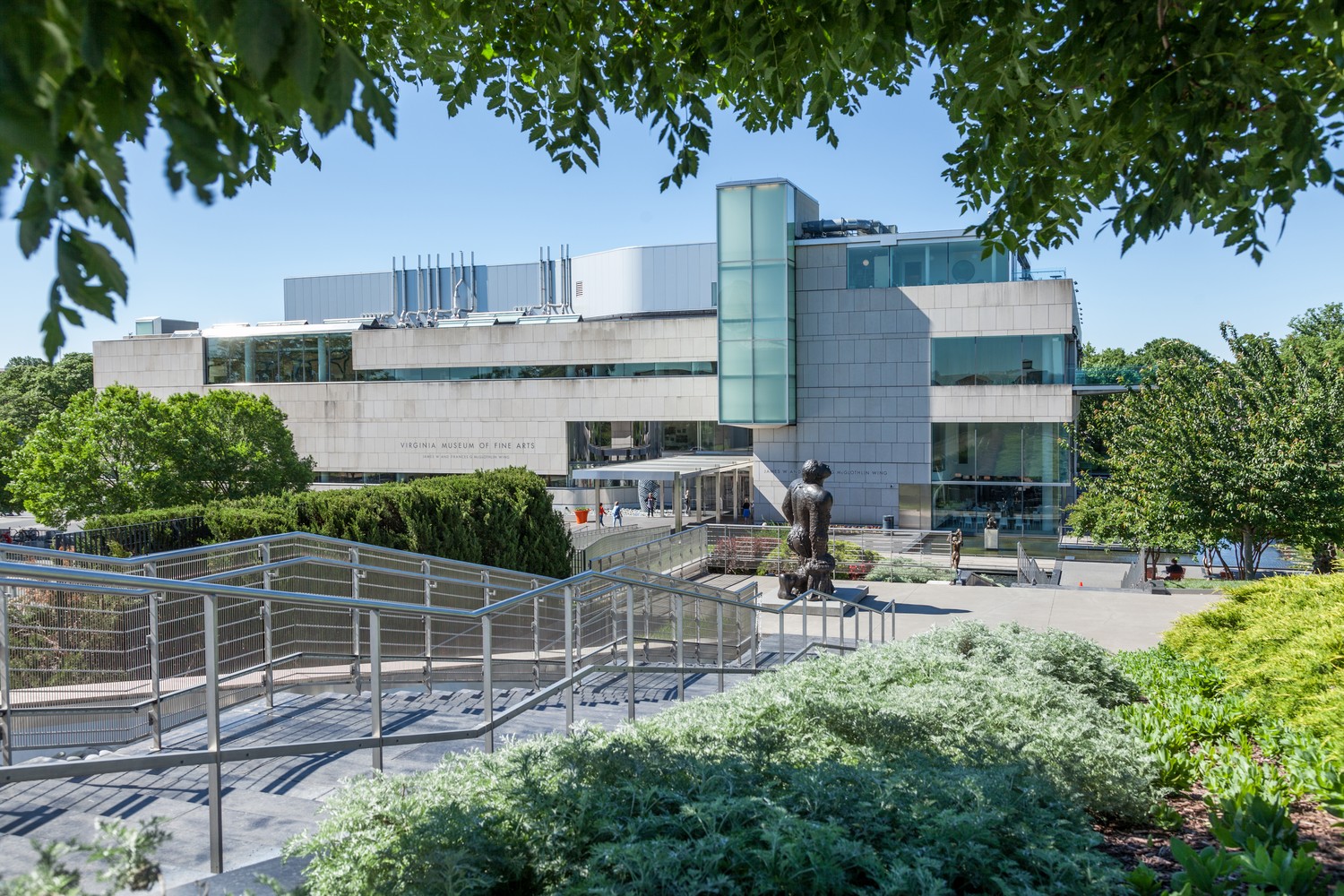
A significant transformation occurred with a major expansion and renovation completed in April 2010. This project, involving a masterplan by Rick Mather Architects in collaboration with SMBW Architects, added more than 9,300 square meters to the existing facility. The renovation included the creation of a five-level glass and limestone entrance wing. This new section provides two floors of permanent collection galleries and serves as the primary interface between the museum and the city. The design incorporates a 12-meter high window facing the Boulevard, which offers views of the surrounding area from within the interior spaces.
The Fabergé and Decorative Arts Collections
The museum holds a significant assemblage of Russian decorative arts, including over 170 jeweled objects produced by Peter Carl Fabergé and other Russian workshops. This collection features five Imperial Fabergé eggs, representing the largest public display of these objects outside of Russia. These pieces demonstrate the technical precision and material complexity required by the Romanov court.
The Art Nouveau and Art Deco collections were established through a gift from Sydney and Frances Lewis. These holdings include furniture, glasswork, and various decorative arts that reflect the stylistic shifts of the early 20th century. The objects illustrate the transition between these two distinct design movements.
Diverse Art Collections and Departments
The museum's holdings span several continents and eras. The African art collection includes sculptures, textiles, and ceramics. These objects reflect diverse traditions and creative ingenuity. In the American art department, the collection ranges from colonial portraits to contemporary expressions of national identity.
The institution maintains one of the leading collections in the United States of art from India, Nepal, and Tibet. These Himalayan and South Asian collections are among the finest in the nation, featuring monumental sculptures and intricate paintings. The museum also preserves significant works from the Ancient Mediterranean and various collections of ancient art.
The curatorial departments are organized to reflect these diverse origins. Visitors encounter a wide breadth of material, from the spiritual symbolism of South Asian works to the formal qualities of ancient Roman reliefs. The collection's scope allows for a direct comparison between different historical periods and geographic regions.
Masterpieces of the Collection
The collection contains significant works from the Impressionist and Post-Impressionist movements. Claude Monet’s Poppy Field at Giverny (1885) and Paul Cézanne’s Portrait of Victor Chocquet (1877) represent the evolution of light and form during this period. Vincent Willem Van Gogh’s Wheat Field behind Saint-Paul Hospital with a Reaper (about 1889) provides a focused study of landscape and color. These works are held alongside portraits and studies that define the museum's European holdings.
The museum's holdings include several notable portraits and character studies. John Singer Sargent is represented by The Sketchers (1914) and Mrs. Albert Vickers (1884). Ernst Ludwig Kirchner’s Portrat Gewecke (1914) offers a perspective from the Expressionist movement. In the realm of animal portraiture, George Stubbs’s Tiger (1771) remains a key piece of the collection.
The American and indigenous art collections include specific historical subjects and portraits. George Catlin’s Tuch-ee, A Celebrated War Chief of the Cherokees (1834) is a significant inclusion. Other notable works include:
- Sitzende Frau mit Holzplastik, 1912 - Ernst Ludwig Kirchner
- Still life with oysters, 1876 - Eugène Henri Paul Gauguin
- Jockey in Blue on a Chestnut Horse, 1889 - Edgar Degas
- At the Milliner, 1885 - Edgar Degas
Major Donations and Acquisitions
The foundation of the collection began with the 1919 donation of paintings by Judge John Barton Payne. This initial gift established the scope for future acquisitions. In 1947, the institution received the Lillian Thomas Pratt Fabergé collection. This acquisition included approximately 150 jeweled objects from Russia, providing a significant assembly of imperial-era craftsmanship.
The museum's holdings in Asian art were expanded through a 1968 gift from Paul Mellon. This acquisition brought Indian and Himalayan art into the permanent collection. These works include monumental sculptures and intricate paintings that reflect the spiritual symbolism of their origins.
- Lillian Thomas Pratt Fabergé collection
- Paul Mellon gift of Indian and Himalayan art
Recent Projects and Future Expansion
The museum is currently undertaking an expansion project scheduled to conclude in 2025. This development focuses on the creation of new gallery spaces designed to accommodate the growing collection. These additions aim to improve accessibility throughout the institution, ensuring the facilities meet modern standards for all visitors. The project is a deliberate step in the long-term growth of the site.
These structural changes are intended to enhance the visitor experience by providing more light-filled spaces and improved circulation. By expanding the physical footprint of the institution, the museum seeks to solidify its position as a cornerstone of Richmond’s cultural identity. The work integrates new functional requirements with the existing architectural framework to support its role as a central hub for art and community engagement.