
The History of Brighton Museum & Art Gallery
Brighton Museum & Art Gallery is a municipally owned public museum and art gallery located in Brighton and Hove, in the South East of England. It operates as part of Brighton & Hove Museums. The institution is housed within a building that forms part of the Royal Pavilion Estate. Originally constructed for the Prince of Wales, who later became George IV, the structure was completed in 1805. While the building was initially intended to function as a tennis court, this purpose was never fulfilled, and the site later served as cavalry barracks.
The museum and art gallery has occupied its current position within the building since 1902. Following this long period of use, the institution underwent a major refurbishment in 2002, which involved a cost of £10 million. This renovation updated the facilities to accommodate the diverse collections held within the site.
The Decorative Art Collection
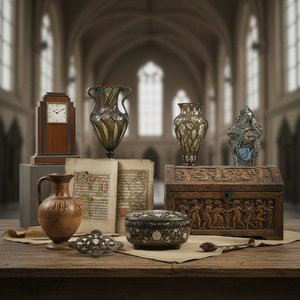
The collection comprises British, European, and American applied art and design spanning from the 17th century to the present day. These holdings include ceramics, glass, metalwork, furniture, and jewellery. The selection is designated of National Importance by Arts Council England. It encompasses the contemporary craft collection alongside the Arts Council (South East) craft collection, which is based at Hove Museum & Art Gallery.
The holdings illustrate major design movements from approximately 1880 to the present. This includes Aestheticism, Arts & Crafts, Art Nouveau, and Art Deco, as well as Modernism, Surrealism, Post-War Design, and Contemporary styles. Notable objects within the collection include Art Deco pieces by Rateau (1882-1932) and Lalique (1860-1945).
- The Marriage of Saint Catherine, 1530 - Francesco Vecellio
- Assumption of the Virgin, 1515 - Albert Cornelis
- Floris van Egmond, Count of Buren, 1510 - Jan Gossaert
Archaeology and Local History Collections
The archaeology collection has developed since the late 1800s. It includes several complete large-scale excavation archives containing internationally important finds. These objects provide evidence of how our ancestors lived in this region. The museum also holds chalk fossils and sub-fossils from the elephant beds. These specimens represent the ice age and the late Cretaceous environments of Sussex.
The Local and Social History collections contain items that detail the people, politics, and culture of this area. These holdings are distributed across several of our museums. Dedicated galleries for these collections are located in Brighton Museum and Hove Museum. The archives provide a record of the diverse social development of the local community.
The 20th Century Art and Design
The 20th Century Art & Design gallery contains a significant selection of works from the modern era. This collection includes contemporary art alongside established movements. The holdings reflect the shifts in aesthetic thought and material application that defined the century.
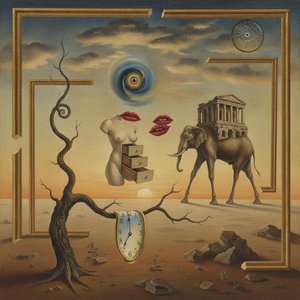
A notable piece in the collection is the Surrealist Mae West Lips sofa, designed in 1938 by Salvador Dali and Edward James. This object exemplifies the intersection of furniture design and Surrealist principles. The museum maintains a focus on how these movements influenced both fine art and functional design.
- Mae West Lips sofa, 1938
The Museum of Transology
The Museum of Transology (MoT) is a collection of objects and a community archive representing the lives of transgender, non-binary, and intersex people. Curated by its founder, E-J Scott, the collection focuses on material culture that documents these specific lived experiences. In 2018, the collection moved to the Brighton Museum & Art Gallery.
The archive contains a variety of personal items and community-contributed artifacts. These include objects from the curator’s own gender reassignment surgery, such as a hospital gown, a morphine syringe, and medicine cups. The collection also holds items such as a balloon that read "It's a Boy!" and various personal effects. These objects provide a direct record of the physical and social realities of transgender lives.
Exhibitions and Special Displays
The museum maintains a constantly changing programme of exhibitions, displays, and events. These rotations ensure the galleries remain active with new material. Special exhibition halls are used to present works of art from various regions across the globe. One such permanent feature includes an exhibition of Egyptian objects.
Recent programming has focused on specific thematic studies. The 2023 exhibition schedule included See the Sea, which presented a series of paintings depicting dramatic seascapes and beachside scenes. Another installation from that period was Lee Miller: Dressed.
- See the Sea
- Lee Miller: Dressed
Visiting the Museum and Gallery
The museum is situated within the Pavilion Gardens in Brighton, United Kingdom, with the postcode BN1 1FN. Visitors can enter the galleries from Tuesday through Sunday between 10am and 5pm. The institution is closed on Mondays, though it remains open on Bank Holidays. The site is located a short walk from the Brighton seafront.
Admission for an adult is £9.50, while child tickets are priced at £4.50. For those planning multiple visits, a yearly pass is available for £9.50. This pass is discounted to £7 for students at local universities and for residents of Brighton and Hove. Families may also visit using a specific rate of £12.35, which covers a group of up to five people including one adult.
The museum provides various facilities for those on site. There is a café available for refreshments and a shop that sells themed gifts and souvenirs. For those traveling by car, there is parking located nearby in the city centre. The museum is an indoor venue and provides disabled access throughout the premises.