

Origins and History of the Tower of London
The construction of the Tower of London began in 1078, ordered by William the Conqueror. This stone fortress was built to defend the city and proclaim royal power following the Norman invasion. It was a physical manifestation of authority, designed to dominate the landscape and secure the newly claimed realm. The structure has endured for nearly a millennium, earning its designation as a UNESCO World Heritage Site in 1988.
For five hundred years, the site functioned as a royal palace. It was a place of residence for monarchs, housing the complexities of court life alongside its more formidable duties. The history of the grounds is marked by significant shifts in purpose, moving between the roles of a secure stronghold and a center of governance. It has witnessed the evolution of the English monarchy through centuries of political change.
The site also holds a darker significance in the national narrative. Between 1388 and 1747, the Tower of London hosted executions, some occurring within the walls at Tower Green and others on the nearby Tower Hill. These events, involving high-profile figures, have left a permanent imprint on the memory of the fortress. The presence of these historical layers makes the site a profound witness to the passage of time.
The Building and its Architecture
The architectural presence of the Tower of London is defined by its evolution from a single stone keep into a sprawling, concentric fortress. At its heart lies the White Tower, a primary example of Norman military architecture. This central structure was originally built to assert power and provide defense. In 1240, Henry III had the great keep painted white, a transformation that gave the building its enduring name. The fortress is not a single entity but a complex of 21 towers, each contributing to the layered defensive system that has developed over centuries.
The perimeter of the site is defined by two defensive walls and a moat, which is now dry. The scale of the fortifications grew significantly through successive royal expansions. Henry III expanded the fortress during his reign between 1216 and 1272. Later, Edward I added massive curtain defensive walls and several smaller towers to strengthen the site. These additions transformed the complex into one of the most formidable defensive structures in the land, creating a series of nested defenses designed to protect the monarchy and its various institutions.
The Crown Jewels and Royal Armouries
The presence of the Crown Jewels within the Tower of London is a continuity that dates back to 1661. These objects carry the weight of sovereignty through their physical substance. The St Edward’s Crown, used for coronations since 1661, remains a central piece of this collection. Nearby, the Imperial State Crown displays over 3,000 gemstones, including the Cullinan diamonds. These stones are not merely decorations; they are the tangible remnants of centuries of state ceremony.
Within the White Tower, the Royal Armouries collection provides a different perspective on the fortress's history. The collection traces the evolution of weaponry and armour from medieval times to the present day. These objects reflect the changing requirements of defense and combat across the centuries. The metal and leather of the armour hold the marks of their specific eras.
The Royal Menagerie and Mint
The history of the Tower of London includes periods of unexpected utility, moving beyond its defensive purpose to house the Royal Menagerie. This collection of exotic animals once occupied the grounds, bringing lions and polar bears to the banks of the Thames. Such a presence transformed the fortress into a site of biological curiosity, a stark contrast to its role as a place of confinement or statecraft.
Parallel to the presence of the menagerie, the site functioned as the center of the nation's currency. The Tower Mint held a significant responsibility, producing all coins of the realm from the reign of Edward I until 1810. This long tenure ensured that the fortress remained a vital engine of the economy, where the physical symbols of sovereignty were struck and distributed.
The intersection of these functions—the containment of wild life and the production of precious metal—highlights the multifaceted nature of the complex. The site has long been a place where the wild and the regulated met within the same stone walls.
Exhibitions and Historical Narratives
The narratives held within these walls often focus on the individuals once held in confinement. Recent exhibitions have examined themes of justice and imprisonment, offering a perspective on the lives of those incarcerated here. These displays frequently rotate, ensuring the historical focus shifts between different eras and figures. The stories of prisoners, ranging from high-profile royals to commoners, remain a central part of the site's ongoing presentation.
Contemporary dialogue is also encouraged through collaborations with modern artists. These partnerships have resulted in installations that place historical events in conversation with modern perspectives. Such works invite a quiet contemplation of how the past continues to influence the present. By juxtaposing different eras, the site maintains a connection to its complex history through varied visual media.
Notable Artistic Works in the Collection
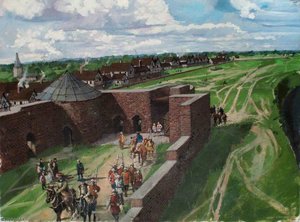
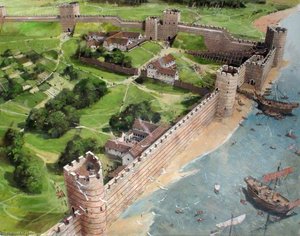
The collection contains works that reconstruct the physical presence of the fortress across different eras. Ivan Lapper provides several visual reconstructions that attempt to capture the site at specific points in history. One such work, Reconstructed View of the Tower of London, c.1240, was produced about 2000. Another piece by the same artist, Reconstructed View of the Tower of London with the Great Hall, 1300, was created about 2000, offering a glimpse into the architectural layout of the thirteenth and fourteenth centuries.
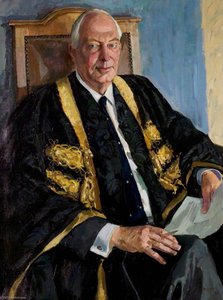
Portraits and installations offer a different perspective on the figures associated with the site. Richard Van Bleeck painted William Petyt (1640–1707), Holding a Copy of the Magna Carta in 1690. This work places a specific individual within the historical context of the realm's legal foundations. Nearby, the Installation of the Constable of the Tower, Sir John Stanier by Trevor Stubley provides a more contemporary sculptural presence within the complex.
- Reconstructed View of the Tower of London, c.1240, about 2000
- Reconstructed View of the Tower of London with the Great Hall, 1300, about 2000
- William Petyt (1640–1707), Holding a Copy of the Magna Carta, 1690
- Installation of the Constable of the Tower, Sir John Stanier