


Origins and History of the City Museum of Münster
The City Museum of Münster was founded in 1979. It functions as a repository for the long-standing narrative of the region, tracing the development of the city from its earliest recorded beginnings. The collection follows a chronological order, starting from approximately 793. This timeline allows for a steady observation of how the urban landscape and its inhabitants have shifted through the centuries.
The museum presents over 1,200 years of city history. This span of time reaches from the early medieval period through to the present day. By organizing its holdings according to this progression, the institution provides a sense of continuity. The exhibition covers the evolution of Münster from its foundational era to the contemporary age, documenting the transformations that have shaped the city's identity.
The Museum Building and Its Architecture
Located at Salzstraße 28 in Münster, Germany, the museum occupies a space where historical layers meet modern structural design. The presence of the institution is defined by a historic facade dating from 1910/1911, which provides a sense of continuity to the streetscape. This original exterior belongs to the former Althoff / Karstadt-Haus, a structure that once anchored the local commercial life of the city.
Behind this 1910/1911 facade, a new building was opened on August 31, 1989. This expansion provided the necessary space for a professionalized collection, offering dedicated rooms for restoration and storage. The architecture allows for a dialogue between the old city fabric and the contemporary requirements of a modern institution. The layout is organized into 33 thematic cabinets that guide the progression through the history of the region.
The physical environment accommodates various scales of objects, from large architectural models to delicate glass goblets. The interior arrangement supports the chronological presentation of the city's development from approximately 793 to the present day. Within these walls, the following elements are preserved:
- The historic facade from 1910/1911
- The modern building structure opened in 1989
- The thematic cabinet system
Thematic Cabinets and Collections
The museum organizes its narrative through 33 thematic cabinets, which offer a chronological progression from the city's origins around 793 to the present day. Within these spaces, city and architectural models provide a physical sense of the urban evolution and the changing landscape of Münster. These models allow for a quiet observation of how the city's shape has shifted through different eras, such as the period of the Anabaptist rule, the Prussian era, and the local traditions surrounding the Send market.
The collections held here include significant material culture that reflects the status and daily life of the region. Glass goblets bearing the coats of arms of Münster princes are held among the objects, alongside porcelain by Clemens August von Bayern. A rooster goblet also remains part of the permanent holdings. These items exist as tangible remnants of the social and political structures that once governed the area.
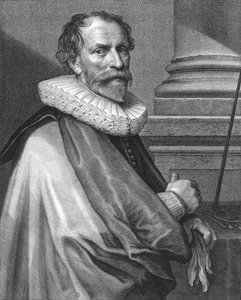
- Portrait of Johann Adolf von Plettenberg (ca. 1656-1697), Herr zu Lenhausen, 1696 - Arnold Boonen
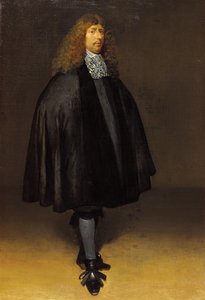
- Allegory of Hugo Grotius and the Peace of Westphalia, 1648 - Gerard ter Borch
- The mass of St. Martin, 1654 - Jan Boeckhorst
- Young woman in silk dress, 1657 - Jan Boeckhorst
- Equestrian portrait of Henri II d'Orléans, duc de Longueville (1595-1663), 1647 - Gerard ter Borch
Specialized Collections and Dedicated Cabinets
The museum’s thematic structure allows for a focused encounter with figures central to the region's intellectual and creative history. Dedicated cabinets are reserved for the painter Bernhard Pankok, the poet Annette von Droste-Hülshoff, and the photography pioneer Friedrich Hundt. These spaces provide a quiet environment to observe the specific contributions of these individuals to the local cultural landscape.
Beyond individual biographies, the collection preserves the atmosphere of a bygone era through immersive installations. The Henke colonial goods shop, dating from 1911, remains a significant presence within the museum. This reconstruction offers a tangible connection to the commercial life of the city at the turn of the twentieth century. Nearby, the Café Müller from the 1950s provides a different window into the social history of the post-war period.
The museum also holds specific objects that reflect the political and religious complexities of Münster's past. These include glass goblets bearing the coats of arms of Münster princes and various porcelain pieces by Clemens August von Bayern. A rooster goblet, whose origins remain a subject of inquiry, is also part of the permanent holdings.
- Portrait of Annette von Droste-Hülshoff, 1847 - Erich Correns
- Portrait of Bernhard Overberg (1754 - 1826), 1810 - Johann Christoph Rincklake
- Vice Admiral William Young (1761–1847) - Andrew Morton
Current and Recent Exhibitions
The museum's recent programming has explored various layers of local history and visual culture. The exhibition Vor 50 Jahren - Münster 1973 offered a perspective on the city as it appeared in 1973, concluding in November 2023. Other recent focuses included the graphic and drawing work of Tons Vormann, which was presented until August 2023, and the exhibition Die magische Welt des Herrn Alexander, which remained on view until September 2023. During the summer of 2023, the photography of Hannah Gnegel was also part of the exhibition schedule.
The current exhibition, Sammeln aus Leidenschaft: Trinkgefäße, which runs from November 9, 2024, to March 20, 2025, examines the enigmatic origins of a specific drinking vessel. This presentation investigates a goblet that bears a striking resemblance to the Golden Drinking Cup from the Peace Hall, which was created around 1600. The exhibition explores whether the object is a historical piece or a later composition, potentially designed specifically for a private collector with deep ties to the city. This inquiry into the nature of collecting and the history of material objects provides a focused look at the complexities of provenance and craftsmanship.


